I’m sure you all know that saying, “Into every life a little rain must fall.” It has been a very rainy and chilly couple of days here on my mountain and despite missing the warmth and light of the sun I am quite grateful to see the moisture.
Some of you may recall that last year the week following Labor Day was a bit too exciting for my family and heart-breaking for many of our community. The Four-Mile Canyon Fire was challenging fire crews to contain it and all this was not helped by dry windy weather. By the time the fire was fully contained 169 homes and 6000 acres of land had been burned.
So the rain is welcome, despite heralding the end of summer, as it decreases the likelihood of another wildfire any time soon. Proof that every cloud has a silver lining.
I don’t know how many of my readers share my aversion to having their photo taken, but I really prefer to be behind the lens and not in front of it.
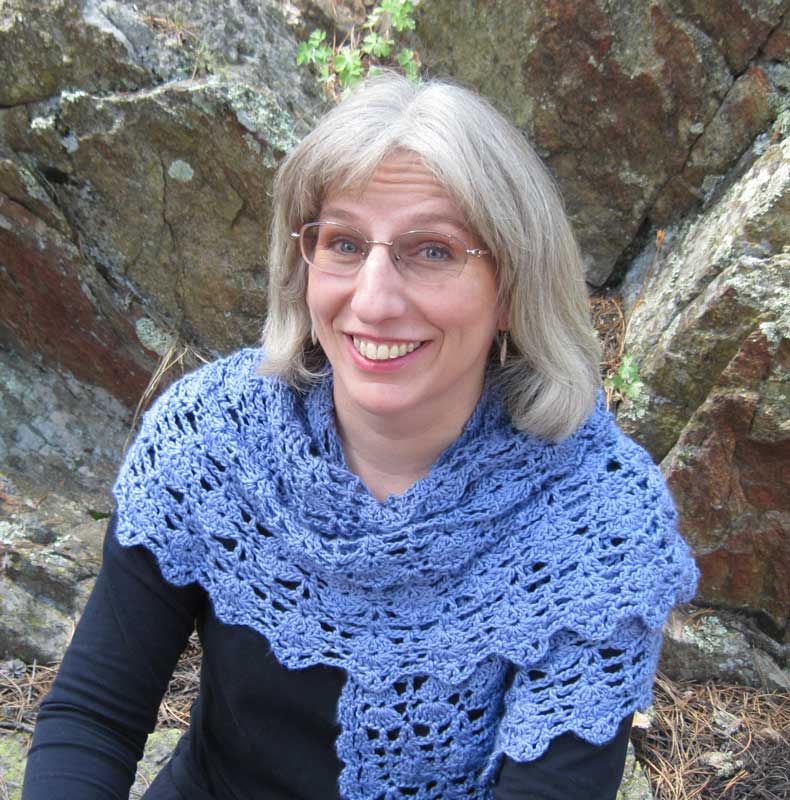
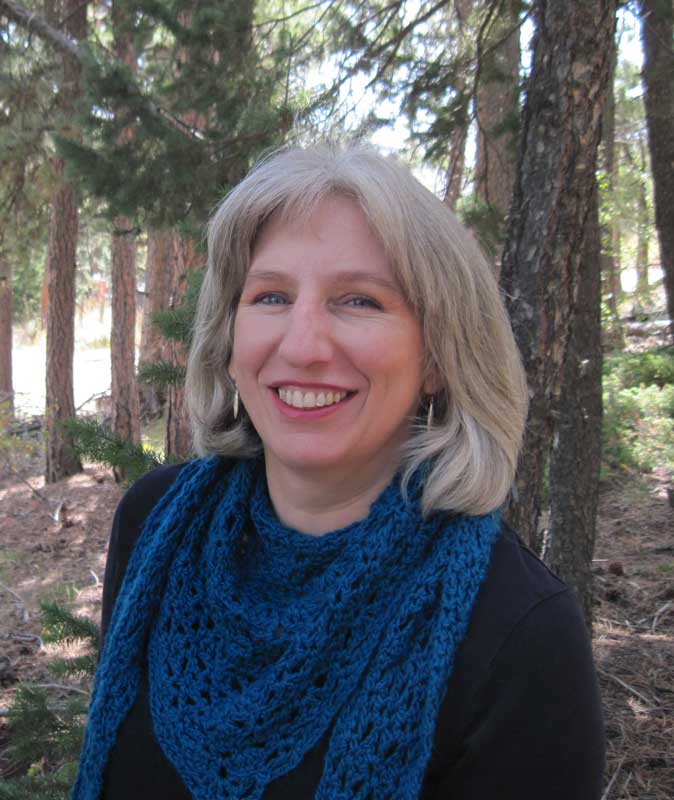
Recently it was brought to my attention that I needed a current photo of me for professional reasons. So today my dear foster-brother DJ and I had a photography session using my lovely mountain back yard for our studio.
Comedy reigned supreme, as seen above…..but bless DJ he hung in there and got some shots that would work.
It has given me a greater appreciation for those that model regularly in the various magazines and such. I’m definitely happier stitching and working out the math for designs.
For you that know me well, you know that isn’t a spelling error. I’m really not one for cooking or baking, and no one wants a recipe for Pie from me.
But when it comes to recipes for crocheting creativity that are related to applied geometries, that is a whole nuther story.
Some of you may remember that old equation from your school days of “Pi R square” (and the standing joke was, “No, Pie are Round”). Pi is literally the secret to understanding circles, and the secret to making hats that fit perfectly.
Baby Doll's New Hat
Pi = 3.14 in reality it is a much longer decimal than that. But taking the number to 2 decimal points is more than sufficient for our purposes. In fact, with a little adjustment to our calculations, taking away the decimals all together works too.
I love making hats as gifts and often they are my “go-to” project when I just need some instant gratification crochet. I don’t know that I have ever made a hat from the brim up. I much prefer the ease of working with top down construction.
My favorite thing about working top down is how simple the foundation is. Start with an adjustable slip knot, then chain a couple stitches, work the first round of stitches into the first chain…Voila! You are off and running. Crown down construction also allows for some really simple decorative stitch work for the brim.
There are lots of fabulous hat patterns out there, and you can make sure that your hat fits yourself or your giftee perfectly by using some simple math.
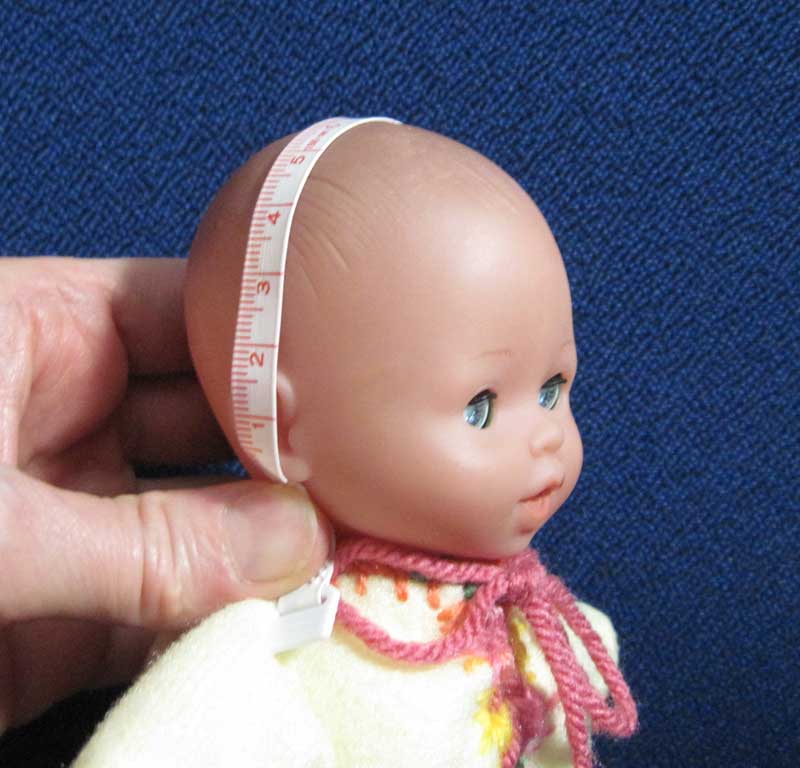
Baby Doll's Head Circumference Measurement
You are going to need a couple of measurements. You need the circumference of their head, which means the distance around their head measured at eyebrow level.
Baby Doll's Hat Depth Measurement
And you’ll need the “depth” measurement, which is referring to the length of the finished hat from middle of the crown to the edge of the brim. Being I like my ears covered by my hat I measure to the bottom of the earlobe.
Target Diameter Measured
Baby Doll’s head circumference is 17.5 cm and her “depth” measurement is 6.5 cm. So my calculation for figuring out how big to work my beginning circle is: 17.5 divided by 3.14 = 5.57 cm. Which I round down to 5.5 cm.
If you are making a gift hat and can’t measure the recipient’s head there are a couple of online sites that have some helpful measurements for averages. TotToppers, Wooly Wormhead,
Some other things to consider when personalizing a hat are preferences of the wearer: how snug they prefer their hats to be, if they want the hat to cover their ears, if they like extra coverage over their ears.
Typically you want a hat to be a bit smaller than the head circumference. This is called “negative ease”. Negative ease depends on the fabric of the finished hat (or garment) to have some stretch to it. The amount of stretch needed is dependant on how much negative ease is planned for.
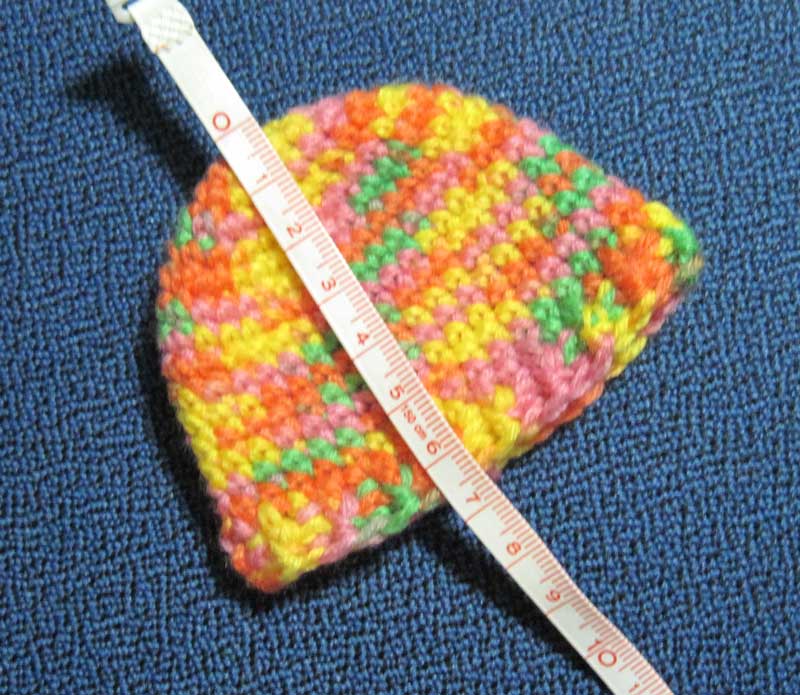
Target Depth Measured
Once I achieve my target size for the diameter of my circle I will then continue working rounds without increases until I reach the depth (or length) that I want. If I am just winging the depth, I’ll stop when I think I am nearing the length I want. Then flatten the hat so the center of the crown is halved I measure the length.
Now it’s your turn. Using a hat pattern you love see if you can make a hat that fits you perfectly. Or try winging a hat using your favorite stitch in the round.
How about that?! Two weeks have flown by so I come back with a bit of Latin.
It’s been a wild August here on the mountain. Between my boys starting back to school on the 15th, 2 very large design projects I’m working on and all the swatching for proposals…..I’ve been wishing I had either a live-in assistant or that I could clone myself.
So I promised some substance for this post. Let’s take a quick look at WPI.
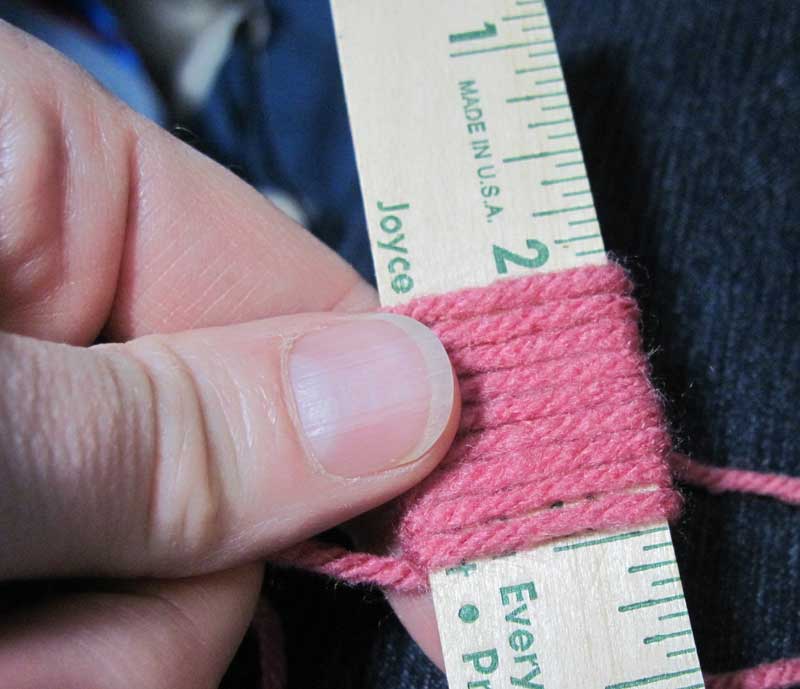
Worsted Yarn, WPI = 9
WPI – Wraps Per Inch. It’s a measurement used to tell the thickness or weight of a yarn. Spinners use this term a lot. It simply refers to the number of times that a particular yarn can be wrapped around an inch wide length. You don’t want to wrap the yarn tightly as it will distort the yarn and you want each strand of yarn to lay flat next to each other on your measure.
I had never heard of it until I joined Ravelry in 2008. Once I had though, I was amazed that it isn’t used as part of yarn labeling. It is a fairly accurate measurement and far less subjective than the categorizations of “worsted”, “dk”, “sport” and “fingering” etc that we see. Or the nifty little drawings with the number on a skein.
On that subject, I purchased this ball of yarn at Hobby Lobby ages ago. I liked it because it was a bright-colored light weight yarn. Imagine my surprise that it was labeled as a # 5 “bulky” weight yarn. Seriously?
Now sometimes with a really fluffy mohair kind of yarn that has a thin core I can see a yarn being labeled bulky. But there is no way this is a bulky yarn. Being I’m an experienced yarner, this sort of labeling mistake doesn’t bother me, but for your new yarn consumer or those less experienced this can be quite confusing. Particularly if you are looking to substitute a yarn.
Measuring by placing ruler at 90 degrees on top of ball.
It is easy to measure WPI in a store, especially on many of the larger commercial skeins. You can do it by laying the ruler at a 90 degree angle to the yarn wraps on the ball, or by slipping the ruler under one layer of wraps to see the number of wraps across an inch.
Measuring by slipping the ruler under one layer of yarn.
I’ll talk more about how this all helps when you want to substitute yarns. For now I challenge you to play with measuring WPI on your own. See if you start to get a feel for the WPI of various yarns.
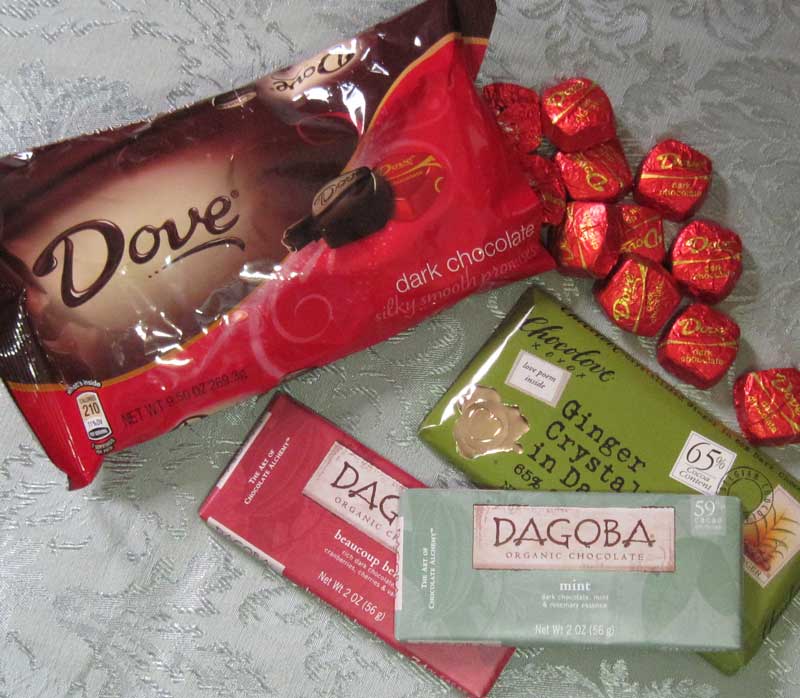
Well, it’s the truth. Chocolate is one of the main food groups in my book. I know, that is a terrible confession from a woman reputed to be a health and wellness writer.
The blog might be a little quiet this week as August has found me with a crazy busy schedule. I am pretty certain that my Mutant To-Do list has been either taking vitamins or doing steroids.
My boys are headed back to school in less than 13 days, I have 4 rather substantial designs to finish and ship in the month of August as well as all the prep stuff I need to take care of for the Fall Knit and Crochet Show.
I promise to be back soon with a nice juicy new post.
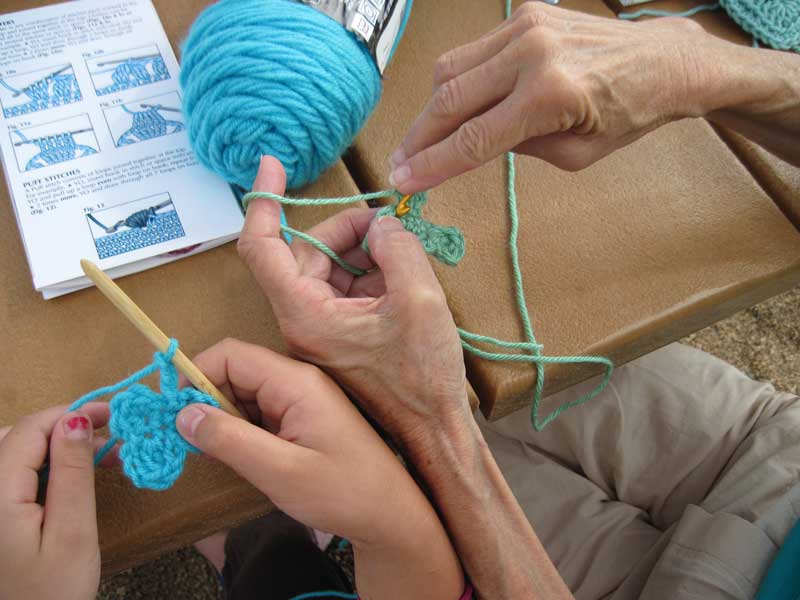
I love teaching others about crochet and how to crochet. I love it because teaching new crocheters (or mostly new crocheters) brings me back to my own beginnings playing with yarn and hook, as well as giving me the opportunity to look at crochet with fresh eyes.
During this summer’s school break I have been teaching crochet weekly to one of my son’s school friends and her grandmother (who knew quite a bit already). My young student had been taught some of the basics from her grandmother, like chaining and single crochet stitch. We have been playing with shaping in crochet and working in the round.
It has been so exciting seeing this young lady take-off in her creativity with crochet. She even sallied forth and made a hat without any pattern. I was so happy to see the results of her experiments.
This fall the 3 of us will be organizing a Crochet Club as a weekly afterschool group for other students and community members to play with hooks and yarn.
I hope for those of you that crochet and knit that you give yourself the gift of sharing your hobby with others every chance you find. It is a fabulous confidence builder for everyone to be able to create something with their own hands as well as being a skill that they can pick up again at any time.
Then you too can delight in returning to your own stitching beginnings and gain new excitement and understanding of your craft.
I am currently faced with the challenge of finishing 2 rather large projects by the 24th of August. So I am reminding myself that I need to stop and stretch my body and particularly my hands regularly.
One of the things I love about crocheting is that it’s easy to reach a meditative state while working. In that state I become less aware of the passage of time. The smooth action of making stitch after stitch is somewhat hypnotic.
Unfortunately, once I do stop I become quite aware of discomfort and even pain in my body if I have been sitting there for hours crocheting. So what to do?
It’s a simple solution. A timer.
My favorite timer is my kitchen timer. I even leave it in the kitchen. When it goes off I have to at least get up to turn it off (it’s quite loud and obnoxious) and that action alone breaks up the static position I’ve been working in. I generally set my timer for 25 minutes, but any interval between 20-30 minutes is helpful.
When the timer goes off, I stand up and stretch. Other things I do…move the laundry into the dryer or take it out to hang it up, get a big drink of water, have a bite of chocolate (that’s in the kitchen too), pet the cat, check on my boys if they are in a different room.
Taking breaks like these can be the difference between being very productive or being laid up with injuries to our hands and bodies. So sharing this lesson with all of you my dear readers will hopefully remind me to take care of myself as well. After all, Timing is Everything.
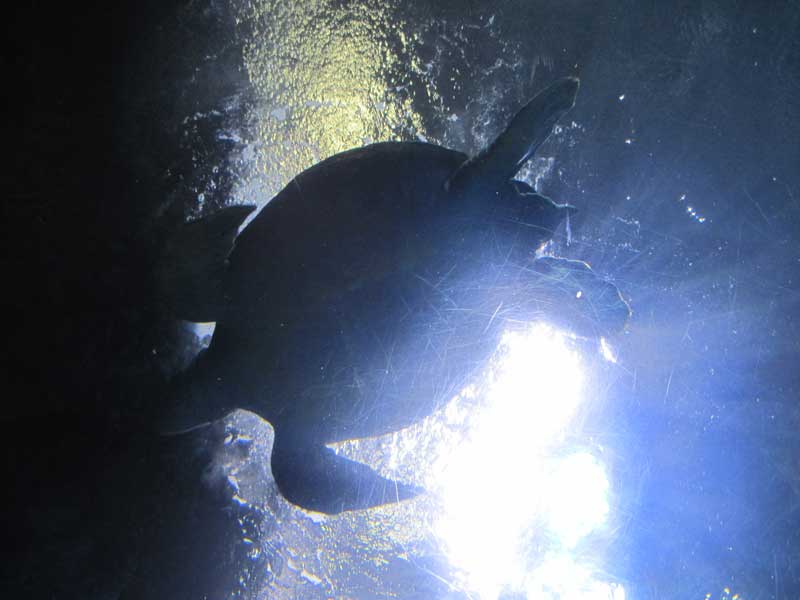
Recently my family and I took a day-trip to Denver to go to the Downtown Aquarium. I loved watching the sea turtles and kept trying to get some good photos of them. After many shots and my return home I found 2 of my shots really came out quite well.
Who knows, these photos may be the basis for inspiration for another soft toy.
As is known by many of my stitchy friends and my dear readers of the blog, I have a slight addiction to novelty yarns and crocheting with unusual materials (spaghetti anyone?). So the first time I heard of Jelly Yarn I had to investigate.
The talented Vashti Braha had mentioned it one evening on the Getting Loopy podcast chat room. I was immediately intrigued and decided I must find some of it to play with. Fortunately not too long after that I was at the Buffalo Knit and Crochet Show (August 2009) and Jelly Yarns had a booth.
My Jelly Yarn Purchase
Jelly Yarns is owned by Kathleen and Nick Greco, super nice people and lots of fun. Their booth was a bright fun corner of the market floor. I was especially excited to find Glow-In-The-Dark and glittery Metallic (sparkles!) Jelly Yarn. I purchased a couple balls of the metallic and one of their “Glow in the Dark” colors.
If you can’t find Jelly Yarn in your area check out their website at JellyYarns.com (it’s also a great place to explore tips about using Jelly Yarn and to see the latest fun stuff they have planned).
The yarn is available in 3 different weights and 14 colors. Kathleen works with their manufacturer in Pennsylvania (another thing to love, this yarn is made in the USA) planning and developing new colors. She also creates wild wonderful knit and crocheted art pieces and patterns from Jelly Yarn.
It is a bit strange to crochet with at first. The yarn is 100% Vinyl, reminding me a bit of the lanyard lacing type stuff used to make woven key chain fobs in summer camp (way back when). This isn’t “yarn” in the fibery sense, but it is very flexible and I love the sculptural quality of it. It is fantastic for beaded crochet with big hole style beads.
Kathleen recommends using a hand lotion or hand salve on your hook to improve the “glide” of the yarn over the hook and thru stitches. Her favorite salve to use is Burt’s Bee Hand Salve. She also recommends the use of a metal hook like the Susan Bates Silvalume. I found I didn’t need the lotion or salve when using my Clover Soft Touch hooks especially as I wanted a loose stitch structure. I do like the salve for tighter projects though. The finished fabric is very elastic with a structured quality and a slight grippy feel to it.
When I returned home from the Buffalo show I made some single crochet bracelet “worms” for my boys from the Glow-In-the-Dark yarn. I also strung a bunch of blue toned beads on the Silver Icing sparkly yarn with the intention of making some fun jewelry items. Unfortunately life got busy like it does and I tucked it away to work on later. This past Monday I was having a clear out of my working space and re-discovered the ball of yarn and decided it was time to play with it again.
So here is the fun and slightly funky bracelet pattern I came up with. Enjoy!
Glittery Beaded Cuff
designed by Andee Graves
Materials:
Jelly Yarn (100% Vinyl) in Silver Icing color. Fine weight
Size J (6 mm) hook (I used my Clover Soft Touch – the matte finish of the metal seems to help)
79 – Size E beads (I used Blueberry Pie Mix [color 01] from Twisted Sistah Beads)
Large yarn needle for weaving ends
Gauge: 6 sc and 7 rows = 2 inches
Special Stitches
Beaded Single Crochet (bsc): Bring bead up close to work, insert hook in st, keeping bead to back of work yo and pull up a loop, yo and pull thru both loops on hook.
Double Beaded Single Crochet (dbsc): bring bead up close to work, insert hook in st, keeping bead to back of work yo and pull up a loop, bring second bead up close to work, keeping bead to back of work yo and pull thru both loops on hook.
Pattern Notes
My cuff is 2″ wide (5.1 cm) and 7 3/4″ around (19.7 cm). If you want yours longer for a larger wrist just add un-beaded rows at the end and beginning. If you want more beaded rows add 5 beads for each additional bsc row and 12 beads for each additional dbsc row. Remember you will need an odd number of rows in the end to make the finishing seam work correctly.
Jelly Yarn isn’t a fiber yarn so taking care of the ends is a bit different. Vinyl will stretch thinner and then relax back into its original size, so knots tied tightly in this yarn tend to stay put. Read the details in the finishing closely to keep your bracelet from coming undone.
Instructions
First string all the beads on your yarn. This is easy to do because the yarn is stiff enough to act as your needle. If you have extra beads you might want to add a few just to be sure you’ll have enough for this project.
Foundation: Chain 7, turn.
Row 1: Sc in back bump of 2nd ch from hook, sc in back bump of each ch to beginning of ch. [6 sc]
Row 2: Ch 1, turn, sc in each st to end of row. [6 sc]
Row 3: Ch 1, turn, sc in first st, bsc in each st to end of row. [1 sc, 5 bsc]
Row 4 – 12: Alternate repeating Row 2 and Row 3, ending with a Row 2.
Row 13: Ch 1, turn, dbsc in each st to end of row. [6 dbsc]
Row 14: Repeat Row 2. [6 sc]
Row 15: Repeat Row 3. [1 sc, 5 bsc]
Row 16: Repeat Row 2. [6 sc]
Row 18 17: Repeat Row 13. [6 dbsc] Aug 27, 2016: Thanks to June T. for pointing out that Row 17 was missing. I had mis-numbered the rows. Eep! It’s been on here wrong for nearly 5 years!
Finishing: Pull beginning and ending tails to tighten slip knot and ending knot. Using tails sew top of Row 28 to bottom of Row 1, sew half way for each tail so they meet in the middle of seam. Tie a square knot with the 2 tails. Weave the loose ends of the tails back toward the sides of bracelet and cut off so ends don’t show.
I am offering this pattern for free so the only tech-editor for this pattern is me. Please let me know if you run into a snag with the pattern.
I’ve been such a busy little designer the past few months that I almost forgot I had 2 new designs coming out in the Autumn Issue of Crochet! Magazine.
Back in 2009, when I sold my first couple of designs, I would call one of my established designer friends all excited with each one. She celebrated with me, but told me that one day I would be so busy with design work that I would forget that I had designs coming out in a publication. Funny to realize her prediction has come true only a little over 2 years later.
Sparkling Lace Shrug - DRG Publishing
This shrug was inspired by a Free-Form garment I made for the Fashion Show at Chain Link 2009. I hadn’t created a pattern for it at the time but the lovely Carol Alexander finally persuaded me to create something for Crochet! based on it. I had used yarns that were discontinued for the original, so she and I had a fun time finding yarns that would work. Once Carol and I had the yarns picked though it came together beautifully, and I wrote my first sized pattern.
Crystal Eyelet Table Runner - DRG Publishing
My house is quite small, and my two little boys tend to dominate it, so there isn’t much use for decorative touches on the table. This is my first ever attempt at a table runner. I’m looking forward to using it on our table at the holidays, the one time a year that I can justify “dressing-up” my table.
The Autumn 2011 issue of Crochet! Magazine should be available on newsstands and in subscriber’s mailboxes soon. Meanwhile you can see a preview of the magazine at the Crochet! website. I hope you enjoy making these designs as much as I did creating them.












 Mamas2Hands