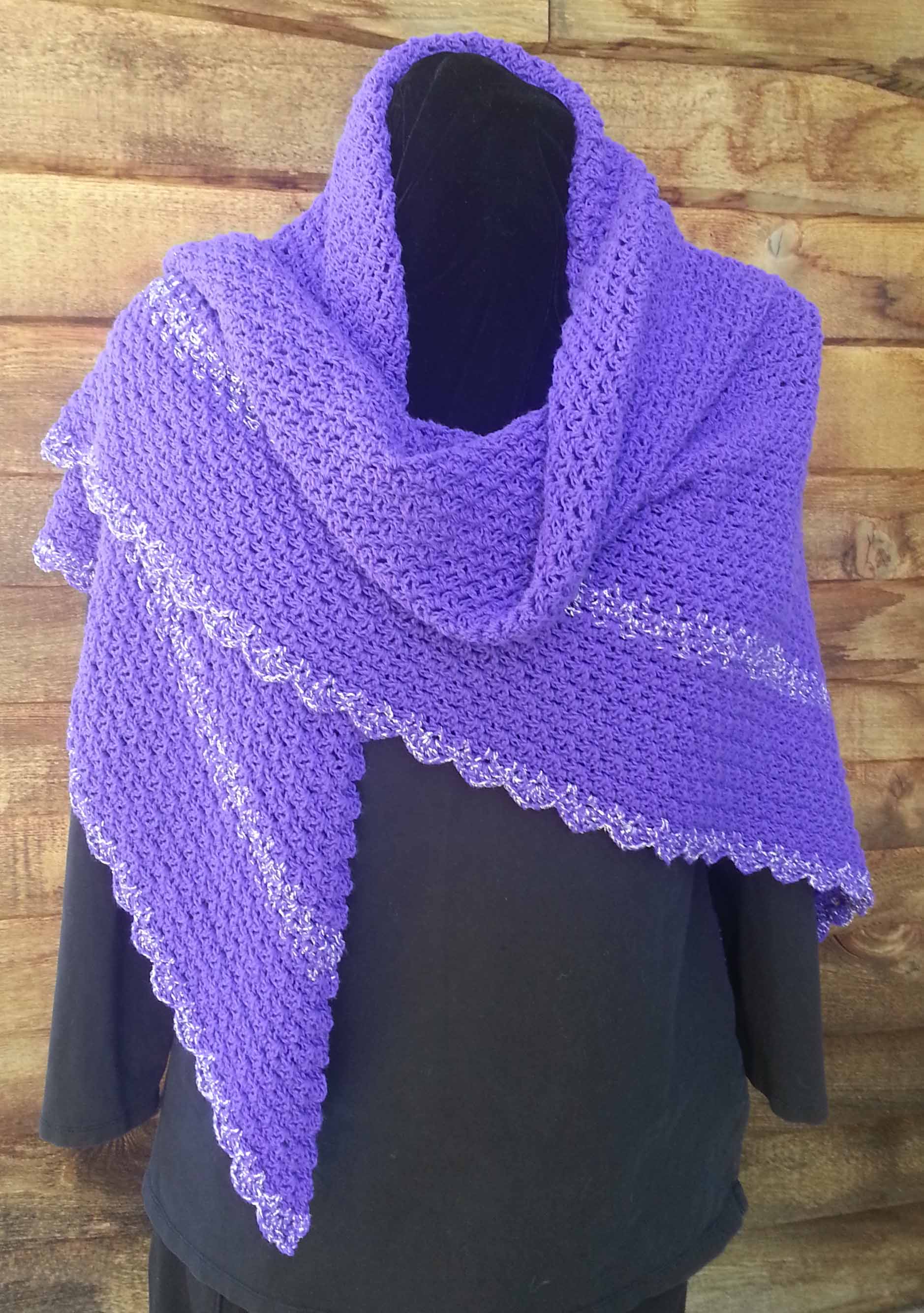
2 by 2 Cowl Pattern

Hello my dear readers. May has been zipping by and I can’t believe there are only 2 weeks left of the school year for my kiddos. This summer is already beginning to look very busy. Between fiber arts conferences and family trips I’ll be on the go pretty much non-stop.

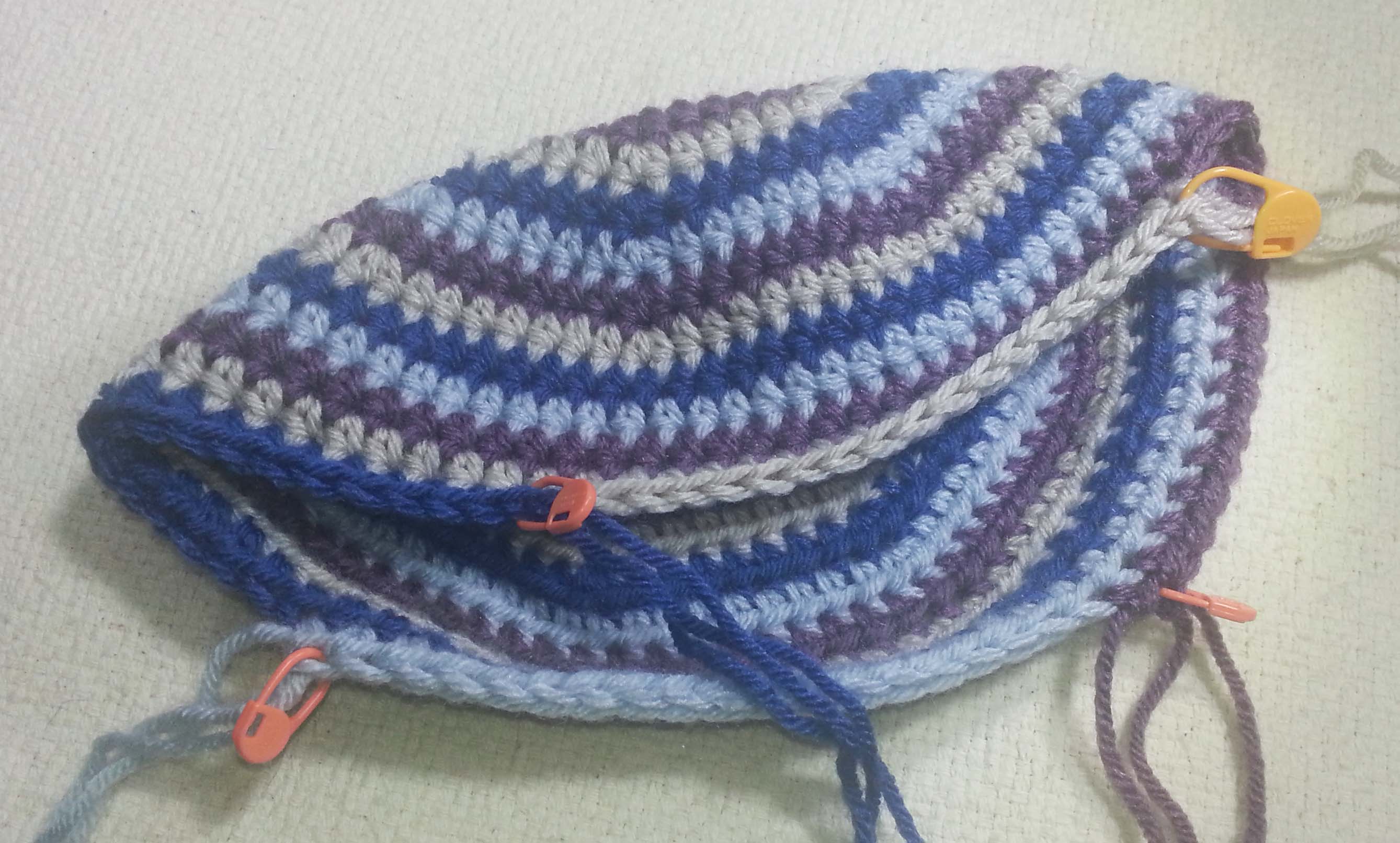
This is my newest design the “2 by 2 Cowl”.  I wanted to start the summer off with a fun pattern for everyone that doesn’t take a lot of yarn and is relatively small to have in your hands or lap when the temperatures start to rise. It uses only 1 skein of Lion Brand’s “Heartland” yarn with a size J hook.

This was all that was left of my skein of yarn when I finished the sample, just 5 grams or a little under 9 yards.

I start this cowl with my favorite foundation: Stacked Rows. If you need a little help with understanding how to work a stacked rows foundation I created a video to help you. You can find it here on my YouTube Channel. For those of you that are ready, let’s jump right into the pattern.

2 by 2 Cowl

Designed by Andee Graves

Skill – Easy

Stitches you need to know: Chain (ch), Double Crochet (dc), Single Crochet (sc), slip stitch (slip st)

Finished size: Approximately 14” wide x 34” around (35cm x 85cm)

Materials

Yarn: Lion Brand Yarns “Heartland”; 100% Acrylic, 142 grams/5 oz, 230m/251 yards. (sample was made with 1 ball of color #147 Hot Springs)

Hook: J-10/6mm, or size needed to obtain gauge

Blunt yarn needle

Gauge:

6 rows and 16 stitches in pattern = 4” (10cm)

Pattern Notes

Foundation is worked in stacked rows to create a scalloped and elastic circle that the rest of the cowl is built off of.

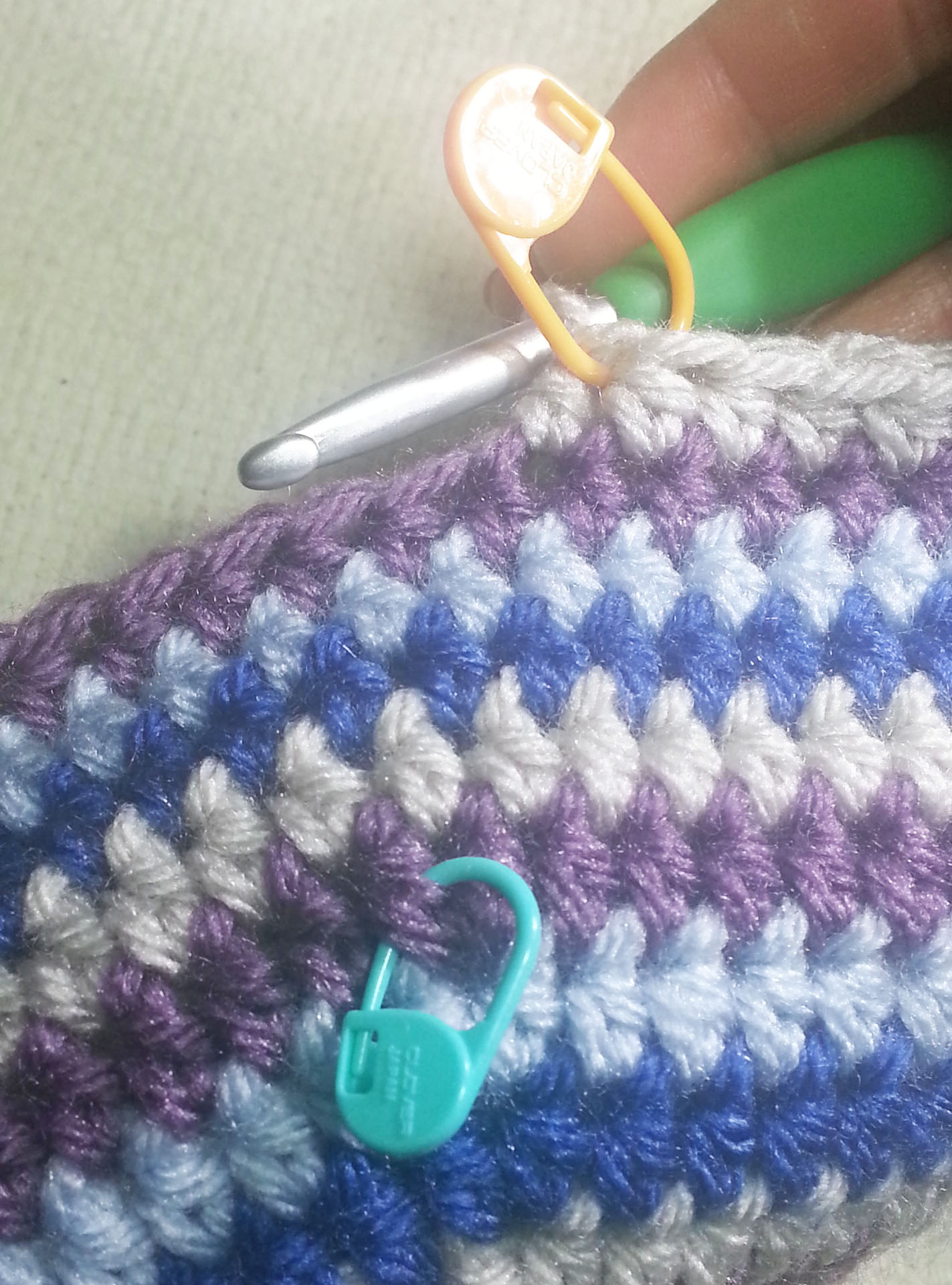
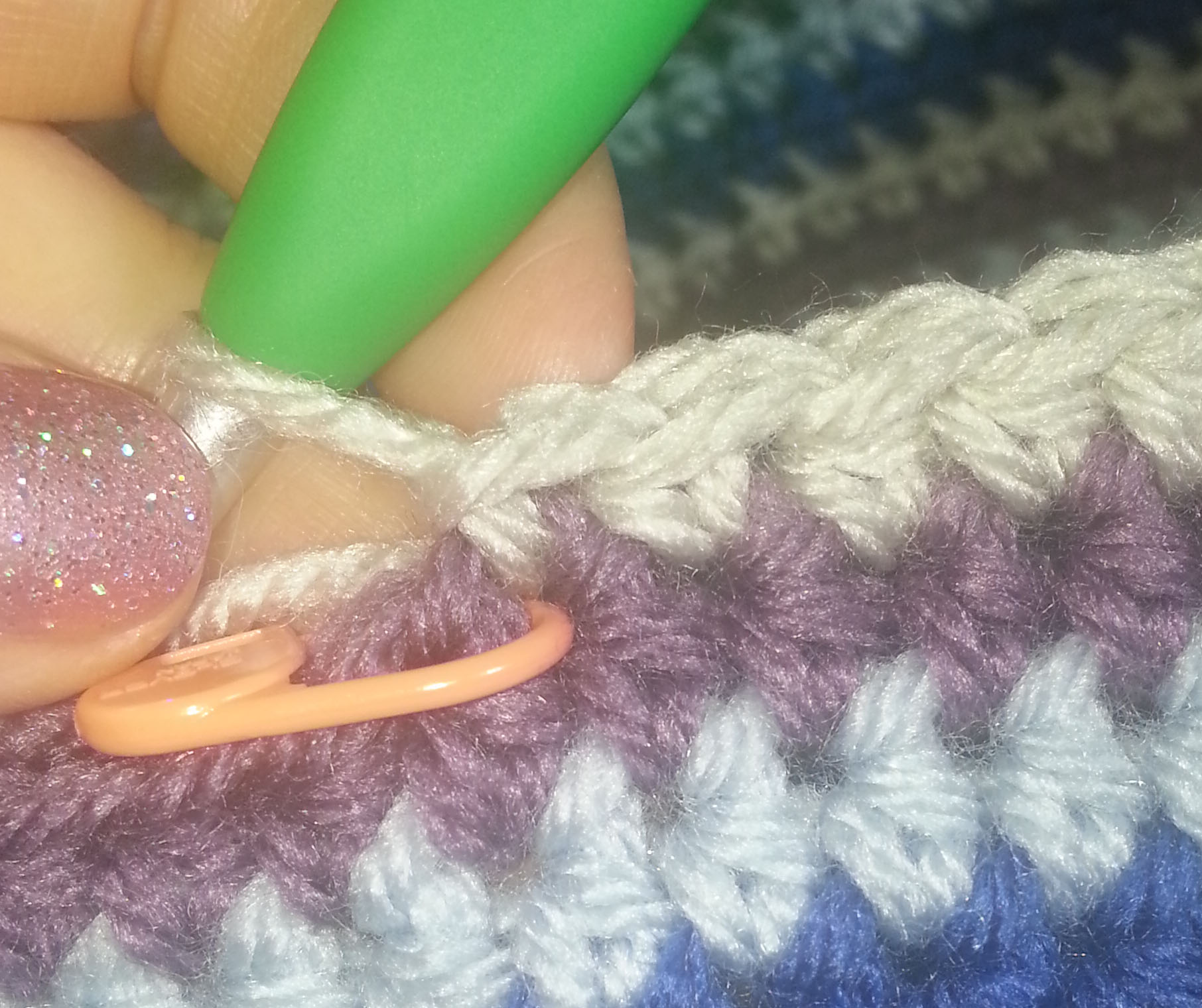
Body of the cowl is worked in joined rounds off the straight side of the stacked row foundation. Look for the hole at the base of the double crochet rows to find the single crochet row to work into when crocheting Round 1.

Instructions

Foundation:

Row 1: Ch 2, sc in 2nd ch from hook.

Row 2: Ch 3, turn, 2 dc in sc.

Row 3: Ch 1, turn, sc in first dc.

Rows 4 – 65: Alternate repeating Row 2 and Row 3

Row 66: Repeat Row 2, join strip of rows into a circle without twisting, slip st to base of Row 1. {33 Scallops, 33 sc rows}

Body of Cowl:

Rnd 1: Turn to work along straight side of foundation rows, ch 3 {counts as dc here and thru-out pattern}, dc in side of first sc row, *skip next dc row, ch 2, 2 dc in side of next sc row; repeat from * until work in last sc row of foundation, ch 2, slip st to top of beginning ch-3. [66 dc, 66 ch-2 sp]

Rnd 2: Turn, (loosely slip st, ch 3, dc) in first ch-2 sp, skip 2 dc sts, ch 2, 2 dc in next ch-2 sp; repeat from * until work in last ch-2 sp of previous row, ch 2, slip st to top of beginning ch-3. [66 dc, 66 ch-2 sp]

Rnds 3 – 21: Repeat Row 2.

Rnd 22: Do Not Turn, ch 1, *sc in first dc, ch 2, 2 dc next dc, skip next ch-2 sp; repeat from * until work in last dc of Rnd 21, slip st to top of first sc of Rnd. Fasten off

Weave in all loose tails. Gently block if desired.

The Luck of the Irish

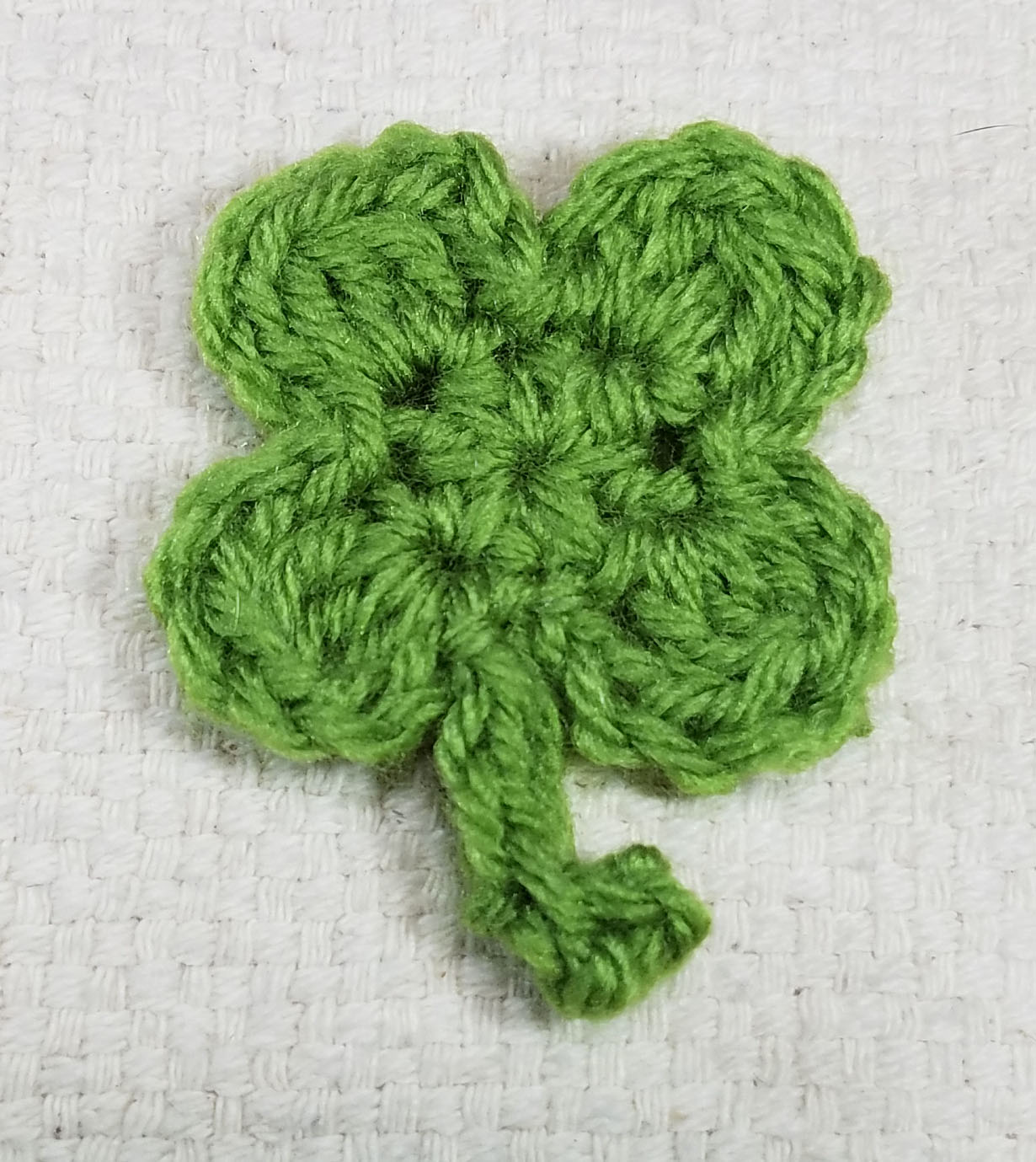
Today is Saint Patrick’s Day, and my family has a little Irish heritage (we are a classic American family with a big mixture of ancestry from all over Northern Europe and the British Isles), so I thought I would come up with a fun little crochet pattern for making a lucky 4 leaf clover.

Funny enough, none of us have much in the way of green clothing, every year I think that I really should at least get the kiddos some green clothing. That thought has not translated to my shopping brain yet. I tend to purchase whichever shirts are on sale, since both of my kids are a bit rough on their clothes.  Instead I crocheted up lucky clovers and made them into pins they could wear.

For those of you that are wondering about Shamrocks versus 4 Leaf Clover. The typical Irish symbol is the 3 lobed clover and is called a shamrock. 4 lobed clovers are much rarer and are not “officially” considered a symbol of Ireland or Saint Patricks day. The shamrock with it’s 3 lobes is said to have been used by St. Patrick to demonstrate the holy trinity of Christian faith. The 4 Leaf Clover is said to symbolize luck because they are so rare.

I had a lot of fun playing with a way to create a 4 Leaf Clover that could be worked in just 2 rounds. This project is rated at the intermediate level, because I used some more advanced techniques like Clusters and working in the back bump of chains.  If you need help with working clusters I have a photo tutorial in the Special Stitches section of the pattern.

Luck of the Irish Clover

Design by Andee Graves

Skill level: Intermediate

Materials:

Yarn – Lion Brand “Vanna’s Choice”, 100% Acrylic (3.5 oz/100g, 170 yds/156m) Color #171 Fern

Hook – I/9 – 5mm hook

Pin back or safety pin to attach to back of clover.

Special Stitches

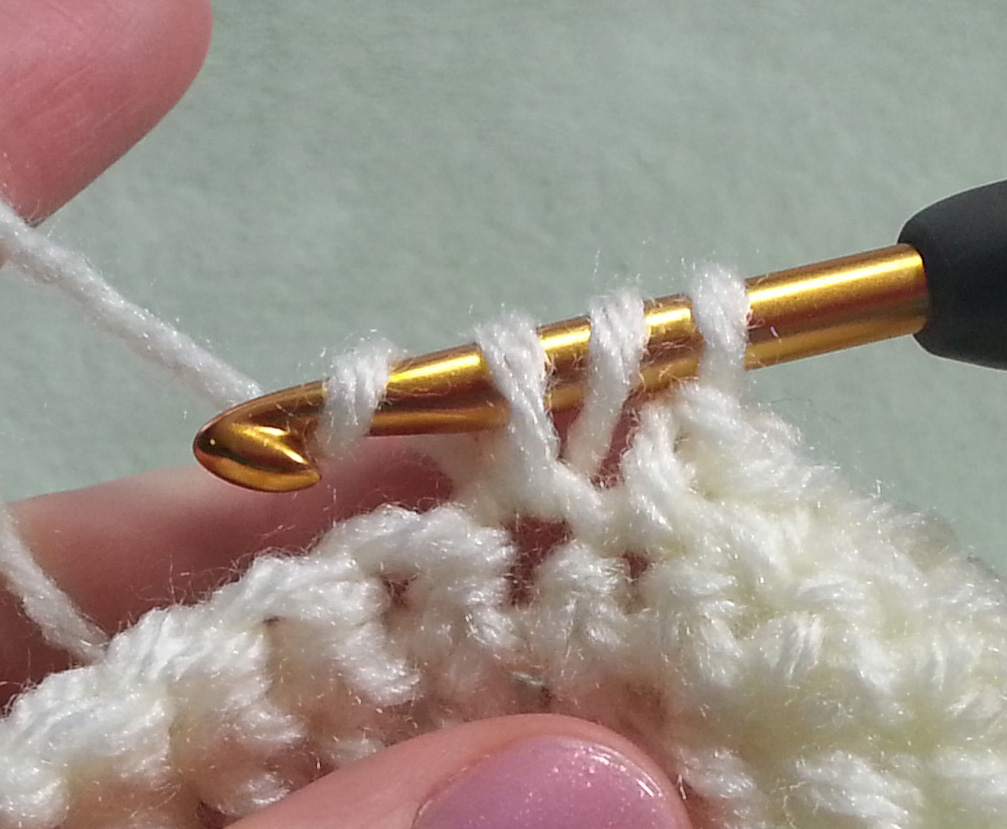
3 DC Cluster (Cl):

Photo A

To make a 3 dc cluster st, yarn over (yo) like making a dc and insert in st or sp, yo, pull up a loop (3 loops on hook), yo {Photo A},

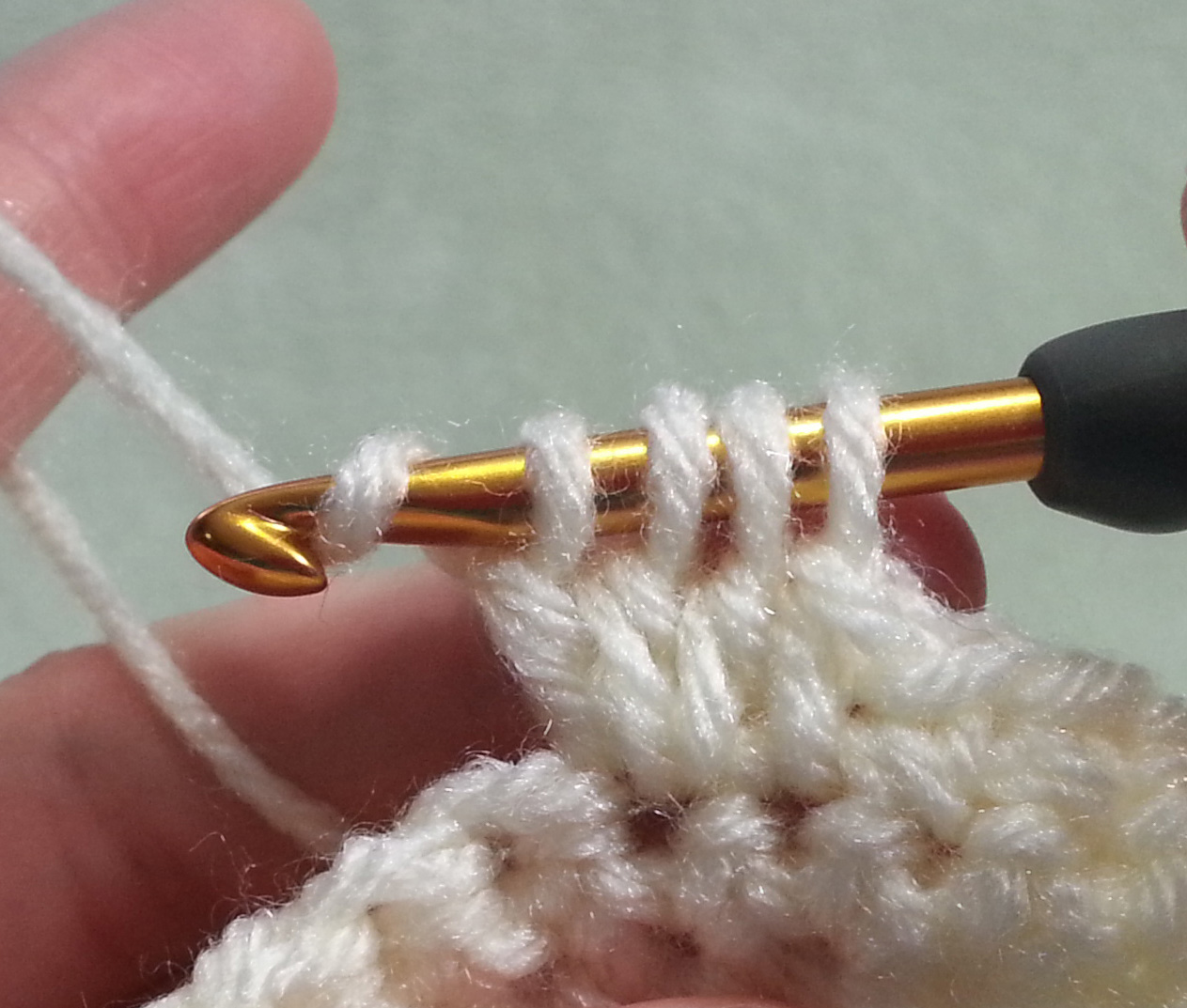
Photo B

pull thru 2 loops on hook (2 loops remaining on hook, 1st base made), yo, insert in same st or sp, yo, pull up a loop (4 loops on hook), yo {Photo B},

Photo C

pull thru 2 loops (3 loops remaining on hook, 2nd base made), yo, insert in same st or sp, yo, pull up a loop (5 loops on hook), yo, pull thru 2 loops (4 loops remaining on hook, 3rd base made), yo {Photo C}, pull thru all 4 loops on hook.

Instructions:

Round 1: Start with an Adjustable slip knot, ch 3, 7 hdc in 3 ch from hook, gently pull beginning tail to close center,

slip st under 2 loops (the “V” front of the ch st) at top of beginning ch-3 to join the round.

Round 2: {Thanks to Edith for the correction.}  Ch 3, *(Cl, ch 3 and slip st) in next st,** (slip st, ch 3) in next st*;

Repeat from * to * 2 times, Repeat from * to ** once,

Stem: Ch 6, working in back bumps, sc in 2nd ch from hook and in next 3 ch sts, slip st in last ch, cut yarn with 4-5 inches of tail. Stem will curl, it is supposed to.

Weave ending tail toward center, use tails to sew on a pin backing.

I hope you have a very lucky Saint Patrick’s Day, and some fun wearing a 4 Leaf Clover.

Shells on the Aegean Neck Cozy

shells-on-the-aegean-neck-cozy-andee-graves-m2h-designs

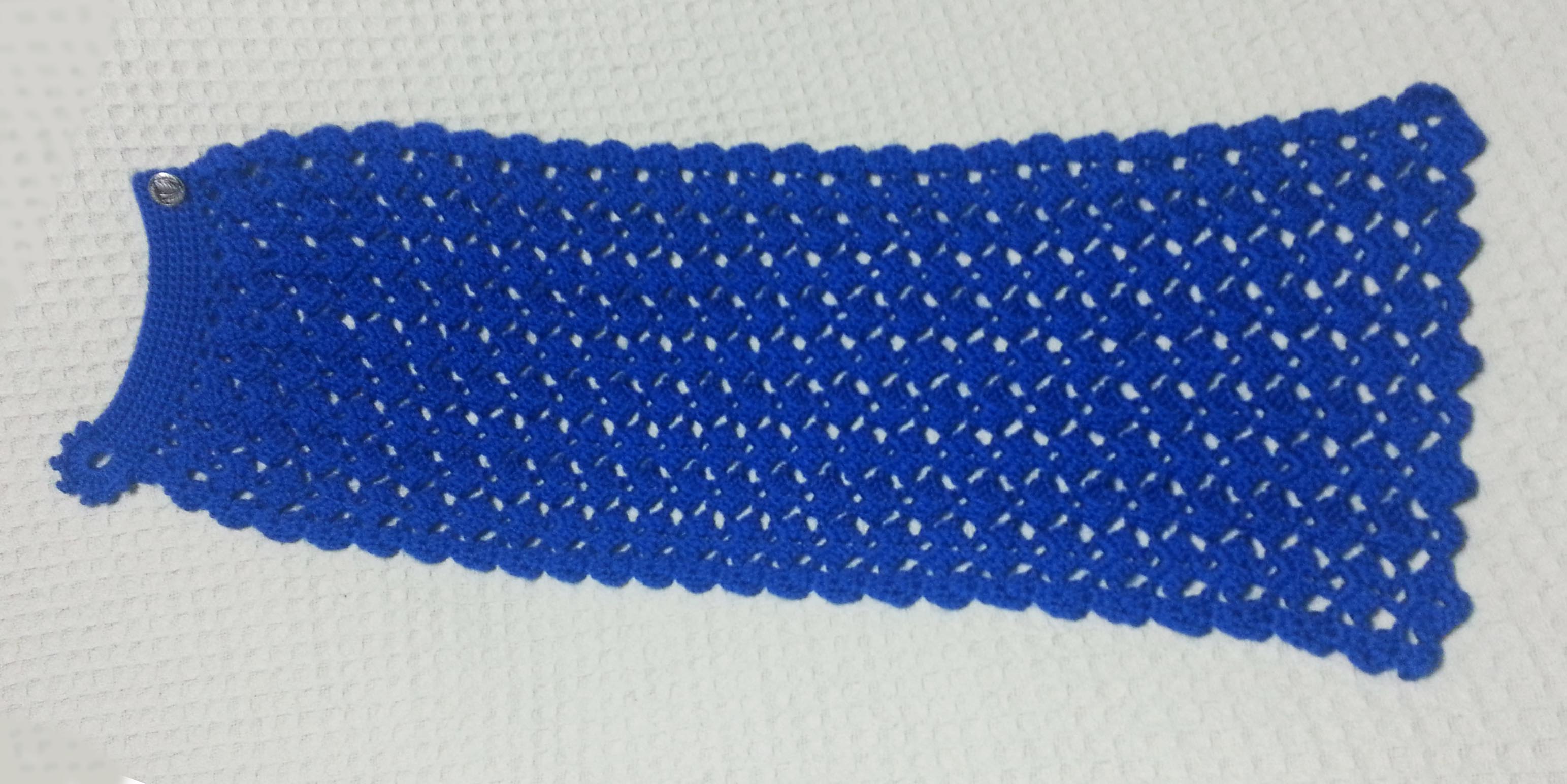
It has been so cold the last couple of weeks that I thought it was time for a warm neck cozy pattern. Because it buttons to fasten around your neck, this snuggly short scarf takes less yarn than a full size scarf.  Just a little under 315 yards of worsted weight yarn. I used Caron Yarns “Simply Soft” for the sample you see.

remaining-yarn

This is all I had left of the 1 skein I used. That is a U.S. Quarter next to it to give you a frame of reference.

Here is the Pattern:

Shells on the Aegean Neck Cozy

Designed by Andee Graves

SKILL LEVEL: Intermediate

FINISHED MEASUREMENTS

Neck Cozy is 13.25”/ 33.125cm wide (lace scarf section) x 30”/ 75cm long.

YARN

Caron Simply Soft (100% Acrylic; 315 yds/288m = 6 ounces/170.1g)

#9767 Royal Blue: 1 skein sample used nearly all of skein

CROCHET HOOKS

Size US I-9 / 5.5mm

ADDITIONAL MATERIALS

Yarn needle

1 – 1” button (shank style works best)

GAUGE

5 rows & 4 sts in single crochet = 1”

SPECIAL STITCHES

Shell Stitch (Shl): (3 dc, ch 2, 3 dc) in indicated st or sp.

V-stitch (V-st): (dc, ch 2, dc) in indicated st or sp. 

Picot stitch (picot): Ch 3, sl st in top of previous st. If you need help with the making the picot stitch I have a tutorial here on the blog.

flat-view-shells-on-the-aegean-andee-graves-m2h-designs 

Pattern Notes

This Neck Cozy is worked in 2 parts, the Button Band and the Lace Scarf.

Be sure to work the base chain loosely for ease of working into the bottom of the foundation row when crocheting the lace scarf part of project. If having problems keeping the chain loose enough, use a hook one size larger to make the chain then switch to the smaller hook for the rest of the project.

When counting stitches for skipping, chain stitches count as one stitch each.

INSTRUCTIONS 

Button Band

Row 1 (RS): Ch 32, working in back bumps sc in 2nd ch from hook and each ch back to beginning. [31 sc]

Row 2: Ch 1, turn, sc in each st to end of row. [31 sc]

Row 3: Repeat Row 2.

Row 4: Ch 7 (creates button loop), turn, sc in each st to end of row. [31 sc, 1 ch-7 loop]

Rows 5 & 6: Repeat Row 2 twice.

Row 7: Ch 1, turn, sc in next 31 sts, (button loop finishing) picot, [(2 dc, picot) 6 times, 2 dc] into ch-7 loop, sl st to end of Row 1. DO NOT Fasten off.

Lace scarf

Row 1: (Working along bottom of foundation of button band Row 1) Ch 3, 3 dc in first st, ch 1 (sk 2 sts, V-st in next st) 9 times, ch 1, sk 2 sts, 3 dc in last st. [9 V-sts, 2 ch-1 sps, 6 dc]

Row 2 (RS) : Ch 3, turn, sk 1 st, 3 dc in next st, ch 1, (Shl in next ch-2 sp, V-st in next ch-2 sp) 4 times, Shl in next ch-2 sp, ch 1, sk 3 sts, 3 dc in next st. [5 Shls, 4 V-sts, 2 ch-1 sps, 6 dc]

Row 3: Ch 3, turn, sk 1 st, 3 dc in next st, (ch 1, V-st in next ch-2 sp, ch 1, Shl in next ch-2 sp) 4 times, ch 1, V-st in next ch-2 sp, ch 1, sk 5 sts, 3 dc in next st. [5 V-sts, 4 Shls, 10 ch-1 spcs, 6 dc]

Rows 4: Ch 3, turn, sk 1 st, 3 dc in next st, (ch 1, Shl in next ch-2 sp, ch 1, V-st in next ch-2 sp) 4 times, ch 1, Shl in next ch-2 sp, ch 1, sk 3 sts, 3 dc in next st. [5 Shls, 4 V-sts, 10 ch-1 sps, 6 dc]

Rows 5 – 50: Alternate repeating Rows 3 & 4, 22 times.

Row 51: Ch 1, turn, sc in each of next 3 sts, (*sl st in ch-1 sp, sc next 2 sts, sk next st, 5 sc in next ch-2 sp, sk 1 st, sc in next 2 sts, sl st in ch-1 sp,* sk next st, 5 sc next ch-2 sp, sk 1 st) 4 times, repeat from * to * once, sc in each of last 3 sts. Fasten off. [71 sc, 10 sl sts]

FINISHING

Weave in ends. Block lightly, if desired.

Sew button to RS of button band on Row 4 at opposite end from button loop.

A Winter Wonderland

Oh yes indeed, it really is Winter now, and we have the snow to prove it. The past couple of weeks have been cold and snowy up here on the mountain. Though we have had a few odd days where it was actually warmer at my home, at 8500 feet above sea-level, then it was in the lower elevations.

frozen-star-ag-m2h-designs

In appreciation of the snow and to celebrate the holidays, I have a quick little snowflake pattern for you. With only 3 rounds to crochet you can make a whole drift worth of them in just a day.

I have always loved the beauty of snow, which is probably a good thing since I live on a mountain. My favorite snowflakes are the ones I can crochet. They last longer, they are a lot warmer, and best of all crocheted  snowflakes won’t leave a puddle of water on your floors.

I hope you have a fun time with my newest snowflake.

frozen-star-d-ag-m2h-designs

Frozen Star Snowflake

Designed by Andee Graves

Skill level: Easy Intermediate

Finished Size:

2 3/4 inches from point to point across center

Materials:

Yarn

Size #10 Crochet Cotton Thread

Hook

1.75mm Steel Hook (or size needed for your thread or yarn)

Notions

Yarn/tapestry needle

One stitch marker

Gauge

Total snowflake (3 rounds) measured across from point to point = 2 ¾ inches

Pattern Notes:

All rounds are worked without turning, RS of fabric is always facing out.

Instructions

Rnd 1: Starting with an adjustable slip knot, ch 2, 6 sc in second ch from hook, sl st to first sc of Rnd. [6 sc]

Rnd 2: Ch 4, Tr in same st as join (counts as first Cl), (ch 5, Cl in next st). 5 times, ch 2, dc in first Tr of Rnd (counts as first ch-5 space). [6 Cl, 5 ch-5 sp, 1 ch-2, 1 dc]

Rnd 3: ch 1, sc in first ch-5 space, (*ch 1, {dc, ch 1, Tr, ch 4, slip st in top of previous Tr, Tr, ch 1, dc} in next Cl, ch 1,* sc in next ch-5 sp) 5 times; Repeat from * to * once, slip st to first sc of Rnd. Fasten off [12 sc, 12 dc, 12 Tr, 24 ch-1 sps, 6 ch-4 sps]

Finishing

Weave in all tails.

andee-photo-aug-2016

Happy Holidays to all my dear readers.  Stay warm and enjoy some peaceful and joyful days no matter how you celebrate.

This post contains affiliate links. I may receive compensation (at no additional cost to you) if you make a purchase using these links.


The Stiffy Mod Podge is what I like to use to stiffen my snowflakes for hanging ornaments. If you can’t find it locally you can order it on Amazon. Just click on the photo above.

This post contains affiliate links. I may receive compensation (at no additional cost to you) if you make a purchase using these links.

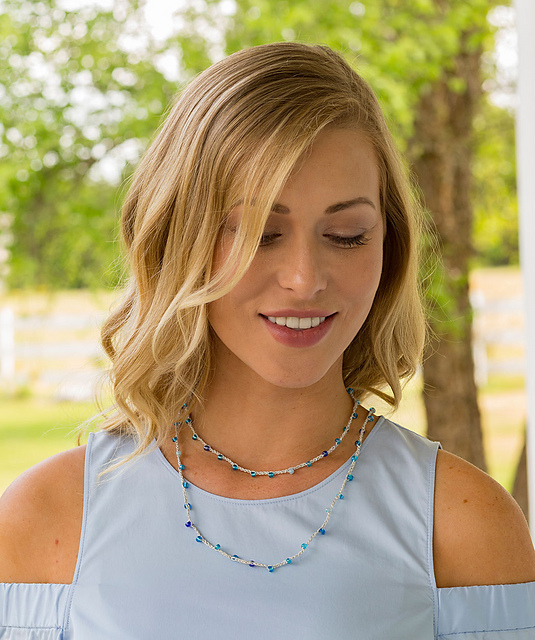
My newest pattern at Red Heart.com

Photo courtesy of Red Heart

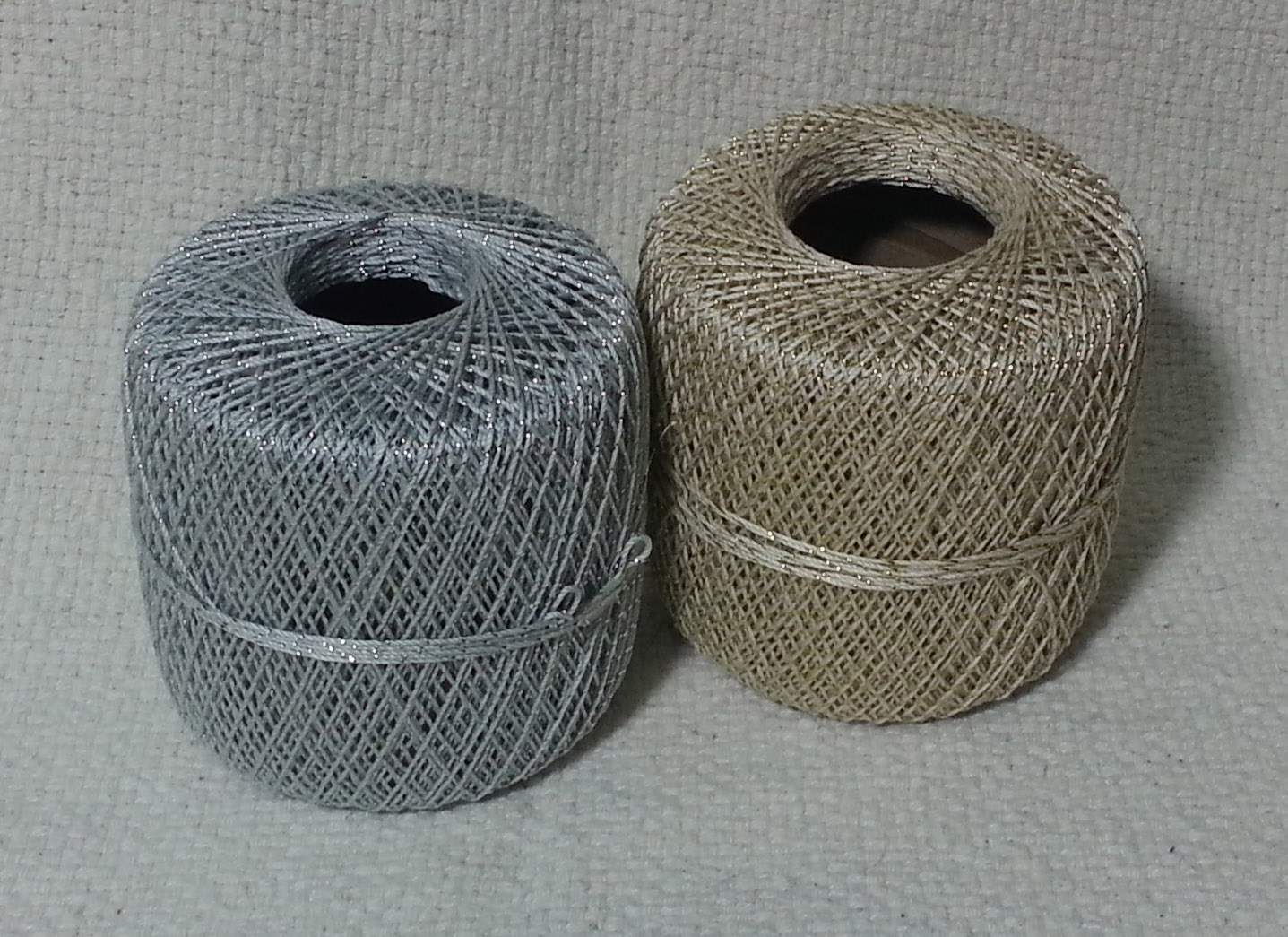
A while back the folks at Red Heart asked me to design a simple beaded necklace that beginning crocheters could manage. They asked me to crochet it in their Red Heart Metallic Crochet Thread in Size #10.

crochet-thread

I’ve always loved this metallic crochet thread, mainly because I’m part magpie. If it has sparkle I will find it. So beads and sparkly crochet thread. I’m there!

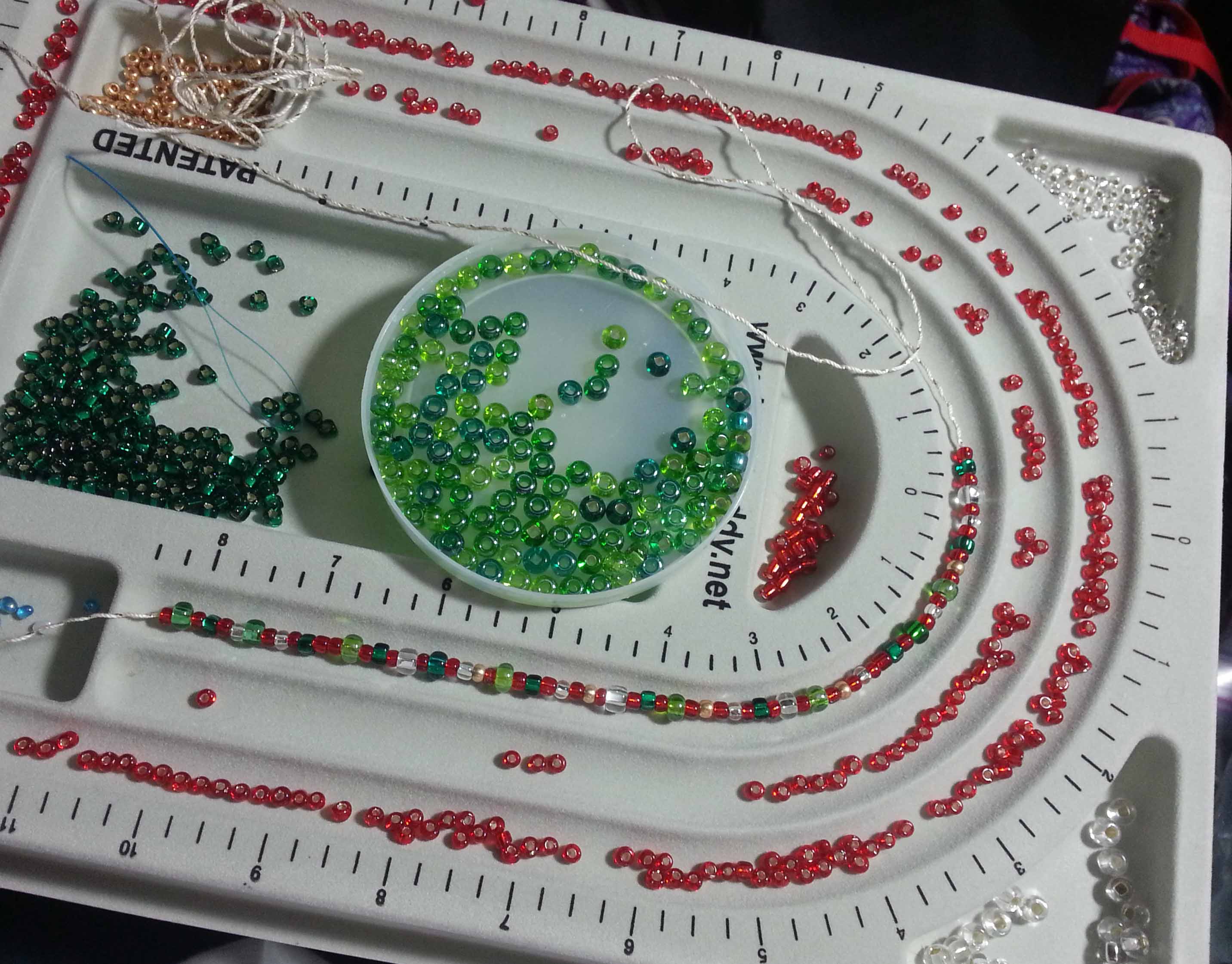
beads

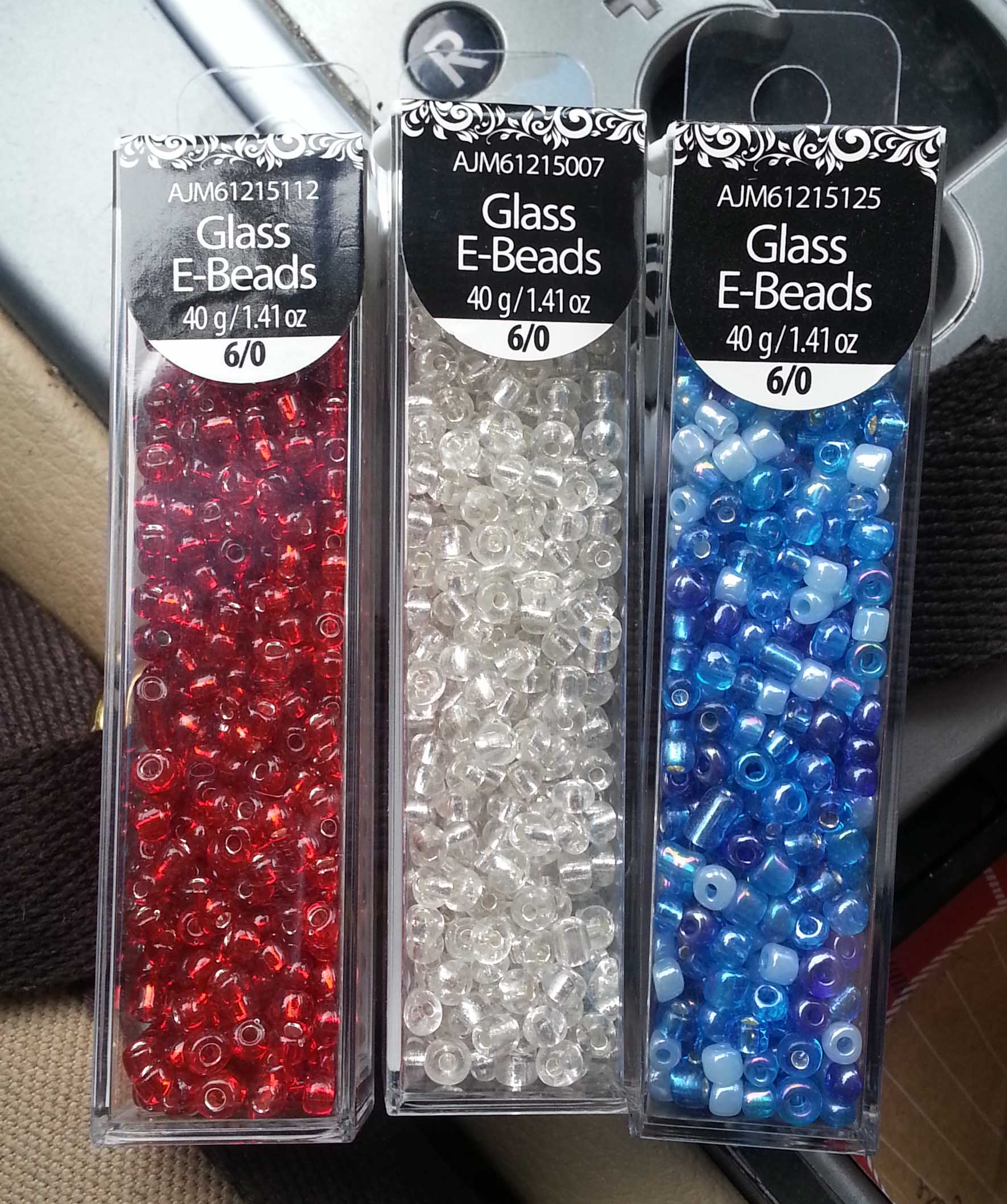
Remember these beads? They were for working out this design.

We are coming up on the holiday season. Lots of parties and packages and New Year’s Eve where sparkle is the Thing! This is a great quick crochet project to add some sparkle to your wardrobe or packages. It is even a terrific quick gift project.

lc5292inset2_medium2

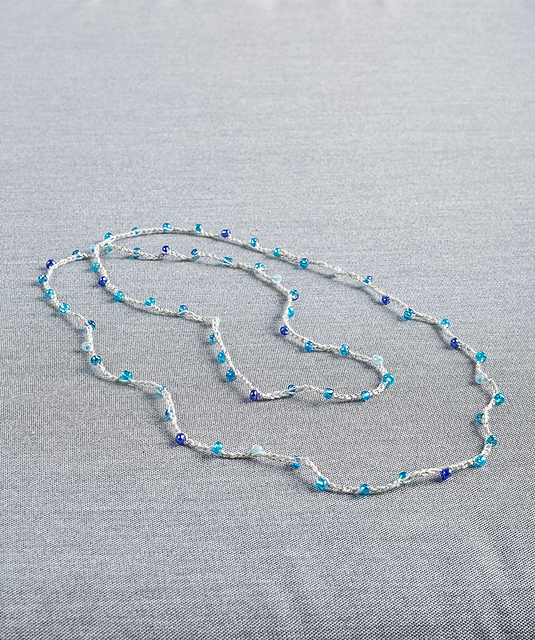
The folks at Red Heart did a lovely job photographing the sample I made for them. You can find the free pattern on the Red Heart website here.  The pattern even includes a photo tutorial on making the beaded chain stitch.

multiple-strands

Of course for the holiday season I like my sparkle to really be kicked up a notch. That means I need lots of strands to my necklace.

Maybe sparkly thread isn’t really your thing? Take a look at all the other wonderful colors of Size #10 thread that Red Heart has available.

variety-of-beads-close

You can also have fun with mixing up the size and shape of beads you are using.

stringing-beads

I generally go with the size 6 E beads but in this strand I added size 2 and some triangle shaped beads. Look for beads with a smooth edge around the hole. Otherwise your beads will cut your thread or abrade the metallic tape.

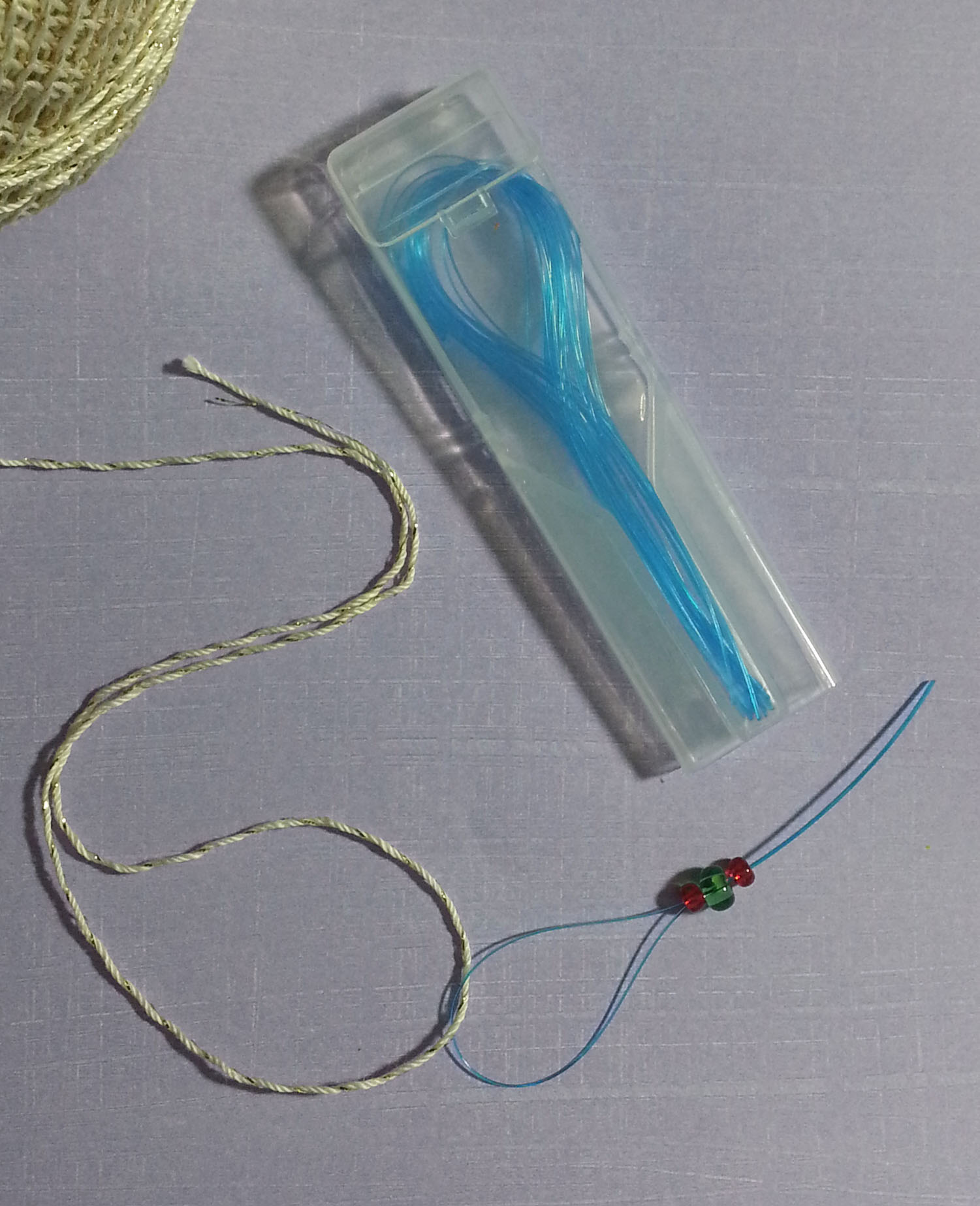
floss-threader

I prefer to use a dental floss threader to string my beads onto the crochet thread (or yarn). The flexibility of the “eye” of the floss threader compresses easily to pull thru the hole in your beads and the sturdiness of the “point” end works well for scooping up beads. You can find these in most drug stores in the dental floss area.

Now it’s your turn. Time to get out the beads and thread and make some sparkle you can wear all year long.

Simple Double Crochet Hat

2016-tree-close-up

I hope everyone here in the USA had a great Thanksgiving Day with their friends and families. Last weekend my family and I put up our tree and decorated the house. Which means I’m now focused on what gifts I’ll be giving this year. Especially what gifts I’ll be crocheting.

My go-to projects for gift-giving are hats, they are quick and a great canvas for creating something special for my crochet-worthy family and friends. My favorite stitch for making a basic simple hat is the half double crochet. But that stitch can be a bit finicky for beginning crocheters.

simple-dc-hat-andeegraves-m2h-designs

So today I am posting an easy pattern for a basic hat worked in continuous rounds of double crochet stitch with 2 rounds of single crochet for the brim. You will only have to make 2 half double crochet stitches in the entire project.

This hat is slightly more “meshy” than the half double crochet because double crochet stitches have a longer “post”. The mesh like fabric lets the scalp breathe a bit more, nice for those that find some crochet hats to be too warm. This is an especially good pattern for alpaca blend yarns as they tend to make extremely warm fabric.

I chose not to use the single crochet stitch for the body of this hat because it is a tighter stitch and doesn’t have enough give or stretch for a comfortable hat fabric.  The only single crochets are for the “step-up”, “step-down” and the brim finish.

For all my hats I like to start at the center of the crown, so the beginning of the pattern is like working a motif. I like my adjustable slip knot start for that (video on my YouTube channel if you need help) as it allows enough room for the first round’s stitches without leaving a gaping hole in the top of your hat.

stitch-markers

Continuous rounds are basically a spiral. This spiral is less complex than the 4 armed spiral I used in my “Whirlwind Afghan Square” and my “Whirlwind Hat”. Just like in those patterns though, I use stitch markers to help me keep track of where the increases for my rounds are happening and the end of my round.

Simple Double Crochet Hat

Designed by Andee Graves

Skill level: Easy

Finished Size:

Head Circumference: Apprx 22”

Materials:

Yarn

Ella Rae “Cozy Soft Chunky” (25% Wool, 75% Acrylic) 3.52 oz/100g, 131 yds/120m: 1 ball

Hook

I-9 / 5.5mm or size needed to obtain gauge.

Notions

Yarn/tapestry needle

Stitch markers in 2 colors: at least 11 in one color and 1 in a different color

Gauge

3 rounds in flat circle = 3.5” diameter

Special Stitches/Abbreviations

Place Marker (PM)

Single Crochet Stitch (sc): insert hook in stitch, yarn-over, pull up a loop (2 loops on hook shaft), yarn over pull thru both loops on hook.

Half Double Crochet Stitch (hdc): yarn-over, insert hook in stitch, yarn-over, pull up a loop (3 loops on hook shaft), yarn over pull thru all 3 loops on hook.

Double Crochet Stitch (dc): yarn-over, insert hook in stitch, yarn-over, pull up a loop (3 loops on hook shaft), yarn over pull thru 2 loops on hook (2 loops remain on hook shaft), yarn over pull thru last 2 loops on hook.

Pattern Notes:

All rounds are worked without turning, RS of fabric is always facing out.

Instructions

Crown

Rnd 1: Starting with an adjustable slip knot, ch 2, (sc, hdc, 10 dc) in 2nd ch from hook,

PM in each st using different color in last dc.  [1 sc, 1 hdc, 10 dc]

End of Round 2 with St Markers in place.

Rnd 2: (2 dc next st, move st marker to 2nd st made)12 times.[24 dc]

Rnd 3: (Dc next st, 2 dc in marked st, move st marker to 2nd st made)12 times. [36 dc]

Rnd 4: (Dc each un-marked st, 2 dc in marked st, move st marker to 2nd st made) 12 times. [48 dc]

Rnds 5 – 6: Repeat Round 4. Stitch count end of Round 6 [72 dc]

Starting with first st marker remove every other marker (1, 3, 5, 7, 9, 11).

Rnd 7: (1 dc in each un-marked st, 2 dc in marked st, move st marker to 2nd st made) 6 times. [78 dc]

Remove all but the last st marker.

Sides

Rnd 8: Dc in each st around, PM in last st of Rnd.

Rnds 9 – 16: Repeat Rnd 8.

Brim

Rnd 17: Hdc next st, sc next 77 sts.

Rnd 18: Sc next 77 sts, sl st next st, sl st back loop next st. Fasten off.

Finishing

Weave in all tails.


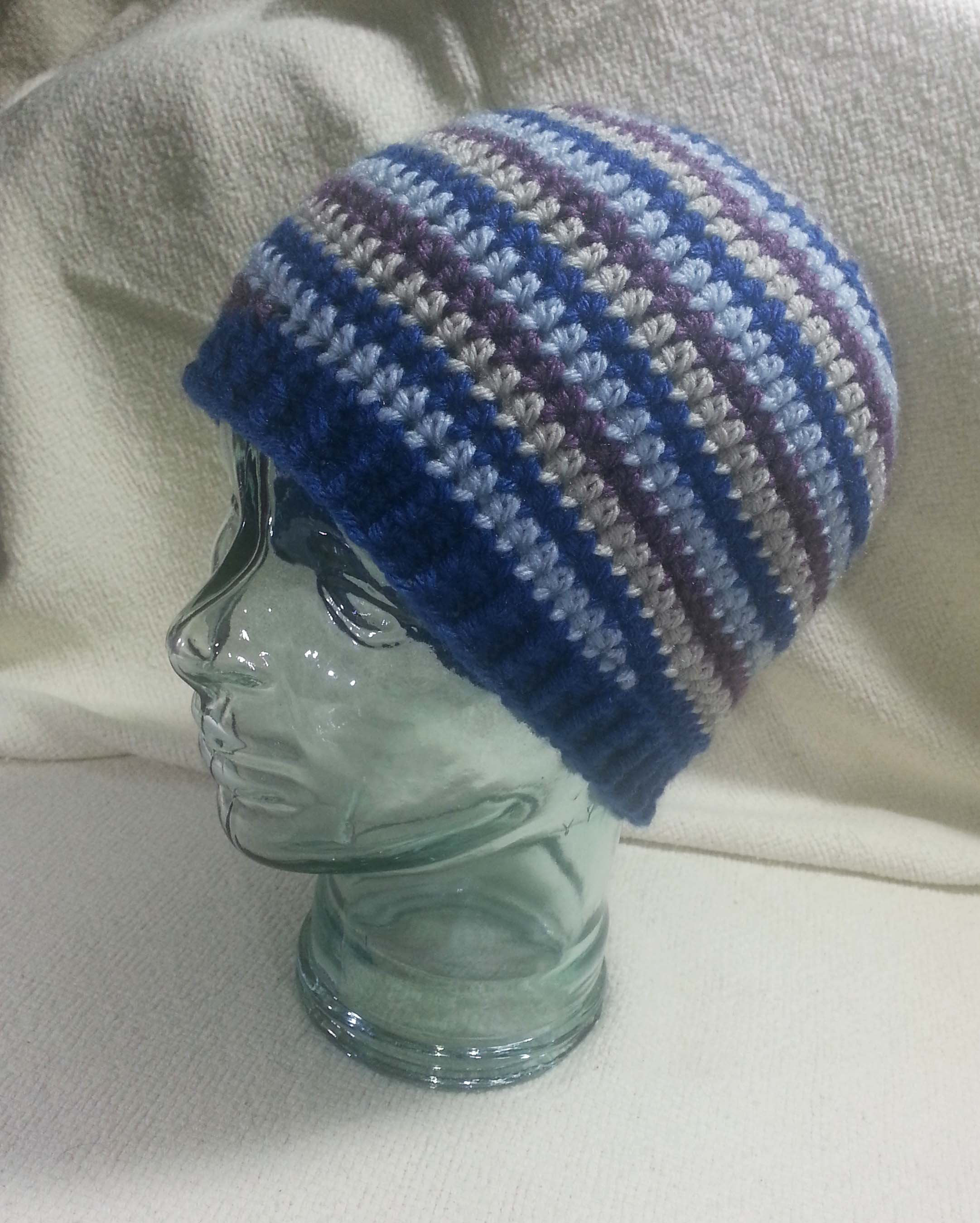
Whirlwind Hat

As many of my readers already know, I love to crochet hats. They are a fun quick project and a great canvas for experimenting with stitch patterns and new yarns. I seem to also make them frequently for gifts to family and friends.

My favorite construction method is working crown down in continuous rounds. Because there isn’t a join for each round the hat will come out seamless in appearance. This also creates a nice elastic fabric, a handy attribute for a project that will need to fit comfortably on your head.

But what if you want a hat with color stripes and you aren’t using one of the handy yarns with gradual color changes?

You can create stripes of color in your hats by changing the color of yarn as you work, but that can leave you with a “jog” in the fabric when you change colors.  Another option in this style of color change is to “step down” your stitches in the first color, then “step up” with the new color. It will look less disruptive to the fabric colors, but it is a bit fiddly and not always ideal for the elasticity of your hat fabric.

What is a crocheter to do?

whirlwind-hat-andee-graves-m2h-designs

Fortunately the solution is actually quite simple. Spirals.

crown-of-hat

This method gives you not only a lovely smooth striped fabric, it also creates a visually interesting crown for your hat. You can work with anywhere from 2 to 8 “arms” in your spiral and use a different color for each arm to get the different color of stripes. Using stitch markers will make this method almost mindless as you work the hat.

yarn-management-solution

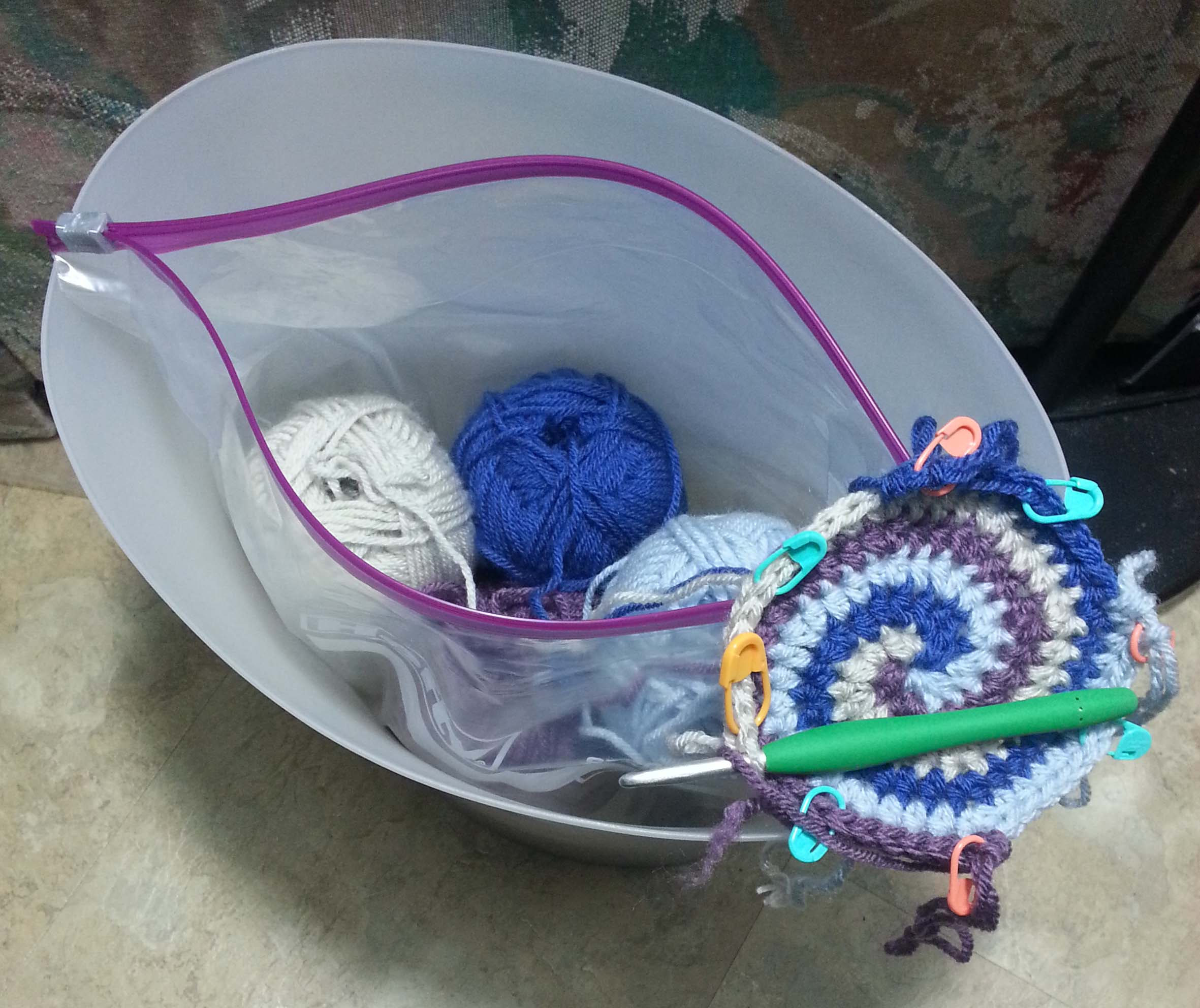
The only thing you have to contend with is how many balls of yarn you are juggling. My favorite way to keep the yarn from tangling is to have the balls snuggly secured in a container. Then I turn the container as I work each color. In the photo above I used a small clean waste bin to hold the yarn.

As you see in the photo I also have my yarn inside a large clear plastic storage bag. If needed I can toss the hat, hook and pattern into this bag and grab the whole thing to take with me to work on while I’m on the go.

Today I have a hat pattern for you that some may find a bit challenging. Fortunately my video tutorial for my Whirlwind Afghan Square: “Whirlwind How-To Part 1” uses the same technique as the first 8 rounds of the hat, and should help you understand the construction of the spiral.

Whirlwind Hat

Designed by Andee Graves

Skill level:       Intermediate

Finished Size:

21” circumference

Materials:

Yarn

Worsted wt (Sample uses Lion Brand Yarns “Vanna’s Choice” 100% Acrylic (3.5 oz/100g, 170 yd/156 m)

Color A: #105 Silver Blue (used approximately 28 yds)

Color B: #109 Colonial Blue (used approximately 46 yds – this was my Brim color)

Color C: #099 Linen (used approximately 28 yds)

Color D: #146 Dusty Purple (used approximately 28 yds)

Hook

I / 5.5mm

Notions

Yarn/tapestry needle

8 Stitch markers

8 Stitch markers in 3 colors (1 in first color, 3 in next color, 4 in last color)

Gauge

First 5 rounds of pattern = 4” in diameter

Abbreviations/Special Stitches

Adjustable Slip Knot – Beginning tail tightens the loop on the hook shaft. Video on my YouTube Channel if you need help.

Hdc – Half double Crochet stitch

PM – Place stitch marker

FPhdc – Front Post half double crochet stitch

BPhdc – Back Post half double crochet stitch

BPsc – Back Post single crochet stitch

Pattern Notes:

Hat uses 4 colors, follow instructions for using stitch markers so you don’t lose your place.

Color 1 of stitch markers is used to mark last stitch of entire round as well as last stitch/increase point of that color section.

Color 2 of stitch markers is used to mark the other 3 last stitch/increase point of color sections.

Color 3 of stitch markers is used to mark the first increase point in each color section.

When working the first 9 rounds move stitch markers up to 2nd stitch worked in each increase point, For Rounds 10 – 18 you will only be using the markers for the last stitch of each color section.

Instructions

CROWN

Crown at End of Round 9

Rnd 1: Starting with color A make an adjustable slip knot, ch 2, (sc, hdc) in 2nd ch from hook, pull up a long loop and remove hook, with color B *insert hook in center/first ch of round, pull up a loop on hook, ch 1, (sc, hdc) in same center/ch, pull up a long loop and remove hook,* ; Repeat from * to * with Color C and D. PM in each hdc w/end of color/round markers (placing single color marker in hdc of Color D), PM in each sc with first increase markers. [4 sc, 4 hdc]

Rnd 2: *2 hdc in next 2 sts, move st marker to 2nd st worked in each st, pull up long loop and remove hook**, insert hook in next color*; Repeat from * to * 2 times; Repeat from * to ** once. [16 hdc]

Rnd 3: *(Hdc in next st, 2 hdc in marked st, move st marker to 2nd st worked) 2 times, pull up long loop and remove hook, insert hook in next color*; Repeat from * to * 2 times; Repeat from * to ** once. [24 hdc]

Note: Measure gauge after finishing Round 5, if your gauge is small and you don’t want to start over work 10 rounds following the increase pattern, if your gauge is large only work 8 rounds following the increase pattern.

Rnds 4 – 9: *(1 hdc in each unmarked st, 2 hdc in marked st, move st marker to 2nd st worked in marked st) 2 times, pull up long loop and remove hook,** insert hook in next color*; Repeat from * to * 2 times; Repeat from * to ** once. Stitch count for end of Rnd 9 [72 hdc]

SIDES9th-rnd-inc-markers-removed

Remove the Color 3 stitch markers – you will not be increasing any further.

st-marker-side-of-round-9-last-st

I put one of these stitch markers in the side of the last stitch in Round 9, this makes it easier to keep track of the number of side rounds worked.

working-sides-with-color-sections

Rnd 10: * hdc in each st until work in marked st, move marker up to st worked in marked st,** insert hook in next color*; Repeat from * to * 2 times; Repeat from * to ** once. [72 hdc]

Rnds 11 – 20: Repeat Rnd 10.

Rnd 21: Step down to one color: Decide which of your 4 colors you want to be your brim color,

stepping-down-colors

then with each of the other 3 color segments: Hdc in each st until one st remains un-worked before the marked st, sc next st, slip st loosely in next st, pull up a long loop, remove st marker.

With brim color: Hdc in each st ending in the marked st, place stitch marker in last st;

Go back to other 3 colors: slip st snugly in next st, fasten off and pull end thru last slip st.

Stitch counts at end of Round 21 [66 hdc, 3 sc, 3 loose slip st]

BRIM

Rnd 1: Hdc in each st around, move st marker up to st worked in marked st. [72 hdc]

Rnd 2: (FPhdc next st, BPhdc next st) 36 times. [36 FPhdc, 36 BPhdc]

Rnd 3 (FPhdc next st, BPhdc next st) 35 times, FPhdc next st, BPsc next st, loose slip st next 2 sts, slip st snugly next st, fasten off and pull end thru last slip st. [35 BPhdc, 36 FPhdc, 1 BPsc, 2 loose slip st]

Finishing

Weave in tails.

Now have some fun making hats. Play around with the colors you use, make 2 arms of the spiral in 1 color and the other 2 arms in a contrasting color for a 2 color version. Mix it up with using a variegated yarn for one of the arms and pulling solid colors for the yarns you make the other 3 arms with.

Fans & Lace Afghan Square

************

October 13, 2016: Hello dear readers and new visitors just a little update to this post.

Happy Birthday to Me! I’m 21 today! No, not 21 years old, my Fans & Lace Afghan Square is block #21 in the 2016 Moogly Afghan CAL.

If you hadn’t heard about the Moogly Afghan CAL it’s not too late to join the fun. You can hop on over to Mooglyblog.com to get all the details and see Tamara’s interpretation of my square.

My video tutorial “Fans & Lace Square – Part 1” for this pattern will be is up on my YouTube Channel this Saturday.

Thank you so much to Veronique HoRaive for providing a French Translation of this pattern, you can find the PDF of the pattern here. fans-and-lace-afghan-square-french-1

Check out today’s blog post to find for some fun ideas on playing with color choices and the number of colors used in the square. “Changing Color, Changing the Look”.

************

It’s October again and the first week has gone flying by! I’ve less than a week before I celebrate my birthday, but I thought I would get an early start with my present to all my lovely readers.
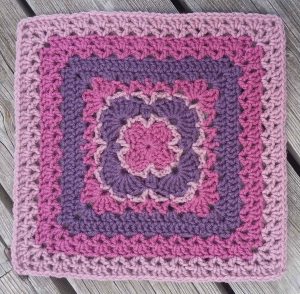
fans-n-lace-square-3-andee-graves-m2h-designs

This is my newest afghan square. I was playing with changing the height of stitches within the rounds. This is a skill building pattern with techniques that some may find challenging. Next week I’ll have a video on my YouTube channel that will walk you thru the pattern and the tricky bits.

I worked my sample square with just 3 colors, but you can use fewer or more than that. Next week I will also have a post showing you how changing the number of colors and when you change colors can dramatically change the appearance of your square.

FANS & LACE AFGHAN SQUARE

Designed by Andee Graves

Skill level:       Intermediate

Finished Size:

12” square

Materials:

Yarn

Worsted wt (Sample uses Lion Brand Yarns “Vanna’s Choice” 100% Acrylic (5 oz/142g, 251 yd/230 m)

Color A: #142 Rose (sample used approximately 52 yards)

Color B: #101 Pink (sample used approximately 48 yards)

Color C: #146 Dusty Purple (sample used approximately 38 yards)

Hook

I / 5.5mm

Notions

Yarn/tapestry needle for weaving in ends

Gauge

First 2 rounds of pattern = 2” across square

Pattern Notes

Start square with an adjustable slip knot. Beginning tail tightens the loop on the hook. *If you haven’t ever used an Adjustable Slip Knot this video shows you how.

Round 2 specifies “sl st loosely”, this means work the indicated slip stitches similar to a chain stitch and do not pull the working loop to tighten them as in a joining slip stitch. You will be working into those loose slip stitches in Round 3.

Special Stitches and Abbreviations

(Standing dc) Standing Double Crochet: make slip knot in yarn and place loop snugly on shaft of hook, yo, insert hook into indicated st, yo, pull up a loop, [yo, pull thru 2 loops on hook] 2 times. If substituting for a chain start of a round, do not work the first 3 chains of the round instructions.

(3dc Dec) 3 double crochet decrease: YO, insert hook in first st, YO pull up a loop, YO pull thru 2 loops, [YO insert hook in next st, YO pull up a loop, YO pull thru 2 loops] 2 times, YO pull thru all remaining loops on hook.

(V-st) V-stitch: (dc, ch 1, dc) in indicated st or sp.

(Fan) 10 Treble Fan: (5 Tr, ch 1, 5 Tr) in indicated st or sp.

(CL) 3 double crochet Cluster: [YO, insert hook in indicated st or sp, YO pull up a loop, YO pull thru 2 loops] 3 times, YO pull thru remaining loops on hook.

(8TrShl) 8 Treble Shell: (4 Tr, ch 1, 4 Tr) in indicated st or sp.

(GrnShl) Granny Shell: 3 dc worked in indicated st or sp.

Instructions

Rnd 1: Starting with Color A, ch 4 {counts as center and first dc}, 11 dc in 4th ch from hook, sl st to top of beginning ch-4. Gently pull beginning tail to tighten center. [12 dc]

Rnd 2:  [Sl st loosely before next dc in space between stitches, ch 3, 3dcDec worked across next 3 sts, ch 3] 4 times, sl st tightly into first loose sl st. Fasten off. [4 3dc dec, 8 ch-3 sps]

Rnd 3:  Change to Color B. (Standing dc, ch 1, dc) in any loose sl st, {counts as first V-st}, [*ch 2, skip ch-3 sp, (sc, ch 3 sc) in top of Dec, ch 2, skip ch-3 sp,* V-st next sl st] 3 times, Rep from * to * once, sl st to first V-st. Fasten off. [8 sc, 8 ch-2 sps, 4 ch-3 sps, 4 V-sts]

Rnd 4:  Change to Color C. Begin as with Standing dc, YO, insert hook into ch-1 sp of any V-st in Rnd 3, YO, pull up a loop, YO, pull thru 2 loops on hook, [YO, insert hook in same ch-1 sp, YO pull up a loop, YO pull thru 2 loops] 2 times, YO pull thru remaining 4 loops on hook {counts as first CL}, [*skip 4 sts, Fan in next ch-3 sp, skip 4 sts,* CL in next ch-1 sp] 3 times, Rep from * to * once, sl st to beginning CL. Fasten off. [4 CL, 4 Fans]

Rnd 5:  Change to Color B. Standing dc in any CL from Rnd 4, ch 1, dc in same st {counts as first V-st},[*ch 2, skip 2 sts, sc next st, ch 3, skip 2 sts, (sc, ch 3, sc) in next ch-1 sp, ch 3, skip 2 sts, sc next st, ch 2, skip 2 sts,* V-st next st] 3 times, Rep from * to * once, sl st to first V-st of round. Fasten off. [16 sc, 4 V-sts, 12 ch-3 sps, 8 ch-2 sps]

Rnd 6:  Change to Color A. Standing dc in ch-1 sp of any V-st in Rnd 5, [ch 1, dc] 2 times in same ch-1 sp, [*skip ch 2 sp, (dc, ch 2, dc) in next sc, skip 1 ch-3 sp, 8Tr Shl in next ch-3 sp, skip next ch-3 sp, (dc, ch 2, dc) in next sc, skip next ch-2 sp,* ({dc, ch 1} 2 times, dc) in next ch-1 sp] 3 times, Rep from * to * once, sl st to first dc of Rnd. Fasten off. [28 dc, 32 Tr, 12 ch-1 sp, 8 ch-2 sp]

Rnd 7:  Change to Color C. Standing dc in first ch-1 sp in direction of work from corner ch-1 sp, dc in same ch-1 sp, skip one st, 2 dc next ch-1 sp, [*skip 2 sts, GrnShl in next ch-2 sp, skip 2 sts, GrnShl next st, skip 2 sts, (GrnShl, ch 2, GrnShl) in next ch-1 sp, skip 2 sts, GrnShl next st, skip 2 sts, GrnShl in next ch-2 sp, skip 2 sts,* {2 dc in next ch-1 sp} 2 times] 3 times, Rep from * to * once, sl st to first dc of Rnd. [24 GrnShl, 16 dc, 4 ch-2 sp]

Rnd 8:  Ch 3 {counts as dc}, *dc in each st along side until reach corner ch-2 sp, (2 dc, ch 2, 2 dc) in corner ch-2 sp,* Rep from * to * until work last corner of square, dc in each st until reach first dc of Rnd, sl st to first dc. Fasten off. [104 dc, 4 ch-2 sp {26 dc each side}]

Rnd 9:  Change to Color A. (Standing dc, ch 1, dc) in 12th dc in direction of work from ch-2 corner sp, {counts as first V-st}, [*skip 2 sts, V-st next st,* Rep from * to * until 2 dc remain before corner ch-2 sp, (V-st, ch 2, V-st) in corner ch-2 sp] 4 times, Rep from * to * until 2 sts are left before first V-st of Rnd, skip 2 sts, sl st to first st of V-st. [40 V-st, 4 ch-2 sp {10 V-st each side}]

Rnd 10: (Loosely sl st, ch 3, 2 dc) in first ch-1 sp {counts as first GrnShl}, [*GrnShl in ch-1 sp of each V-st* until reach ch-2 sp at corner, (dc, ch 2, dc) in corner ch-2 sp] 4 times, Rep from * to * until reach first GrnShl of Rnd, sl st to first st of GrnShl. Fasten off. [40 Gr Shl, 8 dc, 4 ch-2 sp {10 GrnShl each side}]

Rnd 11: Change to Color B. (Standing dc, ch 1, dc) in middle st of any GrnShl along a side {counts as first V-st}, [*V-st in middle st of each GrnShl *until work in last GrnShl before corner ch-2 sp, (V-st, ch 2, V-st) in corner ch-2 sp] 4 times, Rep from * to * until reach first V-st of Rnd, sl st to first st of V-st. [48 V-st, 4 ch-2 sp {12 V-st each side}]

Rnd 12: Repeat Rnd 10. [48 GrnShl, 8 dc, 4 ch-2 sp {12 GrnShl each side}]

Finishing

Weave in tails and block.

Modifying a Pattern

daisies-in-vals-garden
Daisies in Val’s Garden

My friend Val and I get together most Tuesday mornings to crochet and visit. This Tuesday she was determined to finish up some small projects that she had in her basket. One of those projects was a headband she was making from my “Springtime Headband” pattern.

headband-open

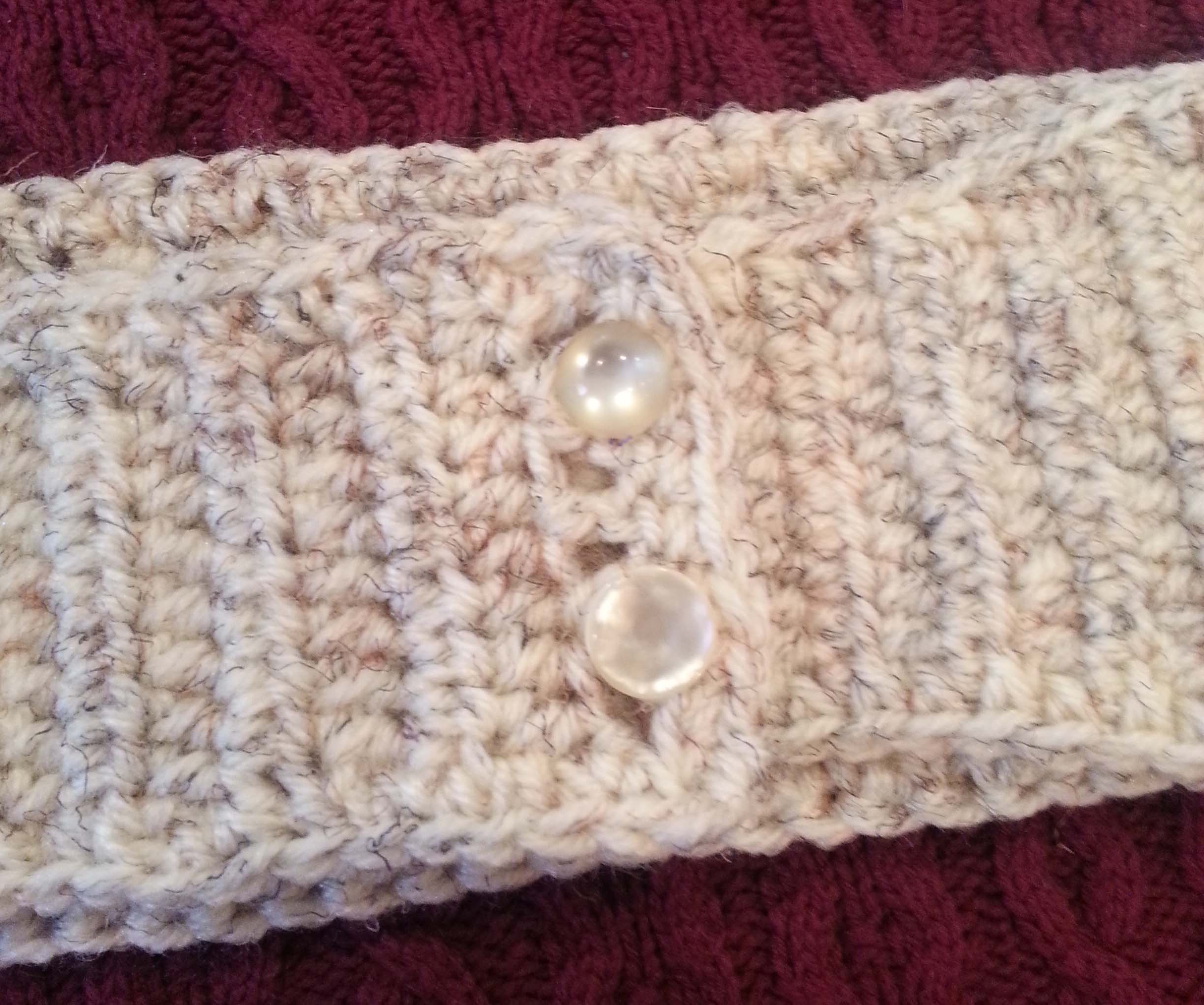
She wanted the headband to be adjustable, so I came up with a modification to add a button band and buttons to it. We were both pleased with how the finished headband looked and Val was really happy to have one of her projects completed.

Blog Headband alone


I thought some of my readers might enjoy using this modification as well. I’m posting the changes we made. The original pattern can be found on my “Crochet and Springtime” post from March 2015. The post also includes a photo tutorial on making cluster and puff stitches.

buttoned-up

SPRINGTIME HEADBAND w/BUTTONS

modifications and design by Andee Graves 

SKILL LEVEL: Intermediate

FINISHED MEASUREMENTS

Headband is approximately 3.25”/8.125cm wide x 23”/55cm long.

YARN

Worsted weight yarn – approximately 35g or 82 yards

Val was using Lion Brand Yarns, Vanna’s Choice, I used Lion Brand Yarns, Wool-ease for my original project.

CROCHET HOOKS

Size US 7 / (4.5mm)

ADDITIONAL MATERIALS

2 – buttons 3/4 inch diameter

Stitch markers

Yarn needle

GAUGE

6 rows & 9 sts in hdc = 2” 

SPECIAL STITCHES

3 DC Cluster Stitch (Cl): (Yo, insert hook into indicated st or sp, yo, pull up a loop, yo, pull thru 2 loops on hook) 3 times, yo, pull thru 4 loops remaining on hook.

Puff Stitch (Puff): (Yo, insert hook into indicated st or sp, yo, pull up a loop to desired height) 5 times, 11 loops on hook, yo, pull thru 10 loops on hook, 2 loops left on hook, yo, pull thru remaining 2 loops on hook.

Half Double Crochet 2 Together (hdc2tog): Yo, insert hook into indicated st or sp, yo pull up a loop, insert hook in next st, yo pull up a loop, yo pull thru all 4 loops on hook.

V-Stitch (V-st): (dc, ch 1, dc) in indicated st or sp.

NOTES

The Cluster stitches and Puff stitches in this project have more texture because they are “squished” between 2 shorter stitches. The texture is created on the back of the rows. The finished project will have the textured side as the right side of the fabric.

Once the first 65 rows of the headband are crocheted button band row is added and edging is worked all the way around with the right side of fabric facing you.

INSTRUCTIONS

For the buttoned version of this headband work Rows 1 – 65 in original pattern.


Button Band:

buttonband-reading-sts

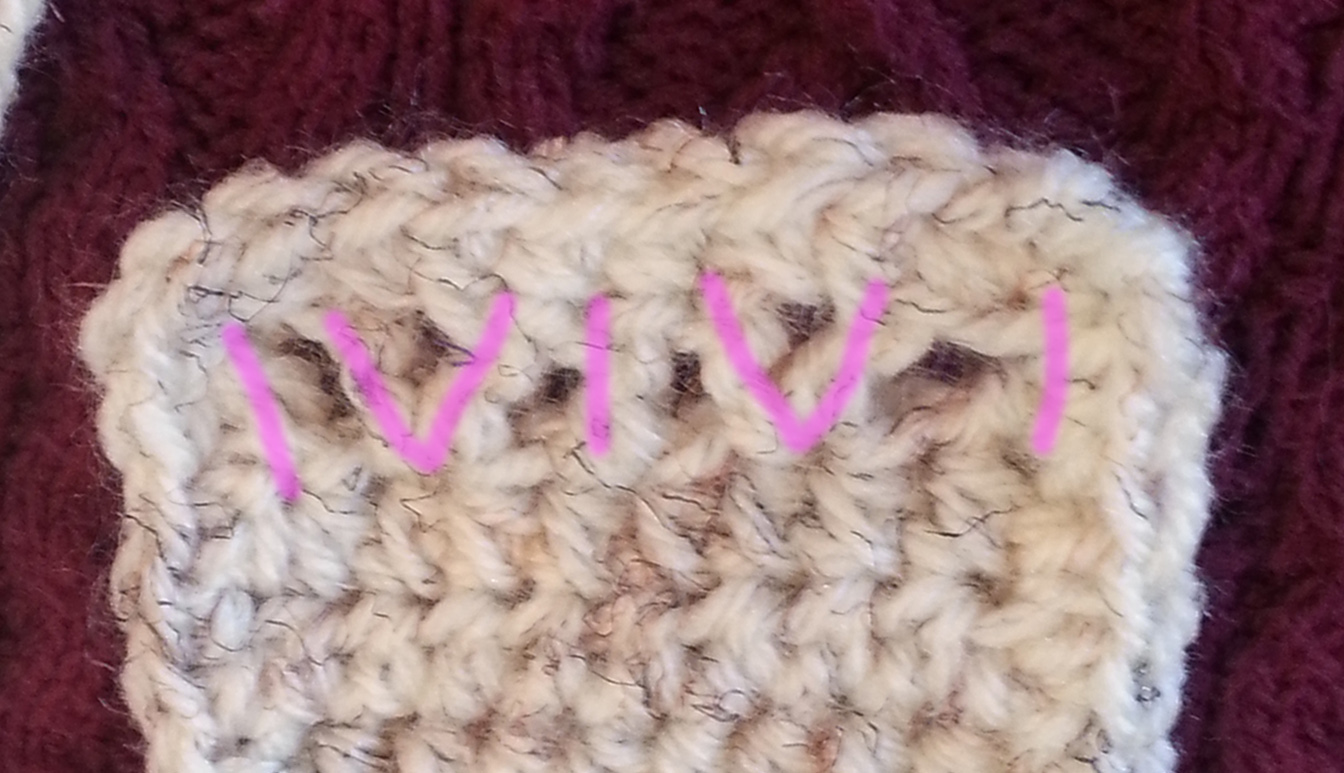
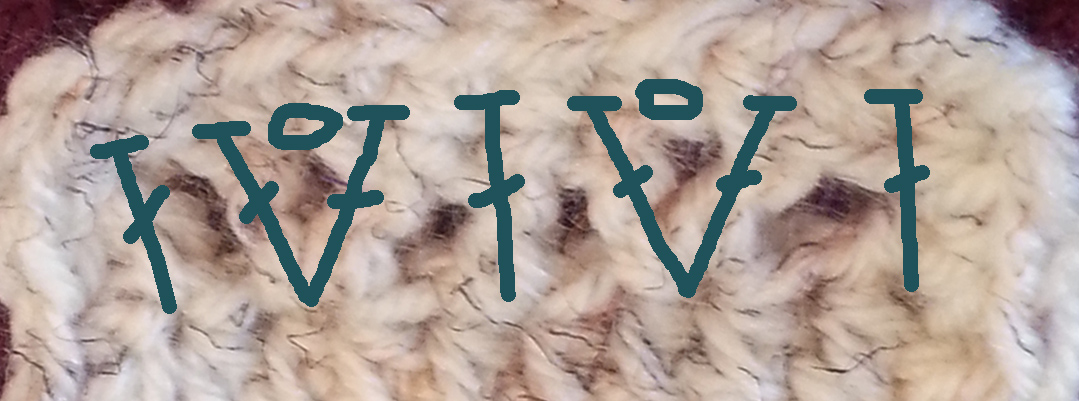
Row 66: Turn, DO NOT CHAIN, sc in first st, ch 2 (counts as first dc), *sk 1 st, V-st next st, sk 1 st, dc next st, Repeat from * once. [3 dc, 2 V-st]

buttonband-st-diagram

EDGING 

Ch 1, with RS facing turn band to work along first long edge, *work sc spaced evenly along edge in ends of rows (3 sc in the ends of the every 2 rows), ch 2, turn to work along end of headband, sc in next 9 sts, ch 2*, turn to work along second long edge, Repeat from * to *, sl st to first sc in round.

FINISHING

Weave in ends. Block lightly, if desired.  Sew buttons to right side (textured side) to align with openings in V-sts.

With the colder weather we are beginning to have up here on the mountain it is time to have some extra layers of warmth handy when I’m walking the dog or taking the boys to school. I may be putting an ear warming headband in the glovebox of my car, just in case.

They are also great quick gift projects for those of you thinking about your holiday gift-giving lists.


The Dilemma of Naming Designs

As I have said before, trying to think up names for my designs can be one of the most challenging aspects of my work. It’s not just me though it turns out. Thursday this week I was facing the naming struggle once again and decided to tweet about it.

“Sometimes the hardest thing about being a #crochet designer is coming up with a name for my designs.”

My tweets show up on my Facebook page and I had a chuckle today when I finally looked at my page today and read the many responses from loads of my yarnie friends.

Some of my designer friends had funny stories about how they came up with a name. My friend, Bonnie Barker, had some help from family recently.

“Yep. I get that! That’s why when I was out of ideas (while working on my latest book), I spoke out loud wondering and my son replied with a silly (but catchy) name, and I ran with it! That’s how the Fergus Shrug got its name.”

My friend Kathryn White shared her solution, that sometimes creates it’s own problems. Turns out the talented Vashti Braha has this same solution and problem.

“Oh I know that problem. Whenever I see or hear a possible name I try and jot it down. But then I have to remember where I put the note….”

There were a number of designer friends who had some very helpful advice that I will be taking note of.

My good friend April Garwood of Banana Moon Studio says,

Lately if I can’t think of one easily I use city names in Oklahoma. There is a list of all of them on Wikipedia. Maybe choose a theme: flowers, birds. I also once used part of a scientific name. The color of the scarf reminded me of purple cabbage, so I looked up the scientific name for the plant. That became Brassica Scarf.”

The talented designer and editor of “Crochet! Magazine” for Annie’s Publishing, Ellen Gormley had this helpful advice,

“Street names, city names, flower names, rock/gems, color names, simple words in other languages… I look at all of these to help.

My dear friend, Brenda Bourg shared her favorite resource,

I have a site with over 20,000 names in all different languages. It makes it pretty easy to find names. If I can pronounce it, and I like the meaning, I run with it.

I think the suggestion that made me smile the most was from Elfie, one of my good crocheting buddies from Kansas City,

“Name then after your friends… for instance a hooded oversize sweater made with dark and sparkley with hints of green yarn would be an Elfie in the woods ..lol…or a purple butterfly shawl Erin about town..”

I still need to come up with a name for this latest design, in fact I’m working on 6 designs right now that are in need of a name. I tend to like “geeky” names or names that have a pun to them.

Playing with Triangles Shawl

Recently I named this series of blog posts and the resulting shawl pattern “Playing with Triangles” which is a bit of a geeky inside joke.

Sophisticated Simplicity Necklace - Andee Graves/M2H Designs 2

And there was my alliterative and contradictory “Sophisticated Simplicity Necklace”.

Mountain Whisper Shawl

Last fall when I was stumped for a name for this light and lacy shawl, I asked visitors to the blog to vote on a name. “Mountain Whisper Shawl” was the name that won. I tend to stick “mountain” into names as a nod to where I live.

One thing is clear, naming my designs may not get easier. Fortunately that won’t stop me from dreaming up new ones all the time. Have a great weekend dear readers. I’m off to see a special exhibit at the Denver Art Museum tomorrow and then I’ll be teaching crochet to knitters on Sunday at the Longmont Yarn Shoppe.