Everyone needs Hugs

One of my favorite things about crochet is using it to make gifts of love and support for my friends, family and even folks I’ll never meet.

It doesn’t have to be something fancy to give a “hug” to them. There are many wonderful patterns out there for afghans, lapghans and prayer shawls to make as gifts for someone you care about in your life, or even to organizations that reach out to folks in crisis.

My First Project Linus Blanket

One of my favorite programs is “Project Linus”. This wonderful organization provides blankets to children of all ages that are hospitalized or under-going a crisis. You can learn more about their program and ways you can help them out at their website.

Project Linus blankets don’t have to be crocheted or knit. They can also be quilts or fabric with edging treatments.
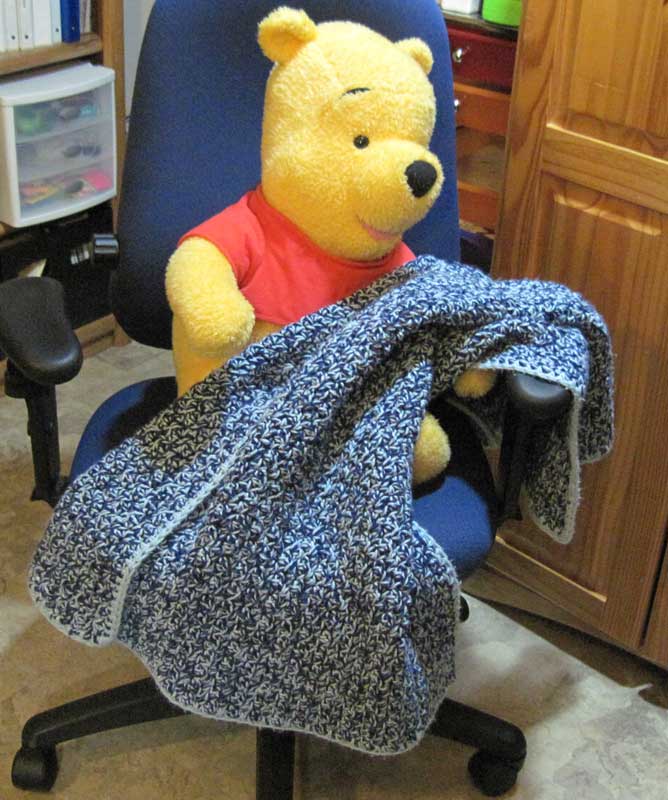
This is a simple blanket I made for my oldest son 6 years ago. It’s a wee bit ratty from all the love it has received over the years, but has held up well and is still his favorite to have nearby. I thought, in the spirit of giving and celebration of NatCroMo, I would provide a pattern for this blanket to my dear readers.

Boo’s Blanket

designed by Andee Graves

Finished size approximately 31.5″ x 42.5″

Yarn: Caron One-Pounder – 2 colors, plus a third color for border edging.

Hook: Size P 11.5mm

Note – Entire blanket is worked holding 2 strands of worsted weight yarn together. This is a child size blanket, but can be made larger by adding to the foundation chain in multiples of 2 and then working additional rows until you are happy with the proportions.
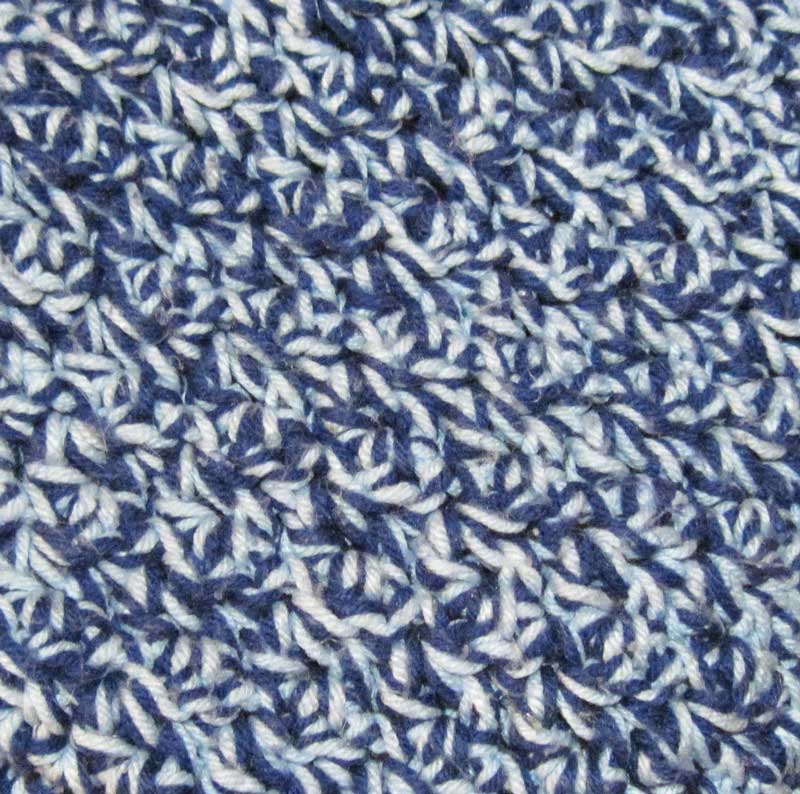
Close up of “Up and Down” stitch used for blanket.

Instructions (written in US Crochet terminology)

Row 1 – Foundation: Chain 85, working in back bumps of chain, sc in 2nd chain from hook, (dc in next ch, sc in next ch) 41 times, dc in last ch, turn.

Row 2: Ch 1, sc in first dc, (dc in next sc, sc in next dc) 41 times, dc in last sc, turn.

Rows 3-62: Repeat Row 2, 60 times. Fasten off.

Edging: Using 2 strands of third color. Attach yarn at any corner, ch 1, (sc, ch 2, sc) in corner st, [*ch 1, sk 1 st, sc in next st*, repeat from * to* to next corner, (sc, ch 2, sc) in corner] 3 times, repeat from * to * until reach beginning of round, sl st to first sc of edging and fasten off.

Alternate edging: Sc in every st with same treatment of corners as in first edging. Can do more than one round of edging to create a more substantial border by chaining 1 after the joining sl st, then working a sc in each sc and corner treatment in the corner ch-2 spaces.

I hope you have fun with this little pattern. Make a blanket for someone you love, or better yet, make 2 and send one to your nearest Project Linus chapter for a child that needs a hug.
Finding Colors

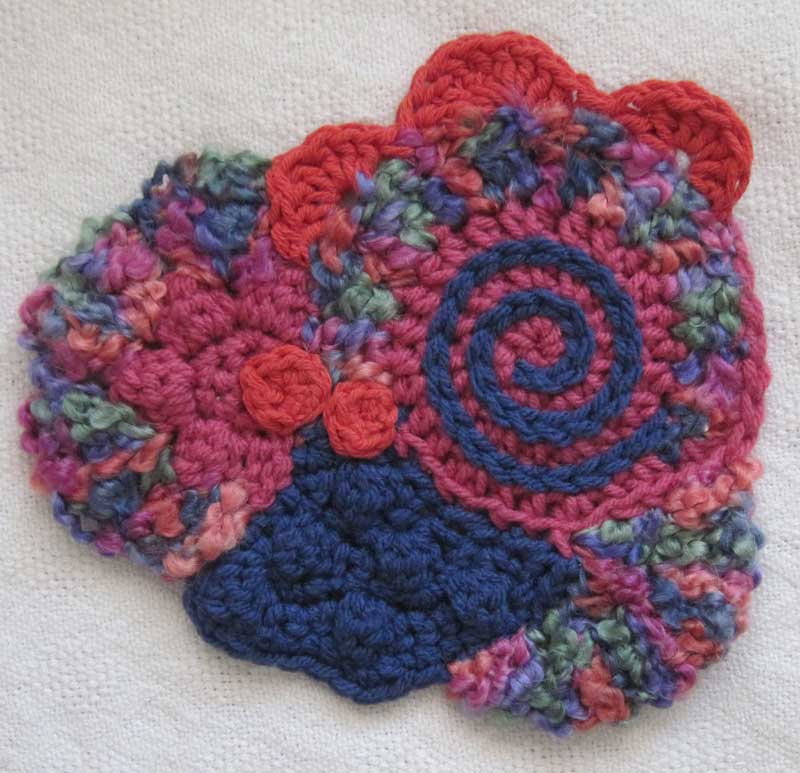
I love to play in free form crochet for art projects. One of the questions I get most often from crocheters interested in trying freeform is about choosing the yarns for a project.

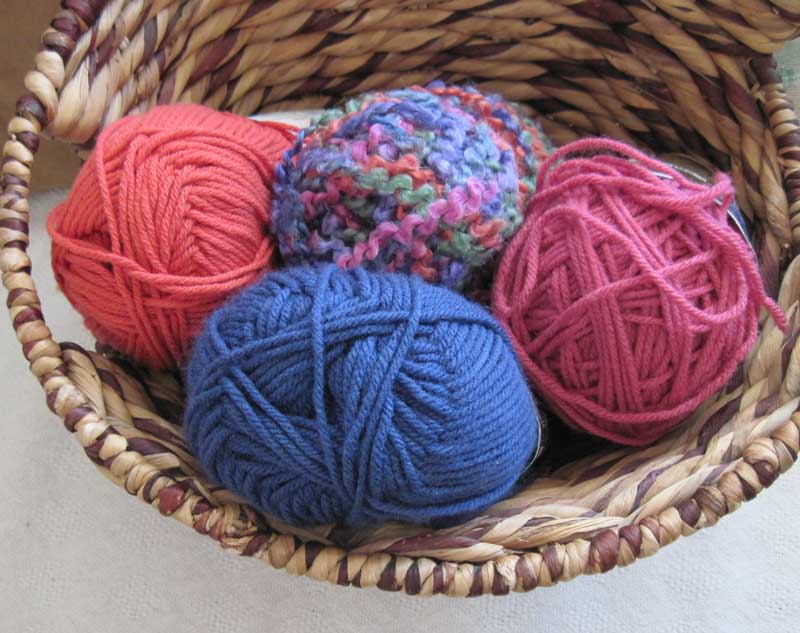
But often the real key to a successful freeform project is choosing the colors.  I chose the colors for this piece using the advice of the wonderful Jenny Dowde.  She said that one of the easiest ways to get colors that play nicely with each other was to choose a multi-colored yarn. Then you find solid color yarns that pick up tones in the multi-colored yarn.

I choose some Lion Boucle’ in the Wild Berries colorway for this project. Then picked pink, orange and blue yarns from my stash that matched the Boucle’.

If you want to learn more about Jenny’s approach to FreeForm Fiberarts I recommend getting your hands on her books: Freeform Knitting and Crochet; Freeformations, Designs and Projects in Knitting and Crochet; Surface Works.

Slip Sliding Circles

If you like to make hats from the crown down or amigurumi (toys), knowing how to get a tight circle is a handy skill.

My favorite method for these types of projects is the “adjustable slip knot”. This is a technique I first heard about in a class I took with Dee Stanziano, though it took me a while to play with it. I use it all the time now.

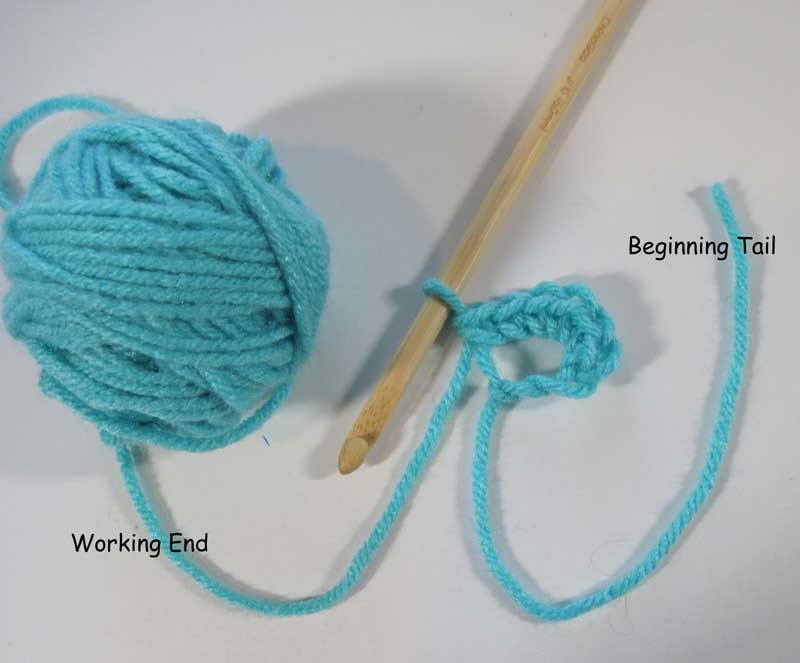
The trick with a slip knot is if the beginning tail or the working yarn tightens it. Generally speaking, the working tail is best for projects like afghans, scarves or garments.  But the beginning tail end is ideal for hats and toys, or anything sculptural where you need a tightly closed ring. I call this slip knot an Adjustable Slip Knot, because you can adjust the size of the loop even after you have worked into it.

To make an adjustable slip knot: Wrap the yarn around 2 or 3 fingers to make an X. The working end of the yarn should be on the bottom and the beginning tail should cross over it. Then use your hook or fingers to reach under the bottom strand to pull up a loop from the top strand.

The best thing about the adjustable slip knot is that you don’t have to fight to make all your stitches into the same spot. If your beginning tail is long enough, you can open the loop as you make stitches. This is loads easier to count your stitches to know if you have the right number in your starting round too.

Once you are finished with the first round, you give a gentle tug to the beginning tail to close the loop. Voila! you have a nice snug first round that did not involve any hair pulling.  Now you can proceed with either concentric rounds or working in the spiral to complete your project.

Give it a try on your next project and see if you don’t love this method as much as I do.

Measuring Up

Tape measures are one of the handiest things to have in your project bag. Measurements are an important part of creating crochet projects, especially if you are making garments. Personally I use them a lot when working out designs.

Of course, like all the tools of my trade, I seem to be constantly searching for my tape measure.  So I am always on the hunt for inexpensive tape measures when I’m out shopping. My brilliant idea being if I have one in every project bag, I’ll have one whenever I need it.

I’ve seen a number of lovely “covered” measuring tapes. Some of them even have crocheted covers, and though I’ve admired them, few have instilled in me the desire to purchase one. 

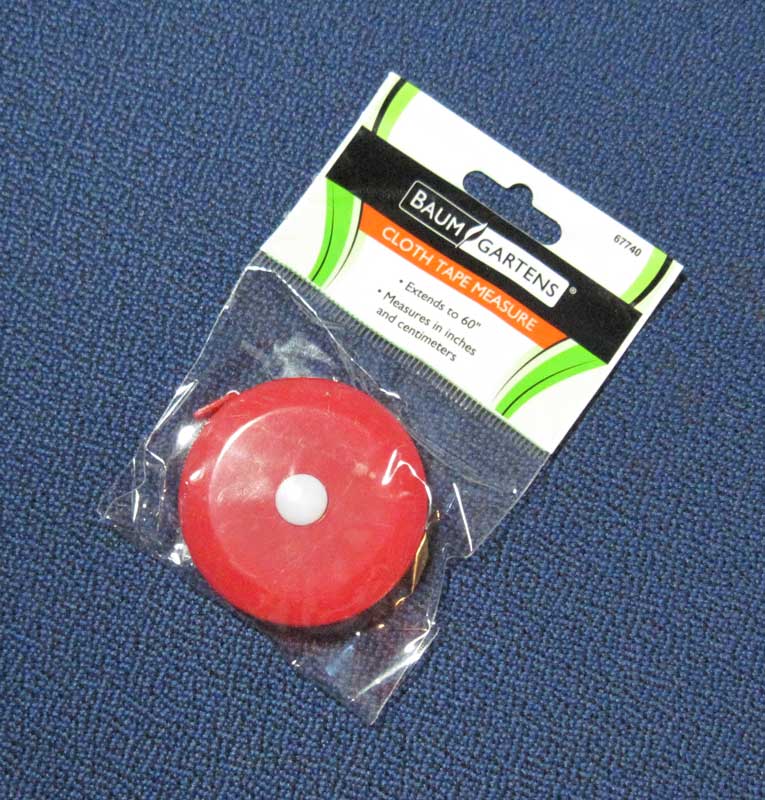
Friday I was at the local hardware store (McGuckins in Boulder, CO), it is one of the best stores for finding amazing and fun stuff to use in creative pursuits.  I discovered some nifty round retracting measuring tapes for the very reasonable price of $1.60.  So I tossed a couple of them in my basket and decided it was time for some experimenting with covering them in crochet.

This gorgeous Aunt Lydia’s Classic 10 thread was in a range of colors that I love, plus it would make it easy to spot my tape in the bottom of most all of my project bags.

I didn’t have a pattern for this. Instead I did my favorite type of crocheting, “Seat of the Pants”.  

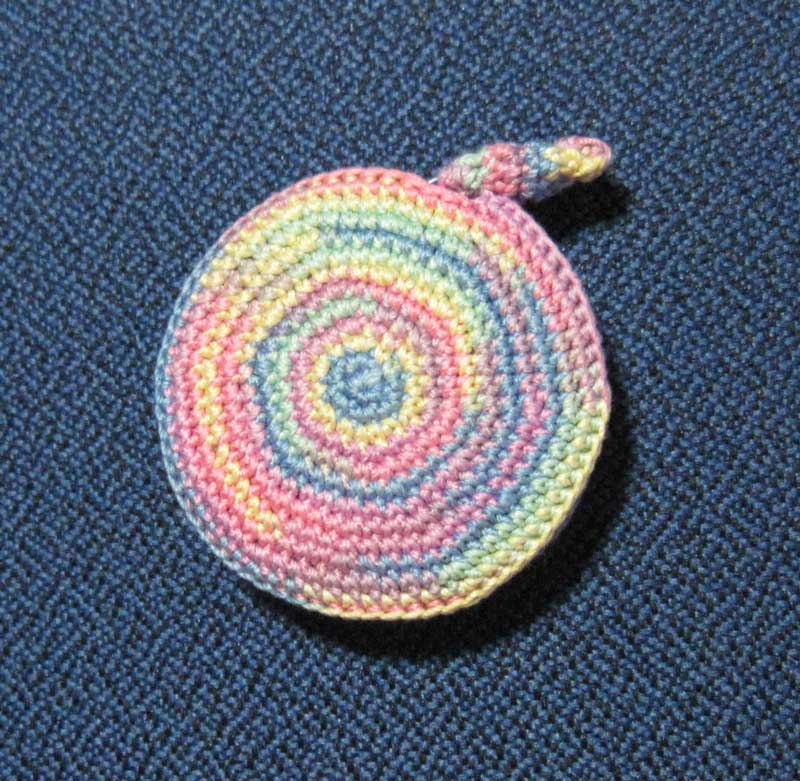
I began with the plain side of the tape measure. I started a simple single crochet spiral round and kept holding it up to the tape casing to see if it was big enough.  My spiral tended to “dome” a little in the center, so I wanted to have the final circle be small enough that it would fit tightly around the casing.

Once I reached the size needed, I worked a row of single crochet off the wrong side of the final round. I left a gap between the beginning and ending of the row for where the tape would feed out. I worked a couple more rows to cover the flat edge of the tape casing, then fastened off with a very long tail. The tail would be used to sew the 2 pieces of the cover together.

Next I chained a ring to just fit around the button of the tape, and crocheted 18 single crochet in that ring. The circle on the opposite side was 12 rounds, so I counted the first round on this side as round 3 and worked out from there. Once I had 10 rounds I fastened off and wove in the center tails for both sides as well as the ending tail for the 2nd circle.

I then placed the 2 pieces around the tape measure, lining up the opening on the edge with the tab for the tape. I used the long tail from the first side to whip stitch the edging to the “button” circle, stretching and positioning the circles to fit well on the casing.

The little tab cover was just a chain long enough to wrap around the tab, then rows of single crochet to the length I needed to cover the tab. I folded it in half and used a couple more rows of sc to join the top edges and make a shaped point. Slipped it over the tab and sewed thru the opening of the tab and along the open side.

I now have my own little covered tape measure. Hopefully this one won’t get lost for awhile.

Happy NatCroMo!

It’s National Crochet Month here in the US, and on Ravelry it is being celebrated as International Crochet Month…since that is a very international crowd and there is a fun Party going on over there if you’d like to join in.

This is a month to celebrate all that crochet is and can be.  The multitude of myths about crochet abound, and I am planning to blog about some and “de-bunk” them thru-out this month.  We will also be taking a look at some of my own crochet history, as well as solving some of my crochet “mysteries”.

Starting with one of my very first crochet hooks.  I’m not sure when this crochet hook came into my possession. But best guess is it was around 40 years ago.  Looking at the markings on the hook it is an older Boye J hook.  One side of the thumbrest says, “Boye” , the other says, Size J U.S.A.  It doesn’t have any mili-meter measurements on it. 

So I’m curious, does anyone have any idea when this hook might have been manufactured by Boye? Leave your thoughts in the comments and maybe we can figure out this minor mystery together.

Another Crocheter

One of my very favorite things is getting other folks excited about crochet.  So I teach, whenever and where ever I get an opportunity.  Last night I was in Denver at the LambShoppe’s PJ Jam and I had a great time working with the lovely Jill to help her “re-learn” crochet. 

She said it had been many years since she had crocheted and she had known how to make granny squares.  She had inherited her grandmother’s crochet hooks and some other needle-crafting supplies so wanted to get back into the craft.

She had decided to make a scarf for her first project, so I taught her a simple V-st pattern.  And before we all knew it she was stitching away. It was so exciting to see her having a great time playing with yarn. 

She did an awesome job with my rule #1 when crocheting: You have to have Fun!

All You Need is Love

Okay, now you have that Beatles tune running thru your head. Right?

Valentine’s Day is just around the corner and I am keeping with my tradition of offering a heart pattern as a Valentine to my readers.

In 2010 it was my Little Heart.

In 2011 it was my Spiral in a Heart.

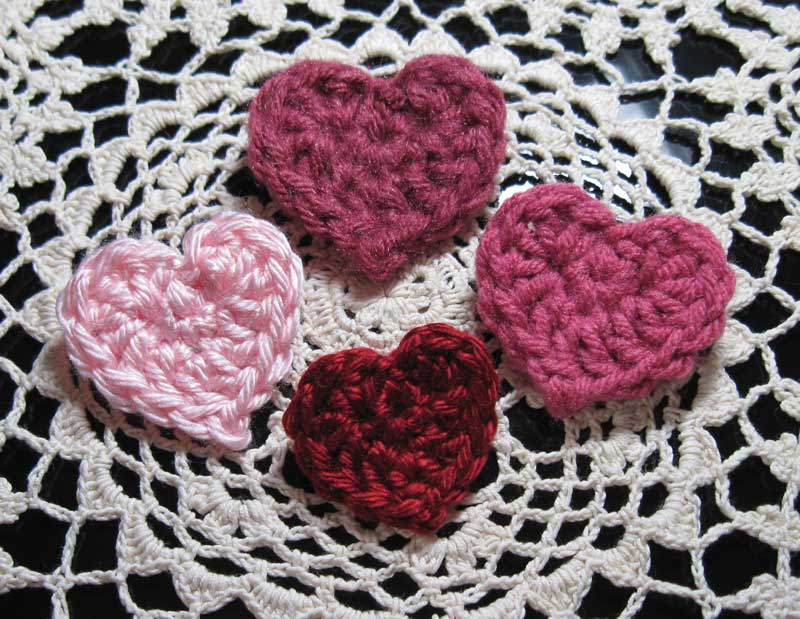
So for 2012 I offer the Simple Sweetheart pattern.  This fun little heart takes just a bit of yarn and a few minutes to stitch up.

Simple Sweetheart  designed by Andee Graves

Start with an Adjustable Slip Knot (this is a slip knot that is tightened by pulling on the beginning tail instead of the working yarn).

SwthrtChart wCnotice

Round 1: Chain 2, 7 sc in 2nd chain from hook, sl st to first sc of round.

Needle Join at end of Round 2

Round 2: Skip 1 st, 5 dc in next st, dc next st, dc next st, ch 1 and sl st in top of previous dc, dc in same st, dc in next st, 5 dc in next st, sk 1 st, sl st in first st (or use a needle join into sl st). Fasten off.

Your little Sweetheart can now be used to decorate a card, or become a pin or magnet.  I used the tails of mine to sew pin-backs on them to make brooches.

Happy Valentine’s Day!

A New Book

One of the fun things I got to do at TNNA in Phoenix was meet Dora Ohrenstein. We were talking about crocheted fabric and the wonderful fun things one can create with hook and yarn.  And even better, Dora had a book signing on Sunday at the show, and I got a copy of her latest book “Custom Crocheted Sweaters: Make Garments That Really Fit”.

This is an awesome book!  Visually it is gorgeous. It is filled with beautiful clear photography, including close-ups of fabric construction. As well as stitch diagrams and schematics that compliment the concise text on making and modifying garments for an ideal fit.  I haven’t had time to read thru the book fully yet, but I’ve read enough to know this will be a favorite and well-used book in my own crochet adventures.

If you want a copy for yourself you can purchase the book online at Amazon.com or request that your local yarn store order it in.  Currently there is also a give-away being held by the lovely Jocelyn Sass on her blog Cute Crochet Chat, but you need to leave a comment on her post by Wednesday, February 1st to be entered in the contest.

Happy Holidays

Wishing everyone a beautiful holiday week-end and a wonderous New Year in 2012.

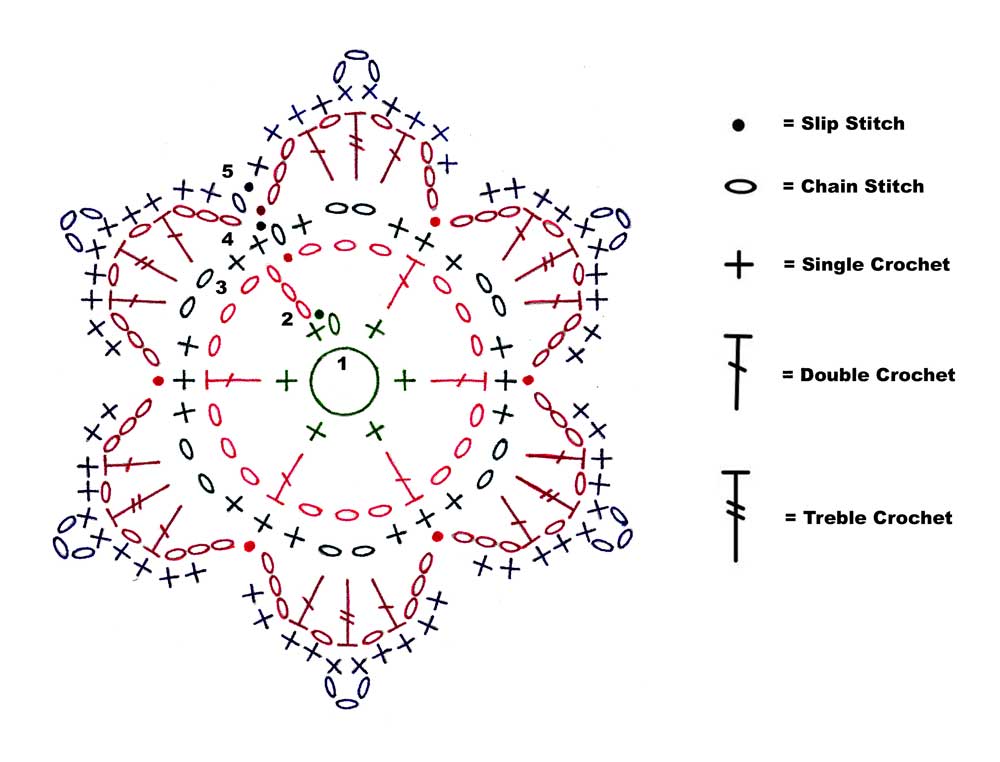
Little Snowflake Ornament / Copyright 2011 M2H Designs

In celebration of this time of year I am sharing a fun little snowflake pattern with you.  For now it is just a stitch diagram, so my apologies to those of you who can’t read those yet.  Maybe a good New Year’s resolution is to learn that skill as it does open the whole world of international patterns to you.  If you have trouble reading the chart because of size, click on the photo and it should enlarge it.

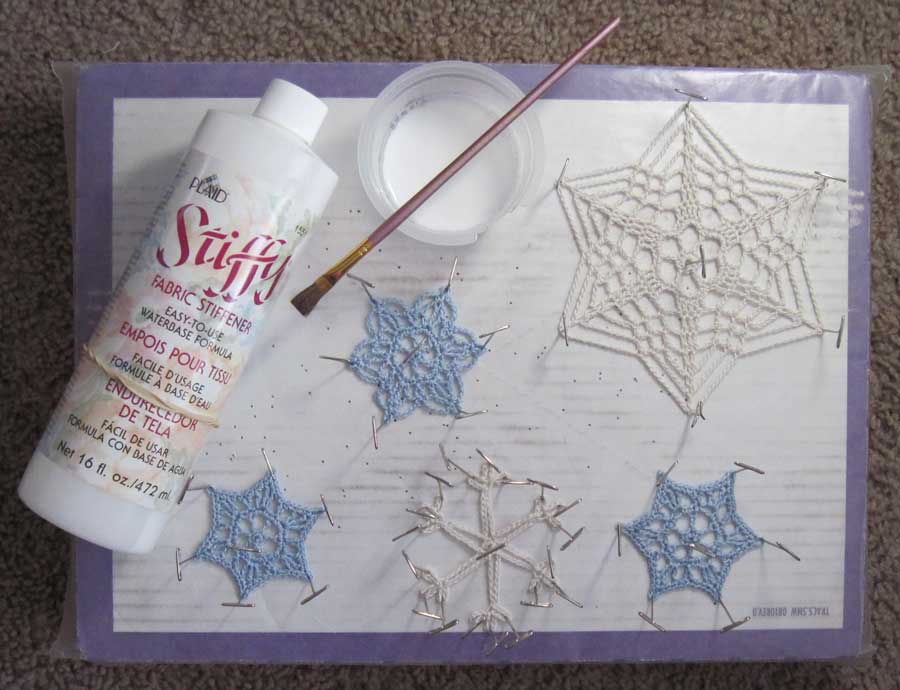
Once you’ve stitched up your snowflake and tucked in the ends, pin it out and use your favorite fabric stiffener to make it into an ornament. I prefer to brush the stiffener on once the snowflake is pinned out, instead of dipping the fabric in the solution first.  Once one side is dry I un-pin the flake and if needed will brush more stiffener on the back.

You can also sprinkle a bit of glitter over the flake while the stiffener is wet to create a sparkly snowflake.

Enjoy!

It’s a White Christmas

Last night we had a big snow storm and woke up to 2 feet of powdery white stuff.  Timing was perfect as my in-laws had arrived earlier in the day.  Now we have a nice fire going in the wood-stove and we are watching Christmas movies.

I did have to wonder if the snow came because I’ve been crocheting lots of snowflakes out of cotton crochet thread.

I’m not usually a “threadie” when it comes to crochet.  But there is something about snowflakes worked in crochet thread that really makes it feel like Christmas time is here. Plus they are wonderful quick gifts that can be mailed easily or used as a decorative element on greeting cards and packages.

Snowflakes can be very simple or extremely complex. Personally I like to play with different ideas, sort of riffing with the hook and thread. My only guide being that I need to keep the flakes 6-sided.

Generally I start off with an adjustable slip knot, then chain 2, work 6 single crochet in the 2nd chain from hook. Pull on the beginning tail, slip stitch into the first sc of the round and I have a nice little center for my snowflake, from there out any thing can happen.

The best bit of snowflakes is that you can make lots of open spaces, then when you use the stiffening material they suddenly become beautiful crystalline looking miniature works of art.

I like to pin my snowflakes out with blocking pins on top of wax paper with one of my foam blocking pads or a piece of cardboard underneath.

Then I brush the snowflakes with my stiffening solution. I use the product “Stiffy” that I purchased at our local Michaels.  But there are lots of options out there such as Alene’s glue mixed with water or laundry starch.  Sometimes you need to experiment to see what works best for your climate.  I want to saturate the fibers enough that the flake will be strong, but not so much that it gets blobby looking.

Once the flakes have completely dried I remove the pins carefully and may use a tiny bit more solution brushed lightly over the flake and sprinkle with some glitter.

A bit of nylon line to make hanging loops and my flakes are ready to decorate the tree or hang in the window.

I hope all of you are having a wonderful holiday visit with your friends and family too.  Happy Holidays to all my lovely readers.