It’s All by Design

Last week I posted about Jan and I having a great time exploring the sites in downtown Chicago after the Chain Link conference. Today I’m writing about the 2018 Chain Link Conference in Portland, Oregon. For me this is going to be a bit of a home-coming.

The first CGOA show I went to was in Portland in September 2008. I’ve told the story before how I met some of my dearest friends at that conference, two of them being Jan and Pam. In fact I met them both in my first class there.

Who could have guessed that a little less than 10 years later I would be returning to Portland for a conference as a board member? It will be a very busy conference for me as I hope to meet as many of our membership as possible, while also attending to my board responsibilities.

One of the exciting events at each conference is the Design Competition. The chair person this year for that committee is Louise Thurman and I am the board advisor. She and I have been working to get everything in place for the competition and I’m excited to see it coming together.

If you haven’t ever entered a piece in the Design Competition then this could be your year, you just need to be a member of CGOA to enter. The deadline for entries is June 30th, so you have plenty of time to get something ready. If you’ve been one to experiment with crocheting you may already have a finished piece that can be entered. It doesn’t have to be recently crocheted, it just needs to be your original design and not publicized or published before.

This year we will have 6 categories, that will be awarded a First, Second and Third place prize:

  1. Fashion: garments (not accessories), including sweaters, tops, jackets, vests, skirts and dresses.
  2. Accessories: including wraps, scarves, cowls, socks, mittens, hats, bags, belts and jewelry.
  3. Home Décor & Afghans: items primarily for the home, including afghans, throws, and baby blankets.
  4. Tunisian: 80% of design needs to be Tunisian crochet.
  5. Artistic Expression: items more artistic in nature, including free-form or mixed media pieces, wall hangings, and wearable art.
  6. Thread Crochet: anything made in crochet thread or fine/lace weight yarn (CYC category #0/Lace); this category may overlap other categories, and includes doilies, garments, baby clothes, or accessories.

Then there will also be the $1000 Grand Prize, the Technical Merit Award, and the People’s Choice Award.

Judging will take place at the conference Wednesday and the winners will be announced Friday evening at the Awards Ceremony. All the entries will be on display Thursday evening thru Saturday afternoon at the marketplace. Folks attending the conference will be able to cast a ballot for the People’s Choice Award, which will be announced Saturday evening at the Closing Ceremonies Banquet.

You can find out more details about the Design Competition and how to enter it at the CGOA website: Crochet.org. From the home page use the Members Only drop down menu at the top, then go to Design Competition.

A Perfect Fitting Pi-Day

It is March 14th again and that means it is Pi Day! For those of you that might have forgotten your circular geometry, Pi is the number used to calculate the circumference of a circle. It’s really much more than that, but that covers the most pertinent aspect for those of us yarnie arts folks. It has decimal places going on to infinity, but is generally written 3.14, which is similar to the order we Americans write the date March 14th: 3/14.

If you have been reading my blog for some time, you already know that I’m a bit of a geek. For my new readers, Welcome, and you’ll figure it out in this blog post.

As a designer my geeky math nature provides me with helpful tools in figuring out shaping and fit for garments as well as for calculating yardage for an afghan. Most of the time in my patterns I have worked all the math for you. But a few years back I had a request from some of my fans for the formulas for making perfect fitting hats. Considering the number of different sized heads out there and the variety of yarn weights this seemed like a very good idea.

But how to make a pattern, that could cover all that? Initially I created a class to teach the formula and then I came up with my “teaching” pattern the “Perfect Fit Hat” available in my Ravelry Shop. In this pattern I demonstrate the measurements you need from the head you are trying to fit and illustrate how to make them. As well as a primer on using Pi to get the size hat you want, the pattern includes step by step photo tutorials, stitch charts and a sizing cheat sheet for those that don’t want to mess with the formulas.

To celebrate Pi Day I am offering my Perfect Fit Hat pattern for 25% off sale in my Ravelry shop. This discounted price will only be available for 24 hours ending March 15, 2018 at 10:00 a.m. (Mountain Daylight Savings Time). You will need to enter the Coupon Code: CelebratePiDay2018 when checking out on Ravelry.

Spiraling Stripes Hat

I love spirals. You can probably tell that just by looking at my logo above. One of my happiest crochet moments was when I realized that I could crochet spirals, since then I have put them in many of my designs. My newest pattern is not only  a celebration of the beauty of spirals it is also a celebration of the functionality of spirals.

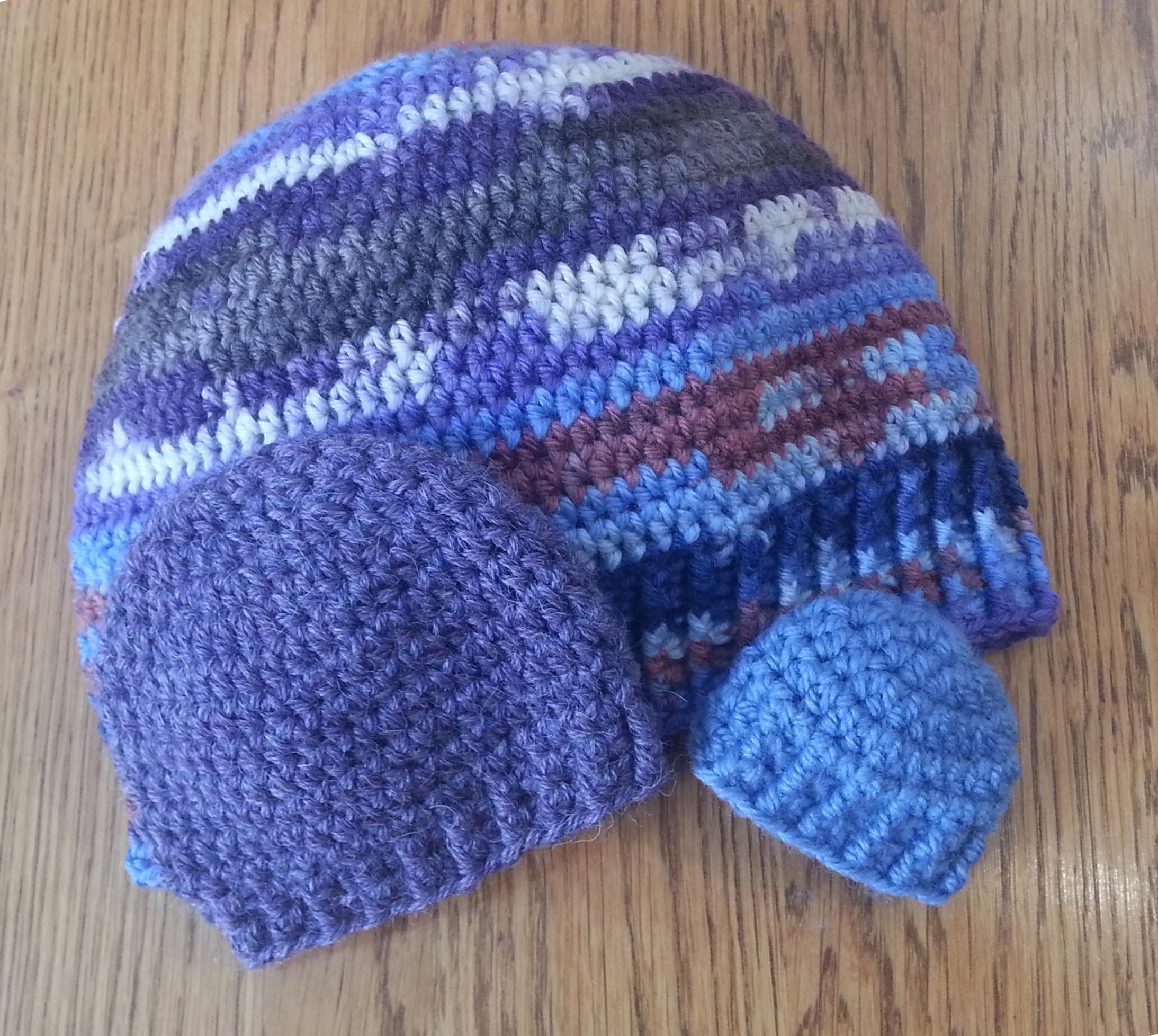
This is my Spiraling Stripes Hat. It is crocheted using 2 colors and a 2 – armed spiral. Spirals are another version of continuous rounds in crochet. This sort of construction makes a lovely elastic fabric for hats because you don’t have a seam of tight slip stitches joining each round.

The pattern is available for purchase in my Ravelry Shop. This pattern includes a step by step photo tutorial and detailed stitch chart to help you understand crocheting the spiral.

I used Round Mountain Fibers worsted weight Superwash Merino wool for this hat. These were 2 colors from their Ornithology Collection: Puffin Blue and California Quail. Their hank size is 174 yards in 100 grams, so this is a slightly heavier weight worsted.

Happy Valentine’s Day

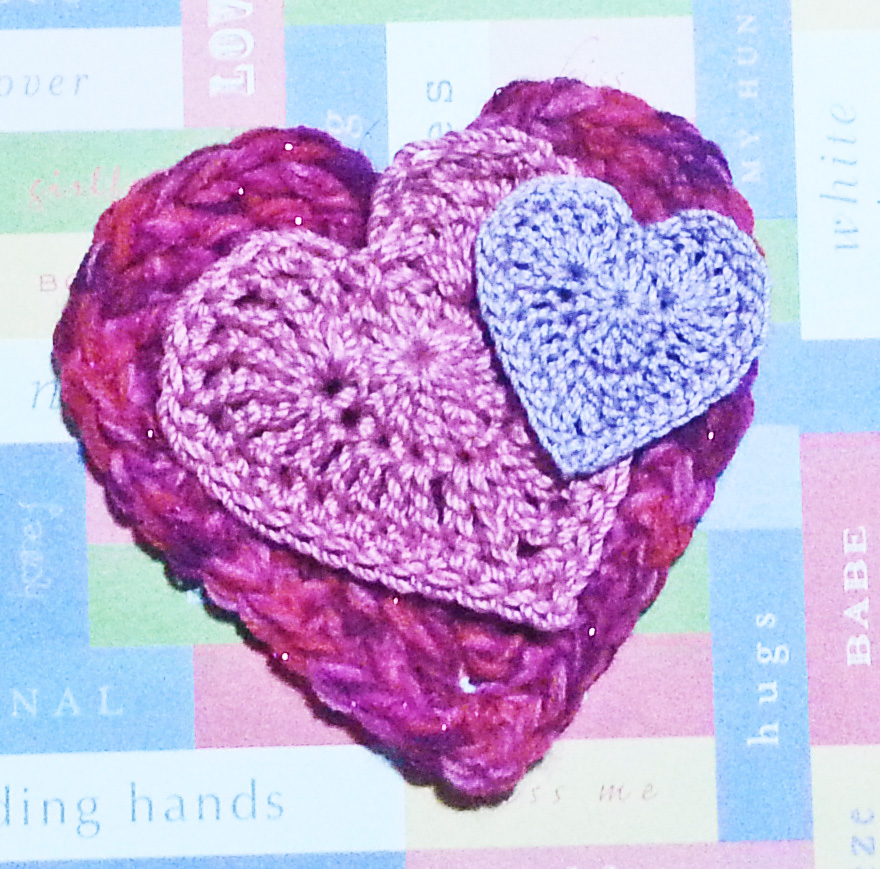
Dainty Hearts Motifs by Andee Graves at “I Like Crochet”

Tomorrow is Valentine’s Day and I have one more thing to share with you.  The folks at “I Like Crochet” online magazine are offering a special Valentine’s sale of their subscriptions.

You can use this link to get the offer on their website. Remember the sale is only going on until February 18th.

Pocket Full of Love (Gift Card Holder)

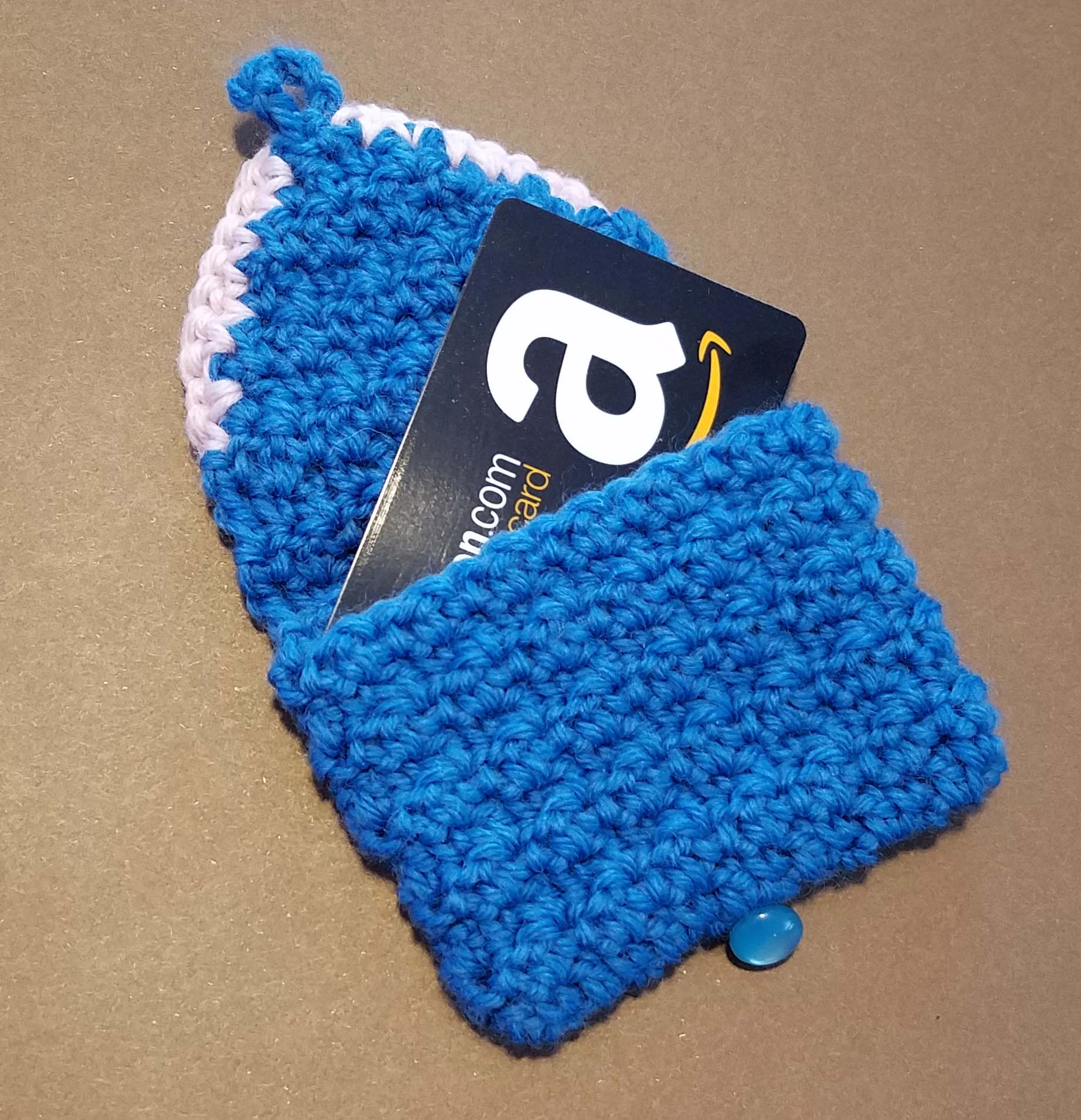
Valentines Day is next week and I’m always dreaming up something fun to celebrate the holiday with my family. This quick little pocket takes only a few hours to crochet up and very little sewing to finish. It’s handy for teacher gifts too.

The trickiest part is attaching the heart as a pocket on the envelope flap. I’ve included a stitch chart with additional information to help you thru this part.

Pocket Full of Love Gift Card Holder

Designed by Andee Graves

Skill level:       Intermediate

Finished Size:

3 ½” wide x 3” tall

Materials:

Yarn

Worsted wt: Sample uses Berroco Yarns “Ultra Wool” 100% Superwash Wool (3.5 oz/100g, 219 yd/200 m)

Color A: #3326 River (sample used approximately 31 yards/14 grams)

Color B: #3310 Alyssum (sample used approximately 11 yards/5 grams)

Hooks

H / 5mm

Notions

Button

Yarn/tapestry needle

Stitch markers

Gauge

8 stitches and 7 rows in Envelope stitch pattern = 2”

Heart 3” tall and 3.25” wide

Abbreviations/Special Stitches

Joining slip st (slip st): Insert hook in indicated place, YO, pull up a loop thru place and loop on hook, continue to pull up on working loop until original loop is tight.

Picot Point st (picot): Ch 1, Insert hook in previous stitch using front loop and top side loop, YO, pull loop thru stitch and loop on hook and tighten. If you need help working this stitch I have a tutorial on this blog post, it also has some additional help on crocheting rounds 1-2 of the heart used for this project.

Pattern Notes:

Envelope is worked in the round off a chain foundation for 10 rounds, then the flap is worked off half those stitches ending with a button loop. Beginning tail is used to sew the button to the base of the envelope.

Heart pocket is crocheted onto the flap point with the 3rd round of heart stitches, the ending tail is used to sew the last couple of stitches. 12 single crochet stitches at top of heart are left unattached for pocket opening.

Instructions

Gift Card Envelope

Rnd 1: Begin with Color A, leave a 10 inch long tail, Ch 15, working in back bumps: sc in second ch from hook, (dc in next ch, sc in next ch) 6 times, dc in next st, Turn to work along bottom of foundation chain using remaining 2 free loops: sc in first st, (dc in next ch, sc in next ch) 6 times, dc in next st, slip st join to first sc of Rnd. [14 sc, 14 dc]

Rnd 2: Ch 1, turn, sc in first dc, (dc next sc, sc next dc) 13 times, dc in last st, slip st join to first sc of Rnd.

Rnds 3 – 10: Repeat Rnd 2.

Envelope Flap

Rows 11-15: Ch 1, turn, sc in first dc, (dc next sc, sc next dc) 6 times, dc next sc. [7 sc, 7 dc]

Row 16: Ch 1, turn, skip first st, (dc next sc, sc next dc) 6 times. [6 sc, 6 dc]

Row 17: Ch 1, turn, skip first st, (sc next dc, dc next sc) 4 times, sc next 2 sts. [6 sc, 4 dc]

Row 18: Ch 1, turn, skip first st, (dc next sc, sc next dc) 4 times. [4 sc, 4 dc]

Row 19: Ch 1, turn, skip first st, (sc next dc, dc next sc) 2 times, sc next 2 sts. [4 sc, 2 dc]

Row 20: Ch 1, turn, skip first st, (dc next sc, sc next dc) 2 times. [2 sc, 2 dc]

Row 21: Ch 1, turn skip first st, sc next 2 sts. [2 sc]

Row 22: Ch 3, turn, skip 1 st, dc in last st. Button hole created. Fasten off [1 ch-3 sp, 1 dc]

Weave in ending tail, weave beginning tail to center of pocket bottom to sew on button

Heart Pocket

Rnd 1: With Color B, start with an Adjustable Slip Knot, ch 4, 12 dc in 4th ch from hook, sl st in top of ch-4.

Rnd 2: Sk 2 sts, 7 Tr in next st, dc next st, 2 dc next 2 sts, 4 dc in next st, 2 dc next 2 sts, dc next st, 7 Tr next st, sl st between last dc and join of Round 1. DO NOT FASTEN OFF. Weave in center tail

Rnd 3 (attaching Heart Pocket to Envelope Flap):

ch 1, starting with first Treble of Round 2 – (sc in next st, 2 sc next st) 2 times, sc next 2 sts,

Use st marker to attach the heart WS to RS point of flap (insert marker between second and third dc of bottom 4 dc

and into unworked sc of Row 20),

working thru both heart and flap: sc in same st as previous st, sc in next 2 sts,

working thru heart only: sc again in previous st,

working thru heart and flap: sc in next 6 sts,

working thru heart only: sc again in previous st, ch 1 and slip st in top of last sc made {picot point made}, remove stitch marker, sc next st,

working thru heart and flap: sc again in previous st, sc next 5 sts,

working thru heart only: sc next st,

working thru heart and flap: sc again in previous st, sc next 2 sts,

working thru heart only: sc again in previous st, (sc next st, 2 sc next st) 2 times, sc last st, slip st to first sc of round.

Fasten off with a 10-12 inch long tail.

Finishing

Using ending tail of heart, weave thru 6 sc from joining slip st, sew 2 sc to flap, weave across wrong side of heart to opposite side and sew 2 sc to flap. Look to Heart stitch chart for clarification.

Using beginning tail of envelope, sew on button at bottom of envelope for closure.

The Challenges of Being a Designer

Yesterday I was planning to get a new blog post up, in fact a post with an awesome new free pattern. Unfortunately the best laid plans can go awry and they did.

In celebration of Valentine’s Day I wanted to give all my lovely readers an early gift that you could use to give as a gift. Whew that was a convoluted sentence.

So I sat down with yarn and hook to make this lovely gift card holder. I thought I had taken very good notes on how to crochet it. Instead I’ve been running into issues recreating my sample when following the pattern I wrote from those notes. I’m resolving these issues, but it is taking more time than I had originally allotted.

If all my lovely readers can send some good thoughts my way that might help. Hopefully I will have this fun little pattern ready for you all by Friday morning. Fingers crossed.

Moving Right Along

It’s been over a week since my last post, 2018 has picked up it’s heels and is moving fast already.  On the 10th I had my first CGOA Board meeting and I came out of that realizing that I have a lot to learn about and a lot to do in the next few months.

I also have a number of design projects with deadlines coming up soon. Funny how deadlines in 2018 seemed so far away back in early December, but now they are breathing down my neck.  I’m looking forward to sharing these designs with all of you soon.

In the meantime you can find my latest pattern the Morning Walk Earwarmer in the February Issue of “I Like Crochet”. This is a fun quick-to-crochet project that uses different stitch heights to create a narrow to wide shaping. Earwarmers are especially handy headgear for folks with long hair. They can serve double duty as a hairband as well as keeping the chill off your ears.

I wanted to create an earwarmer that had a little extra thickness over the ears as well as some flexibility in fit. The widest part of the design is a textured stitch with a little bit of open work, then it narrows into ribbing that fits snugly over the ears. Both the top and bottom opening have textured stitch work to create a soft face flattering edge.

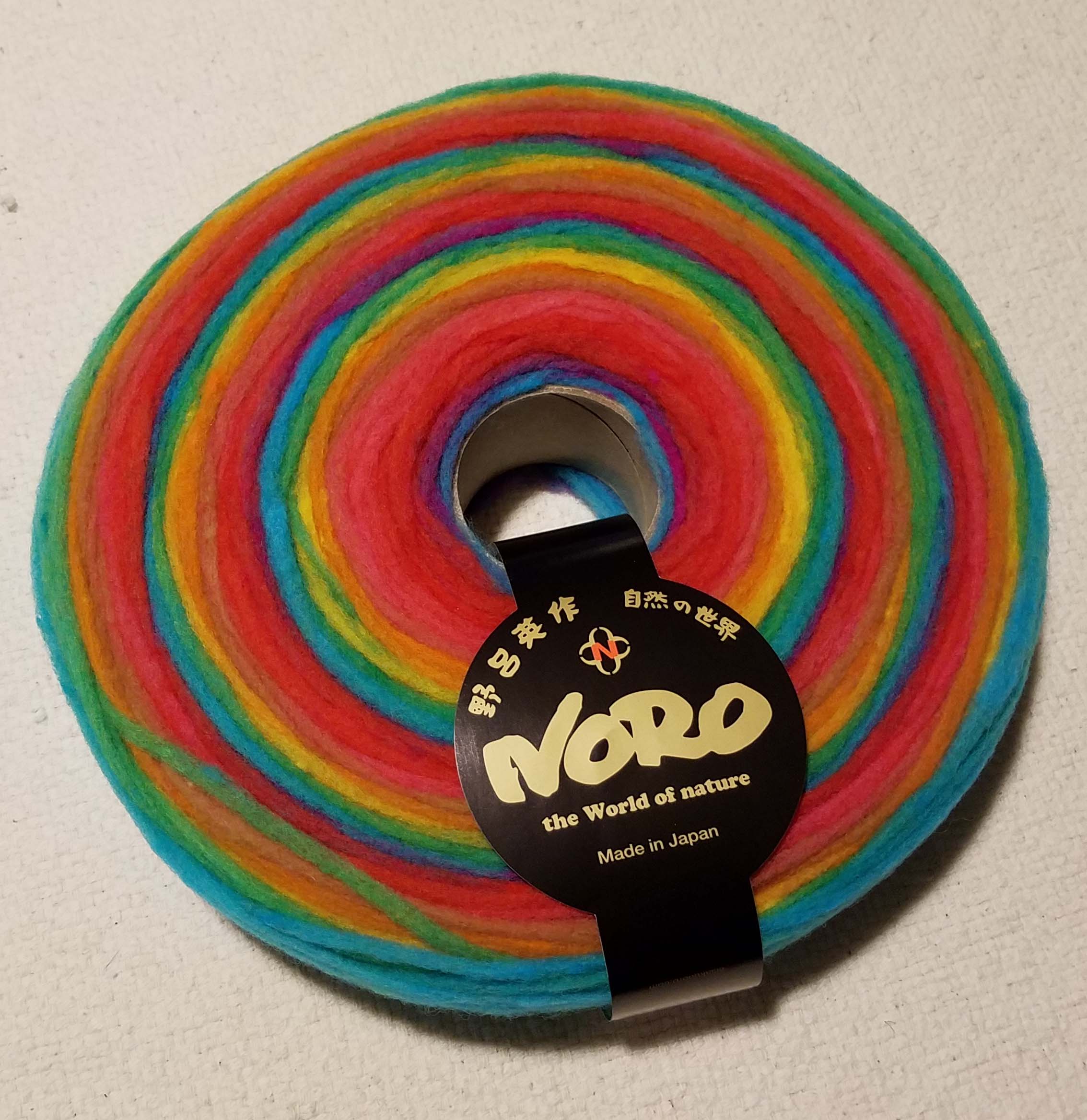
I’ve also been doing some clearing of the clutter in my yarn and fiber stashes. I had purchased this fun Noro product last summer. It isn’t really yarn but a very narrow piece of fiber without any twist. That means it tends to break easily and I’ve been using bits of it when doing needle felting projects.

I decided the other day that it would be good to felt in the washing machine because of the lack of twist. I spent about 6 hours carefully crocheting the remainder of the original roll into a rectangular piece of fabric. I used half-double crochet stitches worked in rows.

This was a good brainless crochet project when I was watching shows and movies with my kiddos during the evenings and weekend. I like having something to crochet that is the same stitch over and over where I can keep my hands busy without a great deal of focus. It was also entertaining to see how the colors were going to come together, something I always love about working with long color changes.

My current plan is that the felted fabric will become a bag of some sort, but it will depend on how much shrinkage I get and what happens with the colors when I finish the felting. It could possibly become the background for a needle-felted painting.

The Best of 2017

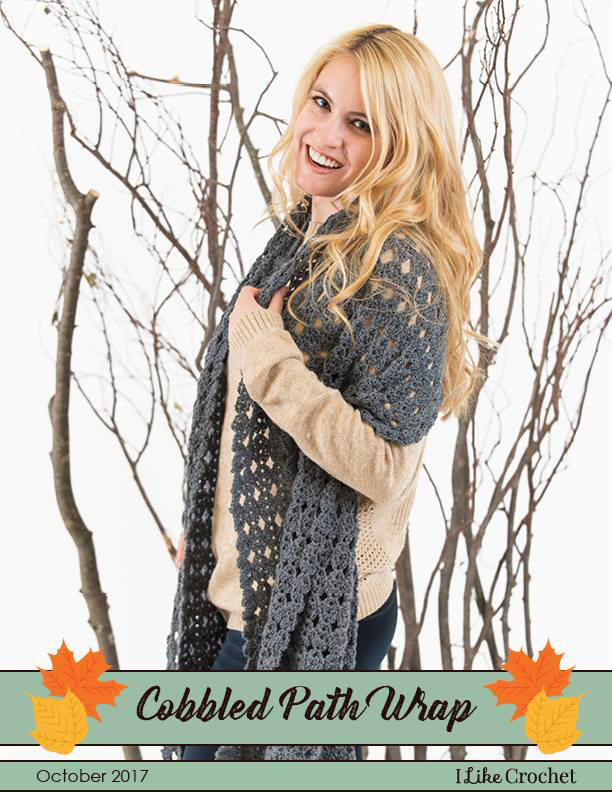
Time is running out on 2017 and it’s time to celebrate the best of the past year for many publications. I recently heard from the folks at “I Like Crochet” that my Cobbled Path Wrap was chosen as one of the “Spectacular Shawls” of 2017.

That design is one of my favorites. I came up with the idea for it about 5 years ago. I wanted to create the look of little motifs without having to weave hundreds of tails in. You can get this pattern with a subscription to the “I Like Crochet” website.

You can see my design and the other “Best of 2017” winners at their website by clicking here.

Wishing all my dear readers a fun and safe New Year’s Eve celebration and a very Happy New Year in 2018.

All that Glitters

When I crochet with thread I tend to favor Size 10 cotton thread, but being that I have a bit of magpie in my genetic make-up I have always been drawn to Red Heart’s Metallic cotton thread.

Long ago I thought it would be the perfect thread for making snowflakes. But once I had added stiffener to it the glittery effect was rather dimmed. So I’ve been searching for a way to make a snowflake that could fully show off the sparkle of this thread.

Finished Ornament - Andee Graves M2H Designs

This was my little experiment this weekend.

First snowflake and orna - Andee Graves M2H Designs

When I was designing my snowflake pattern for this year I created a snowflake that was cupping a bit and realized that it might fit nicely around one of the flattened round style of clear plastic ornaments that I had. It actually looked like it would stretch around it nicely.

2 snowflakes - Andee Graves M2H Designs

I decided to work on making a second snowflake to place on the opposite side so the 2 connected together would act as a sort of cover for the ornament. Since my original snowflake was made with the silver thread I picked the gold thread for the second snowflake.

4 points joined 2 snowflakes - Andee Graves M2H Designs

I crocheted the snowflake up to the last round, then connected the last round at 4 points.

Cover fitted over ornament - Andee Graves M2H Designs

I then slid it over the ornament and completed the round connecting the last 2 points. Crocheting the last little bit while the snowflakes were on the ornament was a bit challenging but I was happy with how it came out.

If you want to try making some snowflake ornaments like this check at your local hobby supply shop for round semi-flattened ornaments. The one I used is 4″ in diameter, but they also come in smaller sizes. You’ll want to use a snowflake pattern that is somewhat star shaped without a lot of fancy things happening with the edges.

Weave in the beginning tails of both snowflakes and the ending tail of your first snowflake before connecting them together and placing them as a cover on the ornament. That way you only have one tail to weave in after fitting the snowflakes around your ornament.

Connection points 2 snowflakes - Andee Graves M2H Designs

I had to shorten the chain lengths at the points of my second snowflake to get a better fit around my ornament. I wasn’t completely satisfied with the look, but it wasn’t too bad for a first try.

I’m going to be very busy the next couple of weeks preparing for Christmas with my family, so I’m not sure if I will have a chance to blog again until after the start of the New Year.  In case I’m not back on here before then, I want to wish all my wonderful readers a lovely holiday season and a fabulous start to 2018.

Sparkling Ice Snowflake

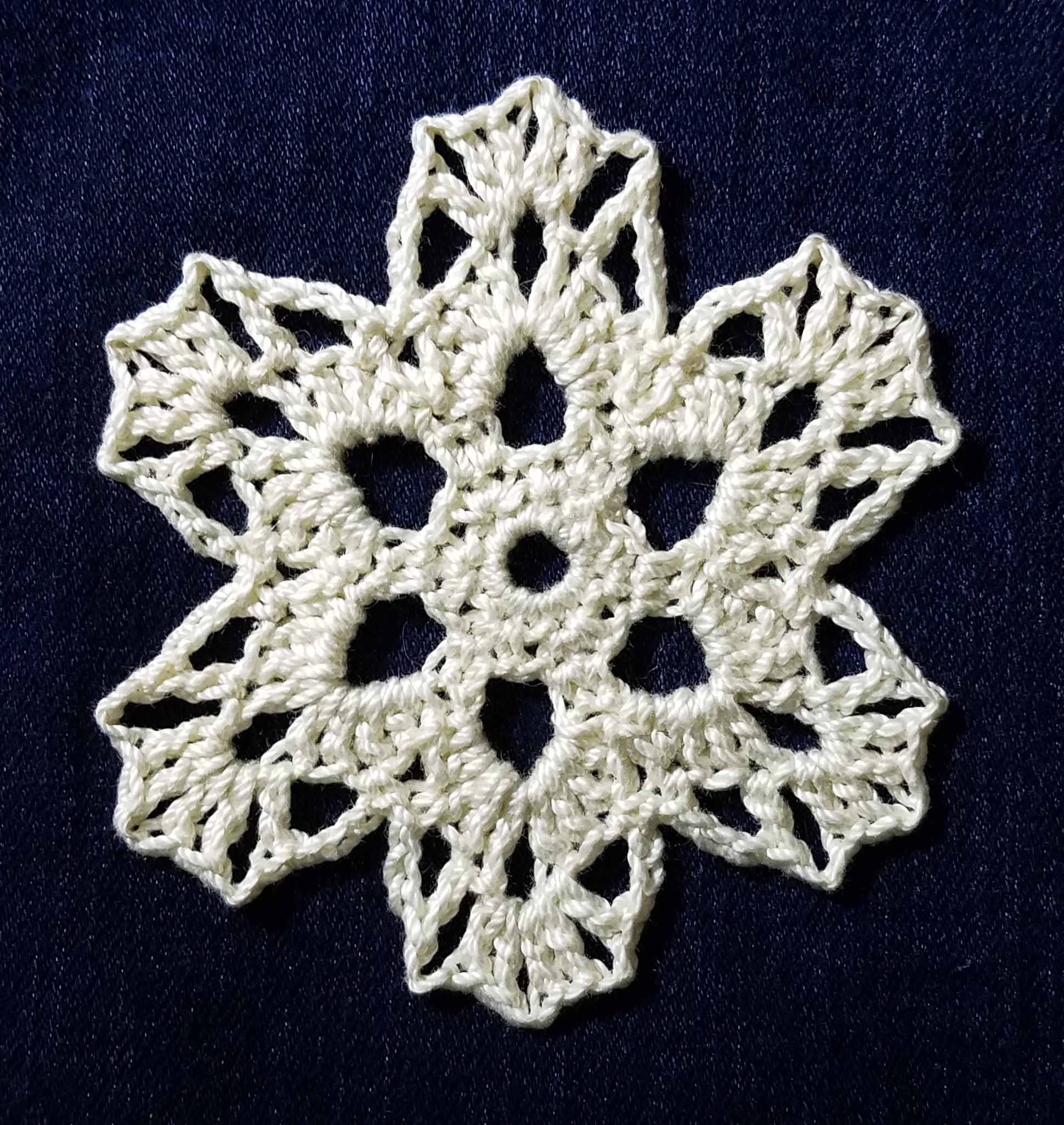
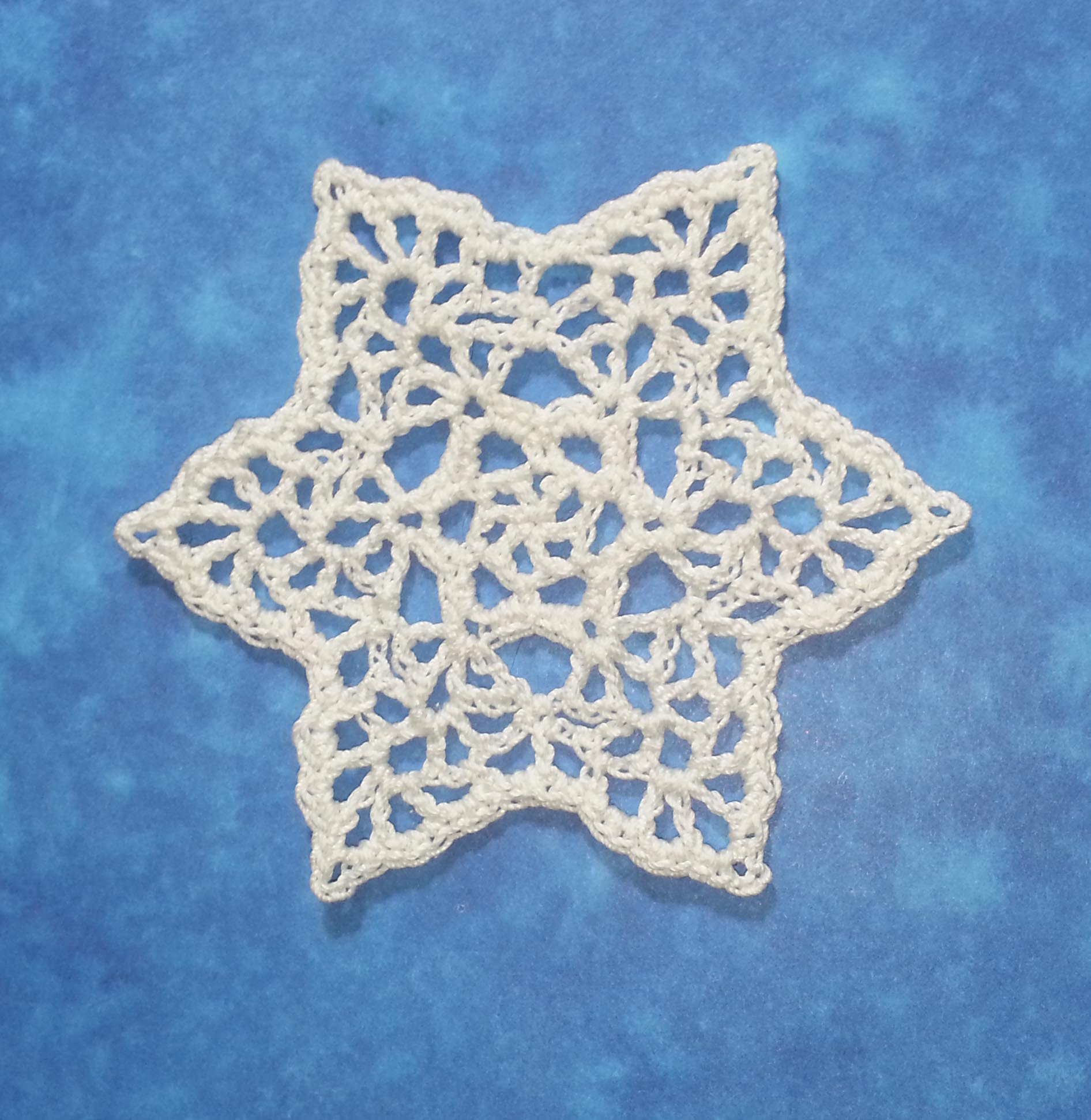
Row of Sparkling Ice Snowflakes - Andee Graves M2H Designs 

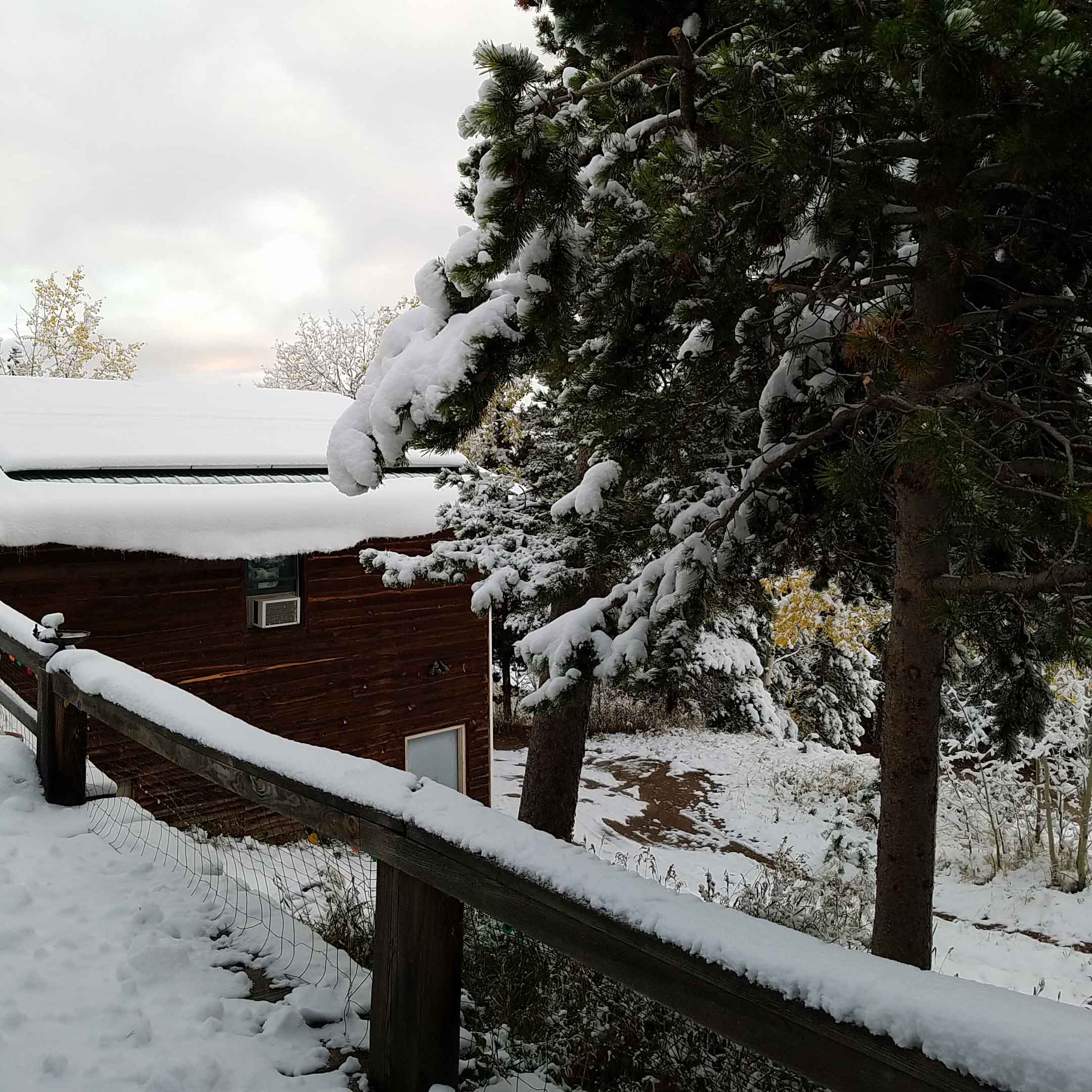
It is Winter up here on my mountain again, though technically it is still Autumn on the calendar. We have had numerous snow storms and a number of days that the temperatures barely crawled above freezing. I’m looking forward to the days of winter when the air sparkles with snowflakes in the sunshine.
I’m happy for the colder weather though, as it has helped me feel more in the mood for Christmas time.

I’m listening to my Christmas music and will be digging out my Christmas movies for watching after we’ve eaten our Thanksgiving dinner. Having gotten into a Christmas mood I’ve decided to get a head start on my Christmas gifts, and especially my gift to all my lovely readers.

Yes, my friends, it is time for a snowflake design again. This year I’m giving us all a bit more time to work on the new snowflakes. That way you can send some out with your Christmas cards if you want.

Not only do I have a pattern for you, but I am also including a photo tutorial on stiffening your snowflakes. Pattern first, since you’ll need some snowflakes to work with.
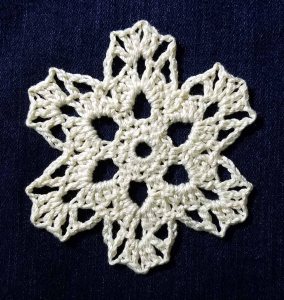
Sparkling Ice Snowflake

Designed by Andee Graves

Skill level: Easy

Materials:

Size 3 Cotton Crochet Thread with hook size: B (2.25mm)

Size 10 Cotton Crochet Thread with hook size: Steel 0 (1.75mm)

Notions

Tapestry needle for weaving in ends

Gauge

Gauge is not critical to this project.

Instructions

Rnd 1: Starting with Adjustable Slip Knot {if you need help with this technique check out my YouTube Video}, ch 2, 12 sc in second ch from hook, slip st to first sc of Rnd. {12 sc}

Rnd 2: Ch 1, (2 sc in next st, ch 1, skip 1 st) 6 times, slip st to first sc of Rnd. {12 sc, 6 ch-1 sp}

Rnd 3: Ch 1, sc in next 2 sts (ch 6, skip next ch-1 sp, sc in next 2 sts) 5 times, ch 6, skip next ch-1 sp, slip st to first sc of Rnd. {12 sc, 6 ch-6 loops}

Rnd 4: Ch 1, [(sc, hdc, 3 dc, ch 3, 3 dc, hdc, sc) in next ch-6 loop] 6 times, slip st to first sc of Rnd. {12 sc, 12 hdc, 36 dc, 6 ch-3 sp}

Rnd 5: Slip st in next hdc, *sc in next st, ch 3, skip next st, dc in next st, ch 2, (2 dc, ch 1, 2 dc) in ch-3 sp, ch 2, dc in next st, ch 3, skip 1 st, sc in next st,** skip 4 sts*; Repeat from * to * 4 times, Repeat from * to ** once, slip st to first sc of Rnd. Fasten off {12 sc, 30 dc, 6 ch-1 sp, 12 ch-2 sp, 12 ch-3 sp}

Finishing

Weave in all ends. Block snowflake and use favorite stiffening method.


If this snowflake doesn’t please you, I have 3 other snowflake patterns available here on the blog:

Frozen Star – Pattern available here.


Lacy Snowflake – Pattern available here for free text instructions only.

Or your can purchase the pattern in my Ravelry shop, this version includes a stitch chart as well as text instructions.
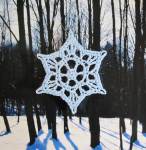
 

Little Snowflake Ornament – Pattern available here.


Stiffening Your Snowflakes

When stiffening your snowflakes you want to consider the climate you live in. Especially the humidity of your region will effect what stiffening agent you should choose, as well as how you want to set up your drying area.
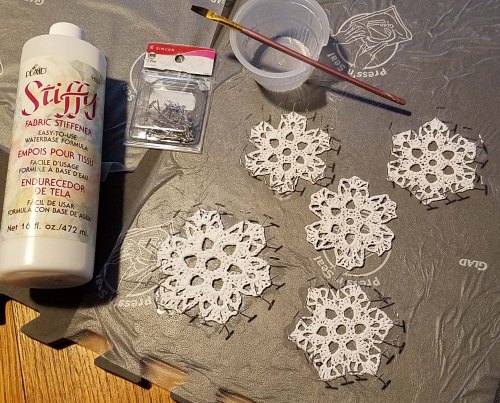
The basic supplies you will need to stiffen your crocheted snowflakes are:

Pins – Nickel-plated or rust proof pins are best, otherwise you can end up with rust marks on your finished snowflakes. My favorites to use are nickel-plated T-pins, Size 16, 1 inch long.

Waterproof (or resistant) Surface – You want to use something that will hold the pins firmly in place and can either be thrown away or washed off.  Wax or Parchment paper over cardboard is an affordable option. Afterward the paper goes in the bin and the cardboard can be recycled or re-used if not too punctured. I didn’t have wax paper in the house for this latest batch of snowflakes so I used Press-n-Seal plastic over my surface. I liked using one of my foam blocking board as it held the pins better than cardboard.

Stiffening Agent – This can be anything that is initially wet enough to be absorbed in the cotton of your stitches without obscuring them, and that dries rigid. I use a product I purchase at my local Michaels store called “Stiffy” from the Plaid company (same folks that make Mod Podge), but something like PVA school glue can work too.

Some of the PVA glues are a little too flexible when dry, so if you want a more rigid finished object you can try adding a bit of corn starch to the glue. If your glue is too thick, you can experiment with adding water to thin it. I use distilled water when doing this. I find a very thin liquid to be best for maintaining the stitch definition of my snowflakes.

This post contains affiliate links. I may receive compensation (at no added cost to you) if you make a purchase using these links.

Brush and Bowl – No matter what application method you prefer you will need both of these objects. If you are planning on using the “soak” method you will want a bowl wide enough that your snowflake will fit inside it. For your brush you will want stiff short bristles, that can help get the stiffening solution down into the stitches or help remove excess solution from the pinned snowflake.

Drying Surface – An old towel or a piece of fine metal screening. If you live in a humid climate you really want a drying surface that lets air circulate around your snowflakes, you might even want to use a fan or a blow-dryer on a low setting. I tend to use a dry towel.

Getting Started

Obviously you first want to crochet your snowflakes, I like to have a pile to work with before I begin the stiffening process. Sometimes I will wet block my snowflakes first. The pinning process is the same as when I am stiffening my snowflakes.

If your snowflake is crocheted tightly and you wet block it with pinning you may have a stable shape without additional stiffening. Or it will hold the shape well enough to just brush on the stiffener without it being pinned. You will want to experiment.

I prefer to use the brush method of applying the stiffener as it helps me keep better stitch definition. If you want to do the soak method you will immerse your snowflake in your solution, then remove it from the solution letting excess drain off. Proceed to pin the snowflake to the desired shape. Once you have the snowflake pinned out, use paper towels to blot off excess solution. Be careful during the blotting that you don’t glue bits of paper towel to your snowflake.

In this demonstration we are trying to get a symmetrical looking snowflake. I approach the pinning like stretching a drumhead (something I learnt from my younger brother, Cy the Drum Guy).

Pinning dry 1 - Andee Graves M2H Designs

This means securing one point on the snowflake then stretching to the opposite point, continuing to work around the points of the snowflake back and forth.
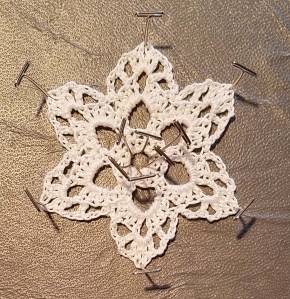
Center and Pts pinned dry - Andee Graves M2H Designs

It can be helpful to also place pins in the center of the snowflake after securing the first 2 points. This is especially helpful with really open stitch work, it will keep the other 4 points from pulling it off center. I remove the center pins once I’ve got the 6 points secured.
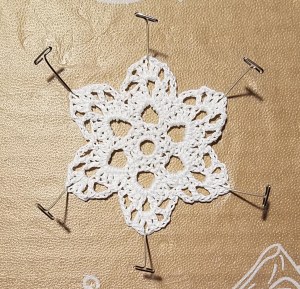
Pinning dry 6 - Andee Graves M2H Designs

Then look at the other areas of the snowflake that you might want to open up. This is how you can really change the look of your snowflakes even when they are crocheted from the same pattern.
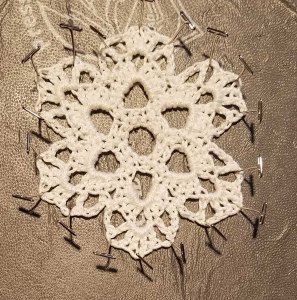
In the case of the Sparkling Ice Snowflake I added 2 pins to each point in the ch-2 spaces  to square up the points of the snowflake, or….

Placing the 2 additional pins in the ch-3 spaces creates a pointed look.
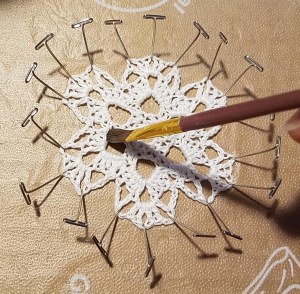
Painting on stiffener - Andee Graves M2H Designs

Now it is time to brush on the stiffening solution. I usually pin my snowflakes wrong side facing up and brush on the stiffening solution to set the shape. I keep brushing the solution to help it absorb and get deep into the stitches. Usually your thread will change color enough that you can see where you still need to brush on more solution.

Once the solution is dry I carefully un-pin the snowflake. Usually this isn’t stiff enough to hang, so I will turn over the snowflake and paint the other side of it with a light coating of stiffening solution. The shape of the snowflake is already set though and I don’t pin it in place again.

If you want to add some sparkle to your snowflake this is a good time to add glitter.  Sprinkle glitter over the wet surface. Tap off any excess and set aside to finish drying.

5 snowflakes 2 sizes Sparkling Ice - Andee Graves M2H Designs

I usually move the snowflake to the drying surface after painting on the second coating of stiffener to prevent it from sticking to the work surface. If you are in a humid climate you may want to un-pin and move your snowflake to the drying surface once it is mostly dry and set from the first coat, this will help it dry quicker.

Nylon Hanger - Andee Graves M2H Designs

Once your snowflakes are completely dry use ribbon or light weight nylon line to create hangers. I prefer the nylon line because it is nearly invisible. I usually use about 4-6 inches and thread it thru an opening on the edge of the snowflake and tie a knot over the 2 ends.

Have fun making snowflakes.


This post contains affiliate links. I may receive compensation (at no added cost to you) if you make a purchase using these links.