Is it Summer Yet?

New Crochet Lace Cowl Design and a Free Coloring Page

I keep thinking our mountain summertime has really started, then the weather proves me wrong. This past week included 3 inches of hail, 45F temperatures and snowflakes in the air Sunday morning. Fortunately our mob of hummingbirds at the feeders every evening reassures me that they think it is summer. The bear has been visiting us too, so he definitely thinks it is summertime.

I haven’t been blogging as much because I have been a crazy busy woman getting ready for the CGOA conference (ChainLink) in Manchester, New Hampshire. Being on the Board of Directors means I am involved in a lot of behind the scenes planning of events. This is especially so as a couple of my chairs for committees have had to cancel coming to the conference.

With ChainLink only 2 weeks away I’m also figuring out what to pack. I always over pack on crochet projects, but I hate to not have something to work on, especially on my travel days. Getting to Manchester and back home is a pretty full day of travel from Colorado. Long lay-overs are much better when one has crochet to play with.

What is your favorite go-to project to work on when traveling? I like smaller projects like hats, cowls, slippers or mittens. They don’t require a lot of yarn, so it’s not too big a project bag. Speaking of cowls….

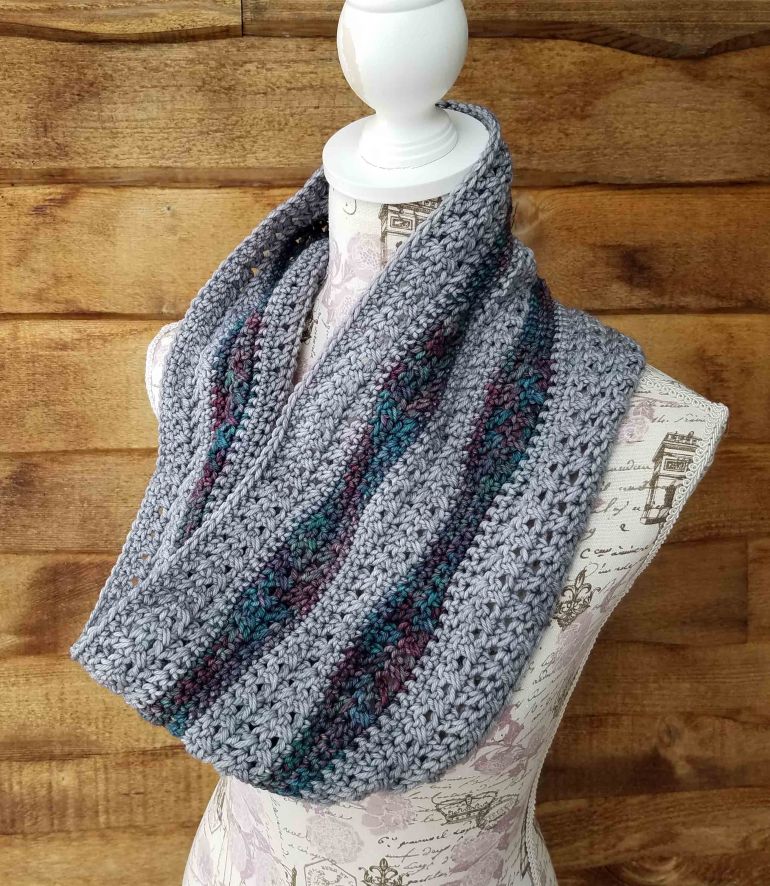
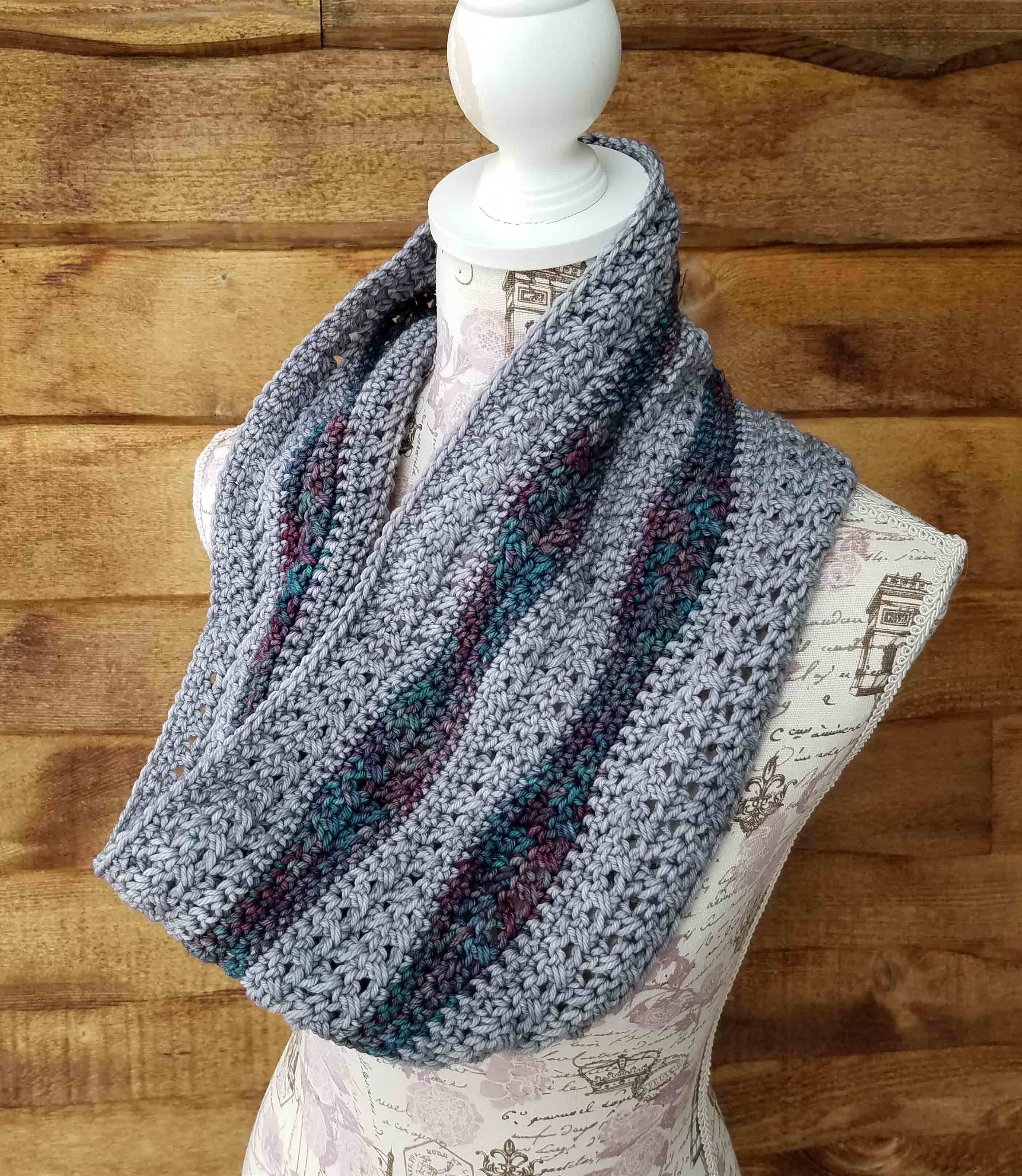
My latest published pattern is a lovely lacy cowl. I was given the gorgeous Suri Alpaca blend sock yarn above to design with at TNNA by the LGF Suris folks a couple years ago. Life happened (like it does) and it took me a little time to complete, but I am really happy with how it came out.

This is my Rhythm of Shells Cowl, published in my M2H Designs pattern line and available for purchase in my Ravelry shop. It is an interesting 4 row stitch pattern that is easy to memorize, but not so dull that it will put you to sleep. It starts with one of my Stacked Rows Foundations and ends with a pretty pointed border. The pattern instructions include a stitch chart. My sample took only 1 hank of the LGF Suris yarn to make and worked up light and warm.

This post contains affiliate links. I may receive compensation (at no added cost to you) if you make a purchase using these links.

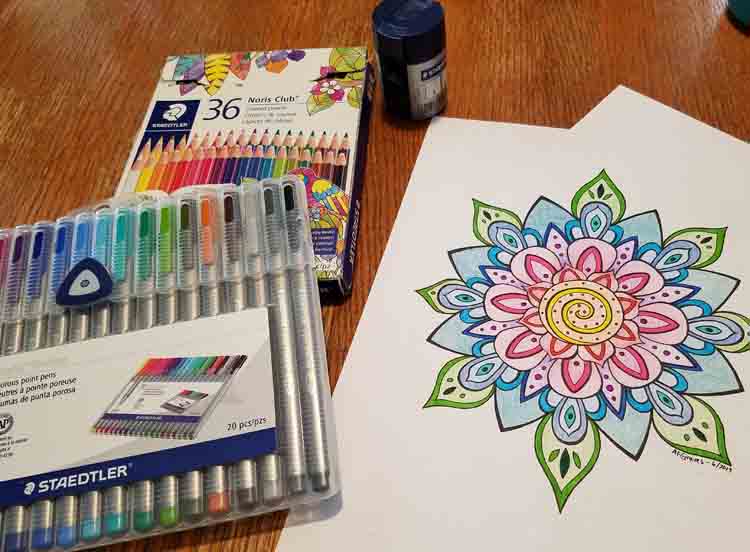
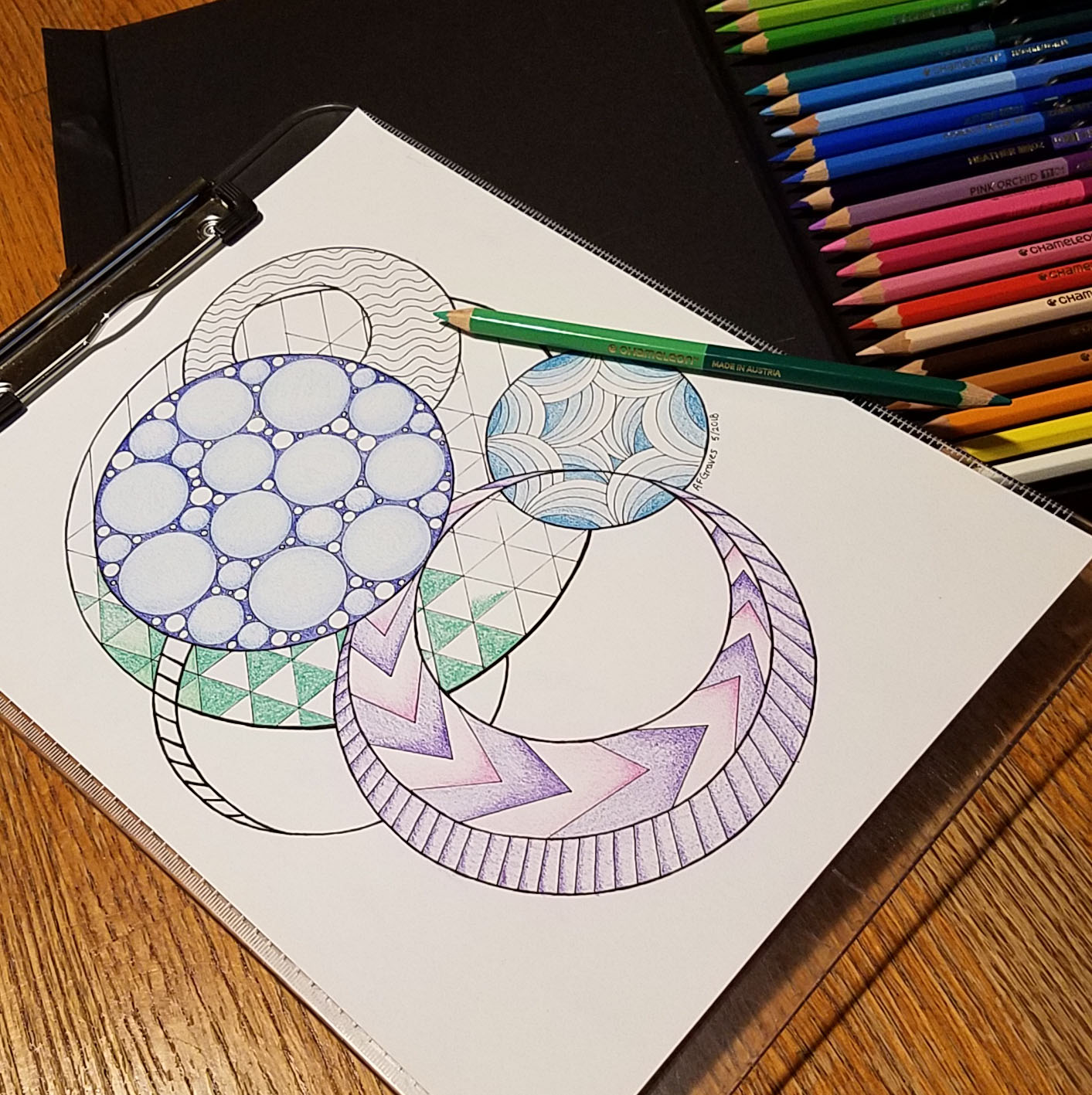
I also have a new coloring page for you to enjoy. Hopefully where you live it is actually feeling like summertime. Mandalas are very relaxing to color as well as draw. You can even have fun adding your own doodles to this mandala to add to your coloring relaxation.

If you would rather color some crochet themed coloring pages remember to check out my E-coloring booklet with FaveCrafts: “4 Inspiring Crochet Coloring Pages for Adults”. You can download them for free.

My current favorite pens for drawing my coloring pages with are my Staedtler Pigment Liners. This set of 8 different line widths is perfect for carrying with me whenever I want to draw. I tend to use the 0.3 size the most, so I’ve purchased extra pens in that size to add to my drawing supplies. If you can’t find them in your local shops click on the photo above to find them on Amazon.

For coloring this page today I used both Staedler Triplus fineliner markers and Staedler Noris Club Colored pencils. I like using fineliner markers for the small details when coloring to ensure that I get the intensity of color that I want. Where the colored pencils are good for laying out larger sections of color in a softer tone.

The Noris Club pencils are great for traveling with, the white layer around the core makes the colored leads more durable. They also seem to hold up better to being sharpened. The more durable leads do draw a little lighter, so I find I want to layer my colors more than with some of my softer pencils. You can click on the photo above to look at the variety of Staedtler Noris Club pencil sets available at Amazon. My set has 36 colors, which gives me a number of options when I am coloring and drawing on the go.

I’ve shared about the Staedtler Triplus Fineliners before, but it bears repeating. These are wonderful markers for both drawing, coloring and journaling. The colors are intense and I can use them for hours without the marker drying up. They are labeled “Dry Safe: can be left uncapped for days without drying up”. I haven’t tested that personally, since I live in a very dry environment. I have had other markers dry up on me while I am working, and that has never been an issue with these.

Whether you are crocheting or coloring I hope you are having a wonderful summer. I’ll try to get another blog post up before I leave for ChainLink, but no guarantees.

The Secrets to Crocheting the X-stitch

This post contains affiliate links. I may receive compensation (at no added cost to you) if you make a purchase using these links.

There was a little delay getting this post finished because we were preparing for adding a new family member. The little sweetie in the photo above. We have been wanting to get a kitten for about 7 months and this week everything came together for Ms. Areya (R-ree-Yah) to join us. I confess, part of the delay is because I am having way too much fun getting kitten cuddles. This is our first baby kitten in 14 years, so we are all enjoying her tiny time, she is just 8 weeks old. You will probably see her photo-bombing the blog a bit over the next couple of months.

Now back to learning about crocheting the X-stitch…

The X-stitch is one of my second favorite stitches to use in my crochet designs. The fabric you can create with it is stretchy and has a pleasing texture. I often think that crocheting it is a little like dancing the two-step; 2 steps foward, 1 step back.

One thing I have noticed about this stitch (and a lot of crochet stitches) is that the written directions for working the stitch can sound very intimidating, when actually working the stitch is fairly easy.

Because there are not standardized terms for the name of all crochet stitches you can encounter a lot of different X-stitches. There are versions of the X-stitch out there that use taller stitches and more skipped stitches, so remember to check the stitch definitions in the pattern you are working to be sure that you know which version is being used.

My favorite version of this stitch is very simple. It is 2 double crochet stitches, worked into 2 stitches, with the second stitch worked over and around the first one. After reading that you are likely thinking I’m nuts to say it is simple.

In my Cliffhouse Cowl pattern I defined the X-stitch as: Skip 1 un-worked st forward, dc in next st, working around 1st dc, dc in skipped st.

Let’s break it down with an illustration.

Step 1: Skip 1 un-worked st forward (indicated by pink arrow),

Step 2: dc in next st (indicated by green arrow),

Step 3: working around first dc, dc in skipped st (indicated by pink arrow).

In this step you are crocheting around the post of the first stitch at the same time as you are working your double crochet in the top of the previously skipped stitch. The first stitch is surrounded by the second stitch.

Stacked or Staggered X-stitches

Stacked X-sts
Staggered X-sts

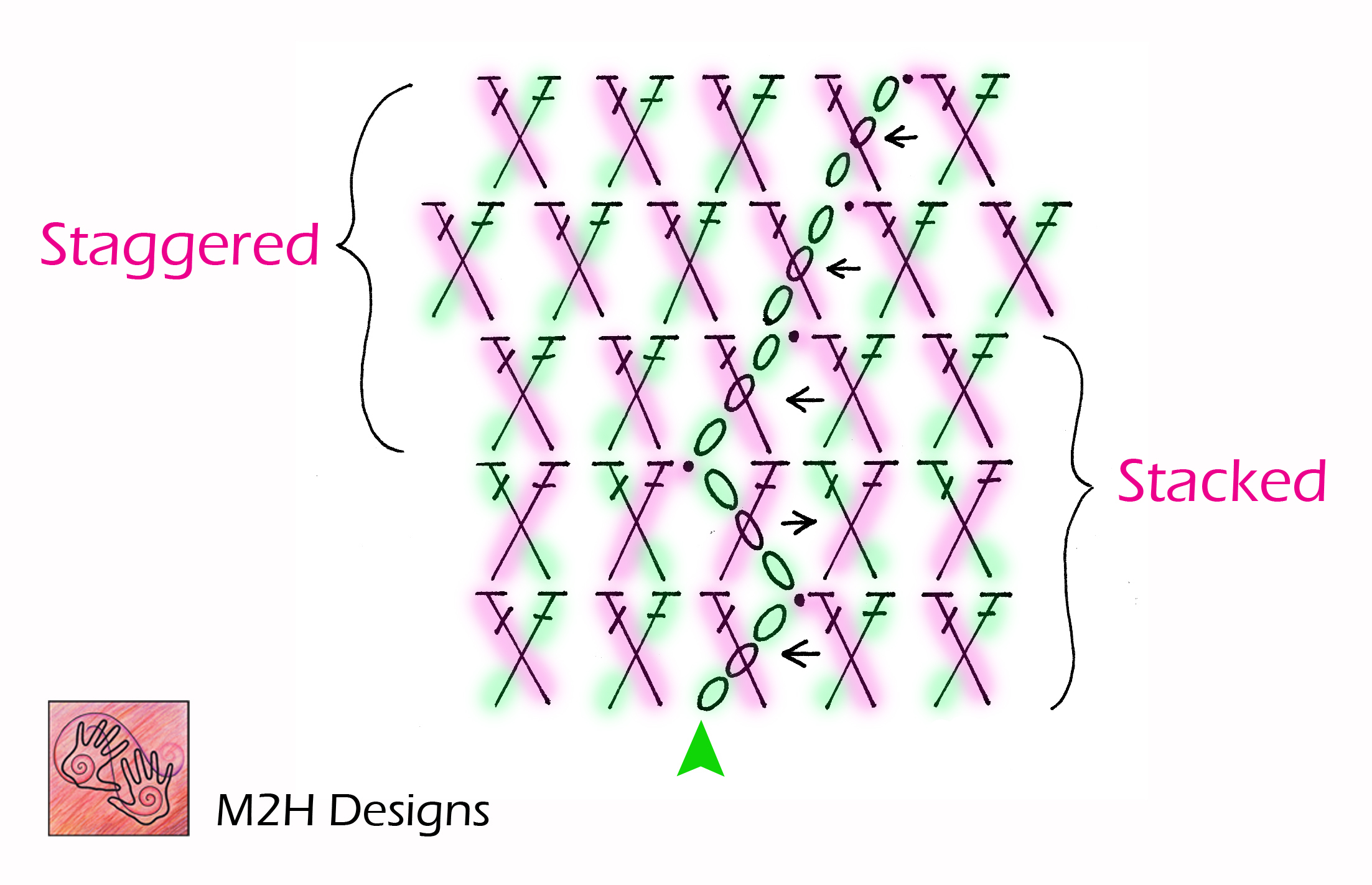
When you are working rows or rounds of the X-st you can stack them or stagger them. You’ll get 2 very different looks to your fabric depending on which you choose.

Cliffhouse Cowl –
Andee Graves M2H Designs

For my Cliffhouse Cowl the X-sts are stacked and worked in the round.

Spiraling Crosses Hat –
Andee Graves M2H Designs
Spiraling Crosses Gauntlets –
Andee Graves M2H Designs

In my Spiraling Crosses Hat and Spiraling Crosses Gauntlets the X-sts are staggered and worked in the round.

The stitch chart above shows both stacked and staggered X-sts worked in the round. The purple stitches are the 2nd dc of each X-st. When working staggered X-sts your join for each round will move to the right if you are right-handed, and to the left if you are left-handed (assuming you hold the hook in your left hand).

At the start of each X-st round the beginning chain 3 acts as your first dc of your first X-st. The lovely part of this is that your join in the finished project will not be as obvious as it can look with other stitch patterns.

Second X-st of Round

It can be a little tricky to see where your next X-st should be worked after working that starting X-st in your first round. The stitch that you joined to for your foundation looks like it should be your first skipped stitch (indicated with yellow arrow this is the stitch that the slip stitch join was worked into for the previous round or foundation), but it is the next stitch over (indicated with pink arrow) and the first dc will be worked in the next stitch (indicated with the green arrow).

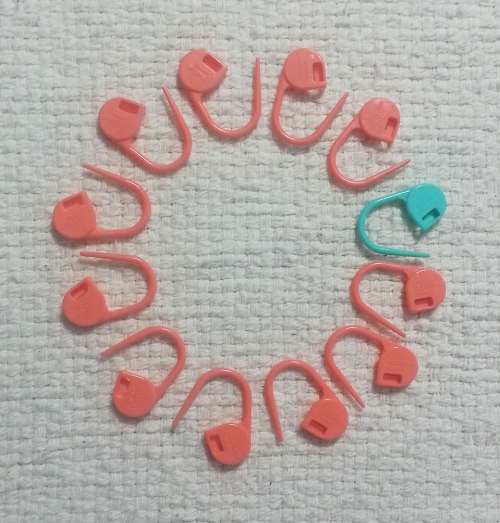
When you get to the end of your round you will finish your last X-st and then slip stitch tightly in the third chain of your beginning chain 3. I find it really helps to place a locking stitch marker in that third chain at the beginning of the round, then when I get to the end of the round it’s very easy to see where to join to.

My favorite locking stitch markers are made by the Clover Company. They are flexible and durable and come in a couple of sizes, colors and styles. I have lots of the orange and green ones that I’ve added to my project bag over the years. If you can’t find them locally you can purchase them on Amazon, just click on the photo above and it will take you right to them.

The new stitch markers from Clover that I have been falling in love with are the “Quick Locking Stitch Markers”. They come in sets of 2 colors for each size, or you can get the variety pack that has a nifty carrying case with 3 different sizes. I really love these markers because they are super flexible and they are little sheep shapes. If you can’t find them locally just click on the photo above and it will take you right to them on Amazon.

Cliffhouse Cowl

Just last Thursday I released my latest design in my Ravelry Shop: Cliffhouse Cowl. This is a fun textured cowl worked using 2 colors. It’s name is a tribute to Mesa Verde National Park. Some of my readers may remember my family and I made a trip there in 2017.

I wanted to design a cowl that reminded me of the alcoves where the various cliff dwellings were built. To get the feel of the buildings in the alcove I used X-stitches. I also used X-stitches as the mesh for the main body of the cowl, for a stretchy and breathable fabric in the final project.

I’ve shared often about my favorite stitch the “V-stitch” on my blog regularly. It is a fairly simple stitch that offers a lot of choices in how it is worked.

The X-stitch is my favorite “trickier” stitch. There are still a lot of options in the fabric that can be made using the X-stitch, but the instructions can be a bit challenging to understand, especially if you are newer to crochet. In this project it is worked in turned rounds and the Xs are “stacked” on top of each other.

I am currently working on a photo tutorial for working the X-stitch both as a “stacked” stitch and as a “staggered” stitch, so if you are having a hard time with this stitch help is coming soon.

Floating Diamonds Shawlette

I’m excited to be participating in the 2019 Celebrate Mom Blog Hop hosted by Pattern Paradise! Each day in May, a different crochet designer will be featured and share a new free pattern with you! There are lots of fun prizes too, so come join the fun! For the list of designers and all the details, go to this post => 2019 Celebrate Mom Blog Hop & Giveaway

My kids and I have a daily tradition that we start and end our days with a hug. But what do you do when your mom (or other dear friends) are far away? You can make them this lovely shawlette that can be a hug for the times you are out of arms reach.

It uses just one ball of Berroco’s “ReMix Light” yarn. Which is a perfect weight and fiber mix for a summer wearable. The open mesh and lace work also make for a very breathable fabric.

This is a little bit more challenging crochet project as you need to keep track of the changes for the diamond pattern. It is definitely one of those projects where you want to check your count at the end of each row to be sure you didn’t add or miss a stitch.

Floating Diamonds Shawlette

Designed by Andee Graves / M2H Designs

Skill level:  Intermediate

Finished Size: 59” (149.9 cm) wide x 11” (27.9 cm) tall after blocking

Materials

Yarn: Berroco “Remix Light” 30% Nylon, 27% Cotton, 24% Acrylic, 10% Silk, 9% Linen (3.5 oz/100 g, 432 yd/400 m), 1 Ball of Color # 6977

Hook: 7 / 4.5 mm (or size needed to obtain gauge)

Notions: Yarn/tapestry needle, Stitch markers

Gauge: In V-st pattern 16 stitches and 9 rows = 4” (10.16 cm)

Special Stitches or Abbreviations

PM – Place stitch marker

V-st – V Stitch: (dc, ch 1, dc) in indicated place

Pattern Notes

Shawl is worked top-down from a stacked rows foundation with a center increase point and decreases at ends of rows. Once body of shawl is finished, yarn is cut and rejoined at end of foundation to work edging along sides and bottom edge.

The majority of the body of this shawl is worked in staggered V-stitches. This means the 2 legs of the V-stitch are worked in the space between two V-stitches.

Instructions:

Foundation Rows

Row 1: Ch 2, sc in second ch from hook.

Row 2 (RS): Ch 3, turn, 2 dc in sc.

Row 3: Ch 1, turn, sc in first dc.

Rows 4 – 157: Alternate repeating Rows 2 and 3 (ending with a Row 3). PM in Row 79. [78 “scallops”]

Shawl Body

Row 1: Ch 2, turn to work along flat side of foundation rows, slip st in side of first sc row, ch 3 {counts as dc}, *skip next dc row, V-st in next sc row*, Repeat from * to * until work in sc row before marked sc row, (V-st,  ch 2, V-st) in marked sc row, move st marker to ch-2 sp just made, Repeat from * to * until work in next to last sc row, skip last dc row, dc in final sc row. [1 ch-2 sp, 2 dc, 78 V-sts]

The marked ch-2 space is the increase point for the rest of the body of the shawl.

Row 2: Ch 3 {counts as dc}, turn, skip first V-st, *V-st in space before next V-st, skip next V-st*, Repeat from * to * until reach marked ch-2 sp, (V-st, ch 2, V-st) in marked ch-2 sp, move st marker up to ch-2 sp just made, Repeat from * to * until 1 V-st is left in row, dc in top of previous row ch-3.  [1 ch-2 sp, 2 dc, 78 V-sts]

Rows 3-9: Repeat Row 2. Count at end of Row 9 – [1 ch-2 sp, 2 dc, 78 V-sts]

Row 10: Ch 3 {counts as dc}, turn, skip first V-st, *V-st in space before next V-st, skip next V-st*, Repeat from * to * 6 times, [V-st in space before next V-st, ch 10, skip next 2 V-sts, Repeat from * to * 5 times] 4 times, V-st in space before next V-st, ch 10, skip next 2 V-sts, Repeat from * to * once, (V-st, ch 2, V-st) in marked ch-2 sp, move st marker up to ch-2 sp just made, skip next V-st, [V-st in space before next V-st, ch 10, skip next 2 V-sts, Repeat from * to * 5 times] 4 times, V-st in space before next V-st, ch 10, skip next 2 V-sts, repeat from * to * 8 times, dc in top of previous row ch-3.  [1 ch-2 sp, 2 dc, 10 ch-10 sp, 68 V-sts]

Row 11: Ch 3 {counts as dc}, turn, skip first V-st, *V-st in space before next V-st, skip next V-st*, Repeat from * to * 5 times, [V-st in space before next V-st, ch 6, skip next V-st, sc in ch-10 sp, ch 6, skip next V-st, Repeat from * to * 4 times] 4 times, V-st in space before next V-st, ch 6, skip next V-st, sc in ch-10 sp, ch 6, skip next V-st, Repeat from * to * once, (V-st, ch 2, V-st) in marked ch-2 sp, move st marker up to ch-2 sp just made, skip next V-st,  [V-st in space before next V-st, ch 6, skip next V-st, sc in ch-10 sp, ch 6, skip next V-st, Repeat from * to *4 times] 4 times, V-st in space before next V-st, ch 6, skip next V-st, sc in ch-10 sp, ch 6, skip next V-st, Repeat from * to * 7 times, dc in top of previous row ch-3.  [1 ch-2 sp, 2 dc, 20 ch-6 sp, 10 sc, 58 V-sts]

Row 12: Ch 3 {counts as dc}, turn, skip first V-st, *V-st in space before next V-st, skip next V-st*, Repeat from * to * 4 times, [V-st in space before next V-st, ch 6, skip next V-st, sc in next ch-6 sp, sc in next sc, sc in next ch-6 sp, ch 6, skip next V-st, Repeat from * to * 3 times] 4 times, V-st in space before next V-st, ch 6, skip next V-st, sc in next ch-6 sp, sc in next sc, sc in next ch-6 sp, ch 6, skip next V-st, Repeat from * to * once, (V-st, ch 2, V-st) in marked ch-2 sp, move st marker up to ch-2 sp just made, skip next V-st, [V-st in space before next V-st, ch 6, skip next V-st, sc in next ch-6 sp, sc in next sc, sc in next ch-6 sp, ch 6, skip next V-st, Repeat from * to * 3 times] 4 times, V-st in space before next V-st, ch 6, skip next V-st, sc in next ch-6 sp, sc in next sc, sc in next ch-6 sp, ch 6, skip next V-st, Repeat from * to * 6 times, dc in top of previous row ch-3.  [1 ch-2 sp, 2 dc, 20 ch-6 sp, 30 sc, 48 V-sts]

Row 13: Ch 3 {counts as dc}, turn, skip first V-st, *V-st in space before next V-st, skip next V-st*, Repeat from * to * 3 times, [V-st in space before next V-st, ch 6, skip next V-st, sc in next ch-6 sp, sc in next 3 sc, sc in next ch-6 sp, ch 6, skip next V-st, Repeat from * to * 2 times] 4 times, V-st in space before next V-st, ch 6, skip next V-st, sc in next ch-6 sp, sc in next 3 sc, sc in next ch-6 sp, ch 6, skip next V-st, Repeat from * to * once, (V-st, ch 2, V-st) in marked ch-2 sp, move st marker up to ch-2 sp just made, skip next V-st, [V-st in space before next V-st, ch 6, skip next V-st, sc in next ch-6 sp, sc in next 3 sc, sc in next ch-6 sp, ch 6, skip next V-st, Repeat from * to * 2 times] 4 times, V-st in space before next V-st, ch 6, skip next V-st, sc in next ch-6 sp, sc in next 3 sc, sc in next ch-6 sp, ch 6, skip next V-st, Repeat from * to * 5 times, dc in top of previous row ch-3.  [1 ch-2 sp, 2 dc, 20 ch-6 sp, 50 sc, 38 V-sts]

Row 14: Ch 3 {counts as dc}, turn, skip first V-st, *V-st in space before next V-st, skip next V-st*, Repeat from * to * 2 times, [V-st in space before next V-st, ch 6, skip next V-st, sc in next ch-6 sp, sc in next 5 sc, sc in next ch-6 sp, ch 6, skip next V-st, Repeat from * to * once] 4 times, V-st in space before next V-st, ch 6, skip next V-st, sc in next ch-6 sp, sc in next 5 sc, sc in next ch-6 sp, ch 6, skip next V-st, Repeat from * to * once, (V-st, ch 2, V-st) in marked ch-2 sp, move st marker up to ch-2 sp just made, skip next V-st, [V-st in space before next V-st, ch 6, skip next V-st, sc in next ch-6 sp, sc in next 5 sc, sc in next ch-6 sp, ch 6, skip next V-st, Repeat from * to * once] 4 times, V-st in space before next V-st, ch 6, skip next V-st, sc in next ch-6 sp, sc in next 5 sc, sc in next ch-6 sp, ch 6, skip next V-st, Repeat from * to * 4 times, dc in top of previous row ch-3.  [1 ch-2 sp, 2 dc, 20 ch-6 sp, 70 sc, 28 V-sts]

Row 15: Ch 3 {counts as dc}, turn, skip first V-st, *V-st in space before next V-st, skip next V-st*, Repeat from * to * once, [ch 6, skip next V-st, sc in next ch-6 sp, sc in next 7 sc, sc in next ch-6 sp, ch 6, skip next V-st, V-st in space before next V-st] 4 times, ch 6, skip next V-st, sc in next ch-6 sp, sc in next 7 sc, sc in next ch-6 sp, ch 6, skip next V-st, Repeat from * to * once, (V-st, ch 2, V-st) in marked ch-2 sp, move st marker up to ch-2 sp just made, skip next V-st, V-st in space before next V-st, [ch 6, skip next V-st, sc in next ch-6 sp, sc in next 7 sc, sc in next ch-6 sp, ch 6, skip next V-st, V-st in space before next V-st] 4 times, ch 6, skip next V-st, sc in next ch-6 sp, sc in next 7 sc, sc in next ch-6 sp, ch 6, skip next V-st, Repeat from * to* 3 times, dc in top of previous row ch-3.  [1 ch-2 sp, 2 dc, 20 ch-6 sp, 90 sc, 18 V-sts]

Row 16: Ch 3 {counts as dc}, turn, skip first V-st, *V-st in space before next V-st, skip next V-st*, Repeat from * to * once, [V-st in next ch-6 sp, ch 6, skip next sc, sc in next 7 sc, ch 6, skip next sc, V-st in next ch-6 sp, skip next V-st] 4 times, V-st in next ch-6 sp, ch 6, skip next sc, sc in next 7 sc, ch 6, skip next sc, V-st in next ch-6 sp, skip next V-st, Repeat from * to * once, (V-st, ch 2, V-st) in marked ch-2 sp, move st marker up to ch-2 sp just made, skip next V-st, repeat from * to * once, [V-st in next ch-6 sp, ch 6, skip next sc, sc in next 7 sc, ch 6, skip next sc, V-st in next ch-6 sp, skip next V-st] 4 times, V-st in next ch-6 sp, ch 6, skip next sc, sc in next 7 sc, ch 6, skip next sc, V-st in next ch-6 sp, skip next V-st, Repeat from * to * 2 times, dc in top of previous row ch-3.  [1 ch-2 sp, 2 dc, 20 ch-6 sp, 70 sc, 28 V-sts]

Row 17: Ch 3 {counts as dc}, turn, skip first V-st, *V-st in space before next V-st, skip next V-st*, Repeat from * to * once, [V-st in next ch-6 sp, ch 6, skip next sc, sc in next 5 sc, ch 6, skip next sc, V-st in next ch-6 sp, skip next V-st, Repeat from * to * once] 4 times, V-st in next ch-6 sp, ch 6, skip next sc, sc in next 5 sc, ch 6, skip next sc, V-st in next ch-6 sp, skip next V-st, Repeat from * to * 2 times, (V-st, ch 2, V-st) in marked ch-2 sp, move st marker up to ch-2 sp just made, skip next V-st, repeat from * to * 2 times, [V-st in next ch-6 sp, ch 6, skip next sc, sc in next 5 sc, ch 6, skip next sc, V-st in next ch-6 sp, skip next V-st, Repeat from * to * once] 4 times, V-st in next ch-6 sp, ch 6, skip next sc, sc in next 5 sc, ch 6, skip next sc, V-st in next ch-6 sp, skip next V-st, Repeat from * to * 2 times, dc in top of previous row ch-3.  [1 ch-2 sp, 2 dc, 20 ch-6 sp, 50 sc, 38 V-sts]

Row 18: Ch 3 {counts as dc}, turn, skip first V-st, *V-st in space before next V-st, skip next V-st*, Repeat from * to * once, [V-st in next ch-6 sp, ch 6, skip next sc, sc in next 3 sc, ch 6, skip next sc, V-st in next ch-6 sp, skip next V-st, Repeat from * to * 2 times] 4 times, V-st in next ch-6 sp, ch 6, skip next sc, sc in next 3 sc, ch 6, skip next sc, V-st in next ch-6 sp, skip next V-st, Repeat from * to * 3 times, (V-st, ch 2, V-st) in marked ch-2 sp, move st marker up to ch-2 sp just made, skip next V-st, repeat from * to * 3 times, [V-st in next ch-6 sp, ch 6, skip next sc, sc in next 3 sc, ch 6, skip next sc, V-st in next ch-6 sp, skip next V-st, Repeat from * to * 2 times] 4 times, V-st in next ch-6 sp, ch 6, skip next sc, sc in next 3 sc, ch 6, skip next sc, V-st in next ch-6 sp, skip next V-st, Repeat from * to * 2 times, dc in top of previous row ch-3.  [1 ch-2 sp, 2 dc, 20 ch-6 sp, 30 sc, 48 V-sts]

Row 19: Ch 3 {counts as dc}, turn, skip first V-st, *V-st in space before next V-st, skip next V-st*, Repeat from * to * once, [V-st in next ch-6 sp, ch 6, skip next sc, sc in next sc, ch 6, skip next sc, V-st in next ch-6 sp, skip next V-st, Repeat from * to * 3 times] 4 times, V-st in next ch-6 sp, ch 6, skip next sc, sc in next sc, ch 6, skip next sc, V-st in next ch-6 sp, skip next V-st, Repeat from * to * 4 times, (V-st, ch 2, V-st) in marked ch-2 sp, move st marker up to ch-2 sp just made, skip next V-st, repeat from * to * 4 times, [V-st in next ch-6 sp, ch 6, skip next sc, sc in next sc, ch 6, skip next sc, V-st in next ch-6 sp, skip next V-st, Repeat from * to * 3 times] 4 times, V-st in next ch-6 sp, ch 6, skip next sc, sc in next sc, ch 6, skip next sc, V-st in next ch-6 sp, skip next V-st, Repeat from * to * 2 times, dc in top of previous row ch-3.  [1 ch-2 sp, 2 dc, 20 ch-6 sp, 10 sc, 58 V-sts]

Row 20: Ch 3 {counts as dc}, turn, skip first V-st, *V-st in space before next V-st, skip next V-st*, Repeat from * to * once, [V-st in first ch of next ch-6 sp, skip next sc, V-st in last ch of next ch-6 sp, skip next V-st, Repeat from * to * 4 times] 4 times, V-st in first ch of next ch-6 sp, skip next sc, V-st in last ch of next ch-6 sp, skip next V-st, Repeat from * to * 5 times, (V-st, ch 2, V-st) in marked ch-2 sp, move st marker up to ch-2 sp just made, skip next V-st, repeat from * to * 5 times, [V-st in first ch of next ch-6 sp, skip next sc, V-st in last ch of next ch-6 sp, skip next V-st, Repeat from * to * 4 times] 4 times, V-st in first ch of next ch-6 sp, skip next sc, V-st in last ch of next ch-6 sp, skip next V-st, Repeat from * to * 2 times, dc in top of previous row ch-3.  [1 ch-2 sp, 2 dc, 68 V-sts]

Rows 21 – 23: Repeat Row 2. Fasten off at end of Row 23. [1 ch-2 sp, 2 dc, 68 V-sts]

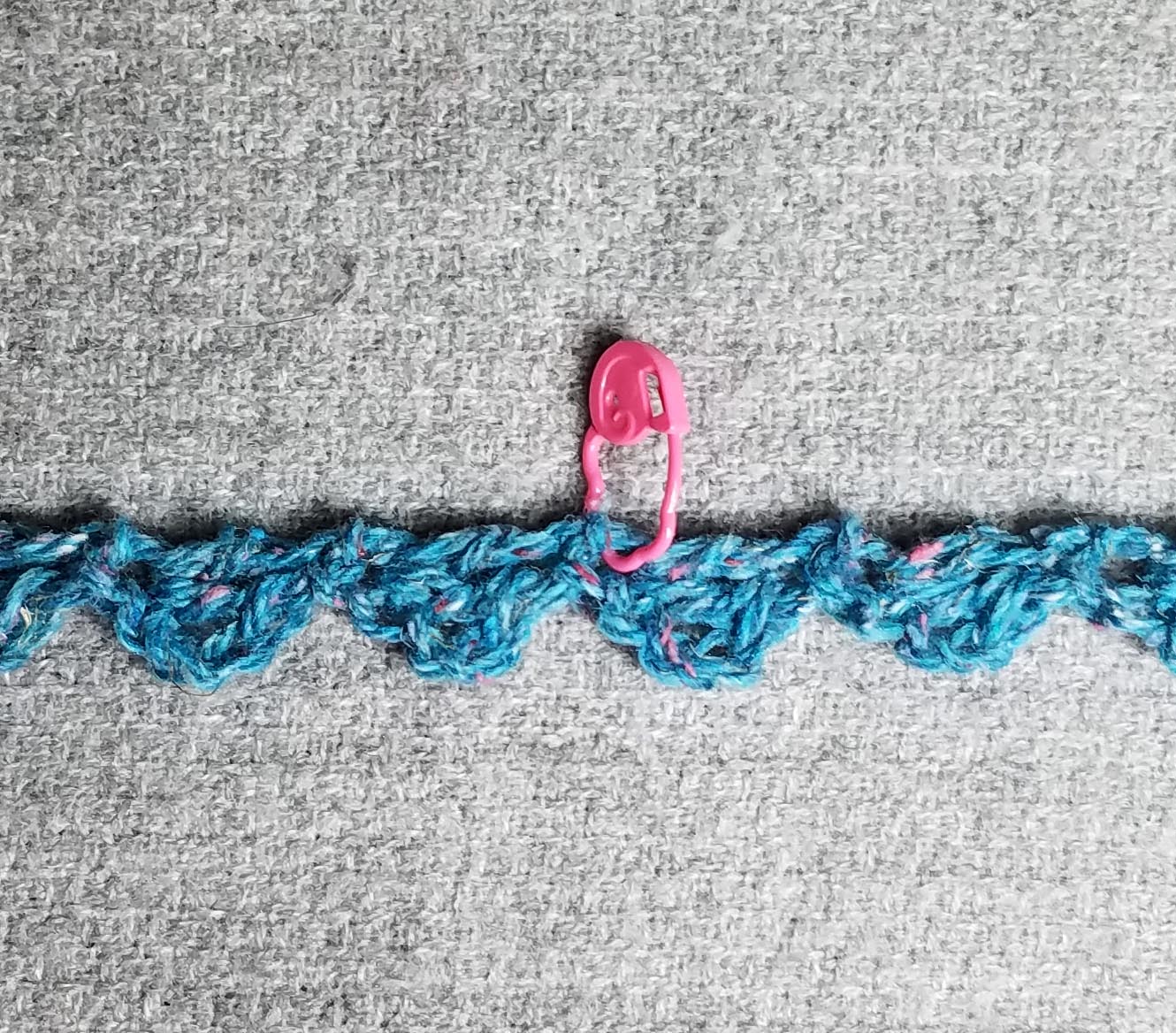
Edging: With RS of foundation facing attach yarn with slip st in ch-2 at beginning of Row 1 {indicated by pink arrow in photo above}, working along side of Shawl body Rows, (ch 2, dc) in same ch-2 sp as slip st join, [(slip st, ch 2, dc) in top of next row] 22 times, slip st in last st at top of Row 23, turn to work along top of Row 23 stitches, ch 3, dc in first dc of first V-st, skip 2 sts, *[(slip st, ch 3, dc) in first dc of next V-st, skip 2 sts]* 33 times, (slip st, ch 3, dc) in marked ch-2 sp, remove st marker, Repeat from * to * 34 times, (slip st, ch 2, dc) in last dc of Row 23, turn to work along side of Shawl Body rows at last end, [(slip st, ch 2, dc) in top of next row] 22 times, slip st in sc at end of foundation rows,Fasten off. [23 small scallops at each end, 69 scallops along top of Row 23]

Finishing

Before weaving in ends, wet block work to open lace. Once shawlette has completely dried, weave in all loose ends.

The stitch markers in my project photos above are my favorite newest Clover stitch markers. They are light weight and come in a variety of colors and sizes. If you can’t find them locally you can click on the product photo below to find them on Amazon.com. This post contains affiliate links. I may receive compensation (at no added cost to you) if you make a purchase using these links.

I hope you have a fun time crocheting this shawlette. If you make it and want to share photos with me of your finished project tag me on Instagram. You can follow me there using the icons at the top of the sidebar. Or just search for me as Andee.Graves.

Needle Felting for Repairs

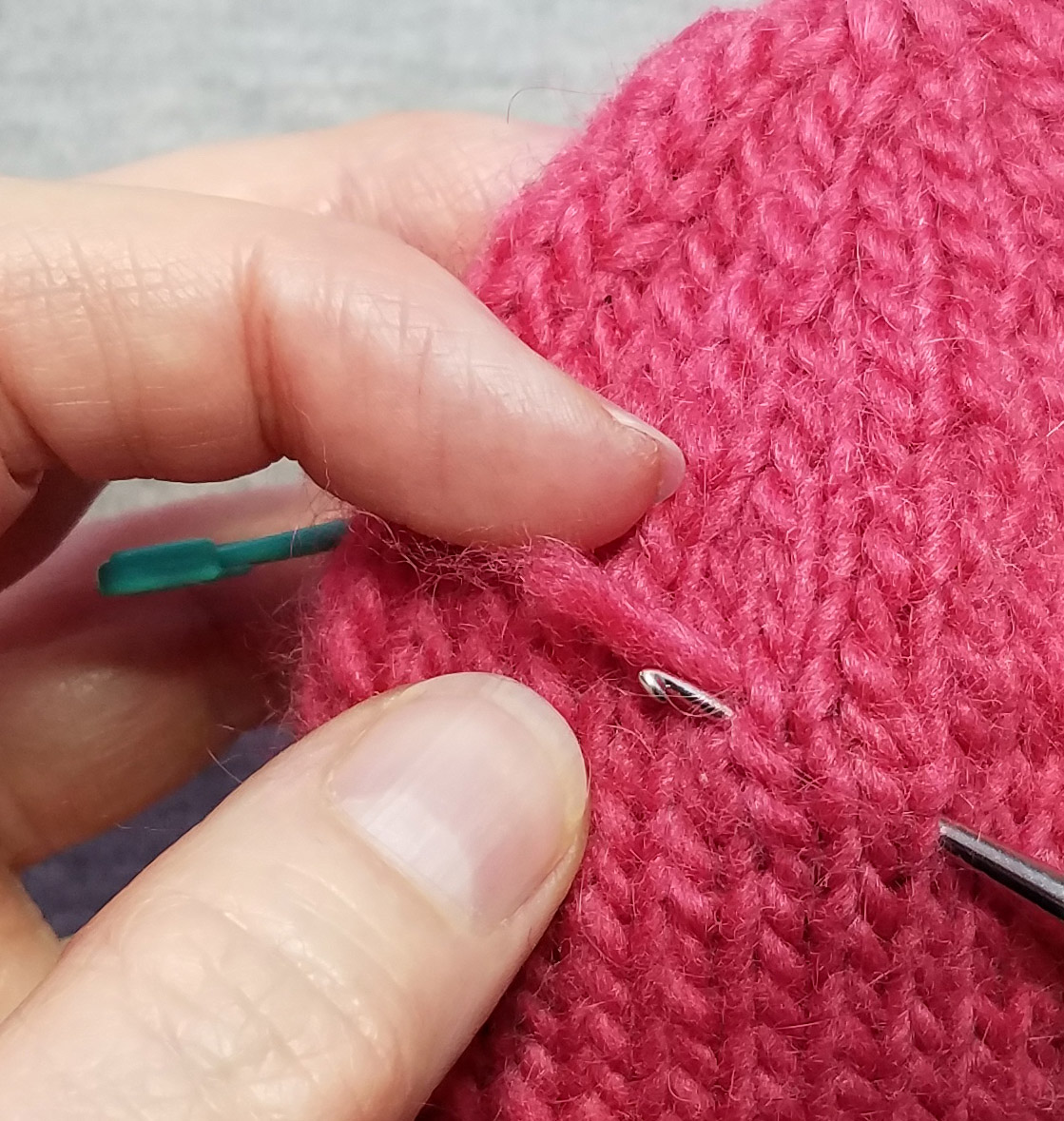
One of my least favorite things in crochet or knitting is dealing with the loose ends once a project is finished. Needle felting can be a big help in securing those ends though, especially if your project is worked using a wool blend yarn.

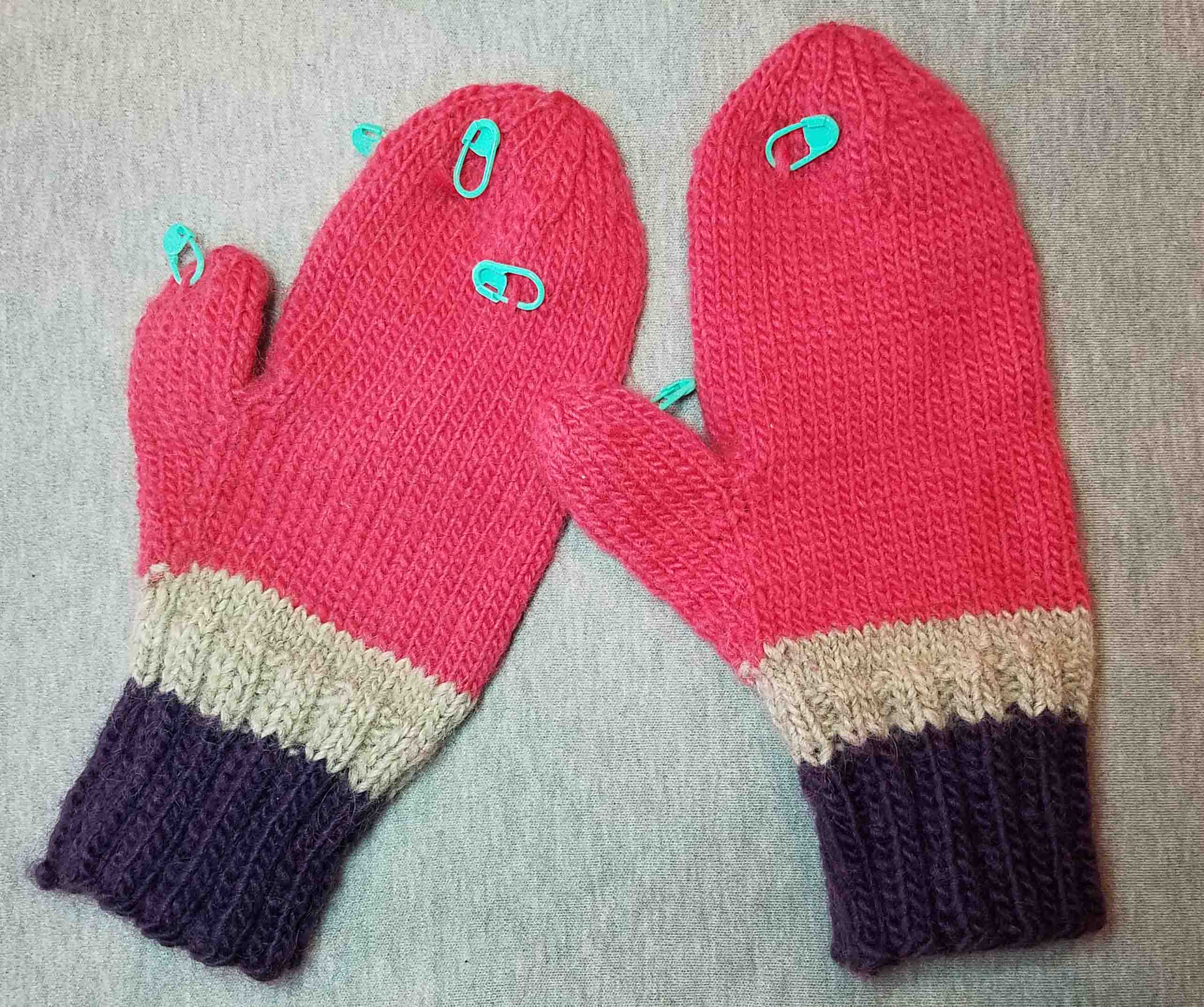
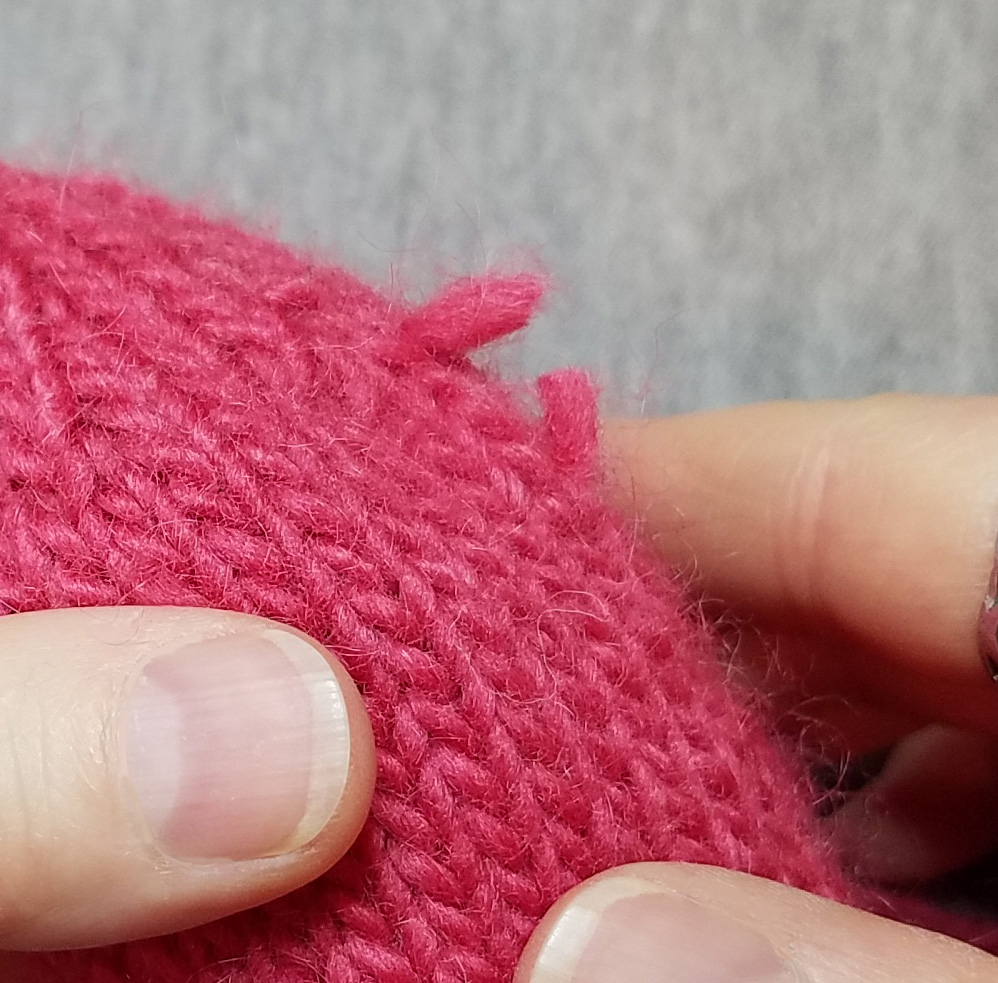
Recently one of my friends had an issue with some mittens she had knit. When weaving in ends she had some extra strands on the outside of her fabric. We looked at the mittens trying to figure out how she could weave in the ends. They were going to be super short and there was a good chance they would pop loose.

Needle-felting to the rescue! I grabbed my size 40 felting needle, my “egg” felting surface, and a small steel crochet hook (not shown).

I cut the strand in the center, and had 2 short ends.

I then pulled the 2 loose ends to the wrong side of the fabric by inserting a small crochet hook in from the side.

I turned the mitten inside out and gently pulled on the ends to be sure I didn’t have any excess yarn on outside of mitten. I inserted my felting surface behind the fabric and snugged the fabric where I would be needling tight to the surface.

I then gently needled the ends close to where they came thru the fabric. I checked the outside (right-side) of the fabric regularly to make sure my work wasn’t visible. I wanted to secure the ends but not decrease the stretch of the fabric. Once I was sure the ends were well secured I trimmed off any excess yarn.

You can use this same method with any knit or crochet project. Especially if the project is worked in a wool or other animal fiber yarn. Needle felting can secure other types of fiber, but you may want to test it out before relying on it for your final project.

Needle felting can even be a great way to secure the cut end of longer tails that have been woven in. Especially helpful on items that get a lot of use like hats, mittens, scarves and blankets.

For longer tails, weave in like you usually do, but before cutting the yarn use your felting needle to secure the end. Then cut close to the needle felted spot to remove excess yarn.

This post contains affiliate links. I may receive compensation (at no additional cost to you) if you make a purchase using these links.

One of my favorite tools is Clover’s Single Needle Felting Tool. It is much easier on my hand than just holding the plain needle. The ergonomic shaping also allows for more control of the needle while working.
If you can’t find this tool locally it is available online at Amazon.com. Click on the photo below to go straight to it.

Time for an Easter Basket

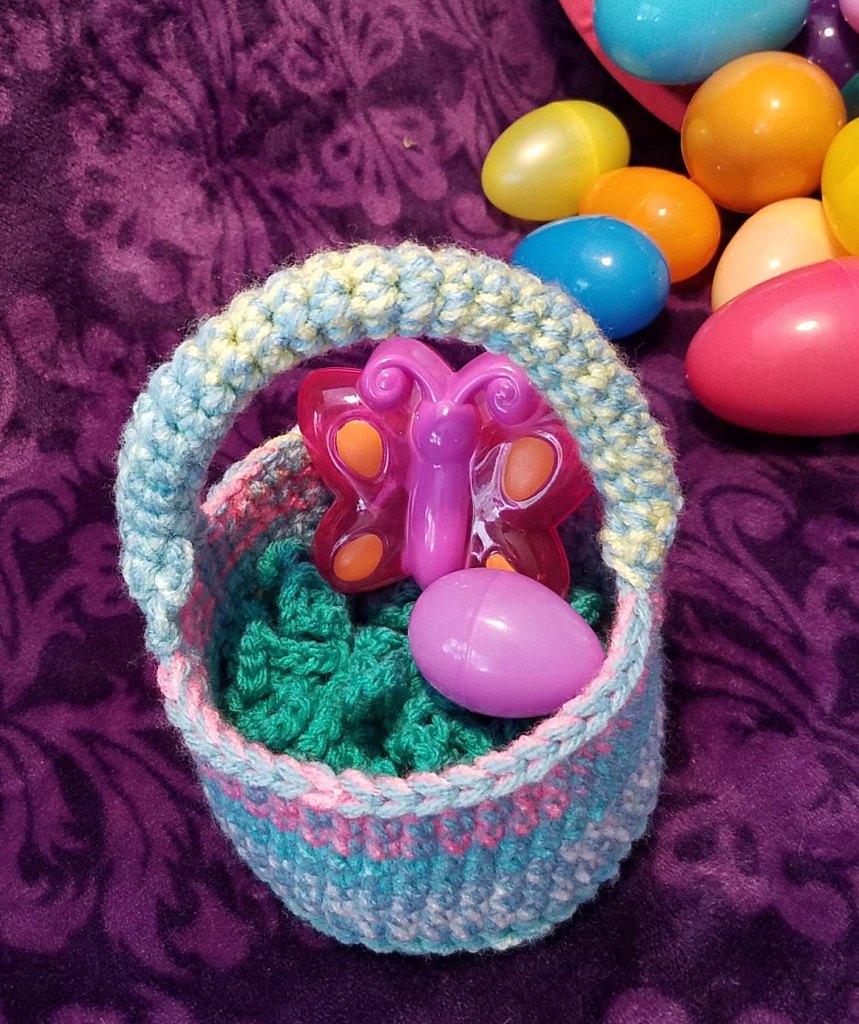
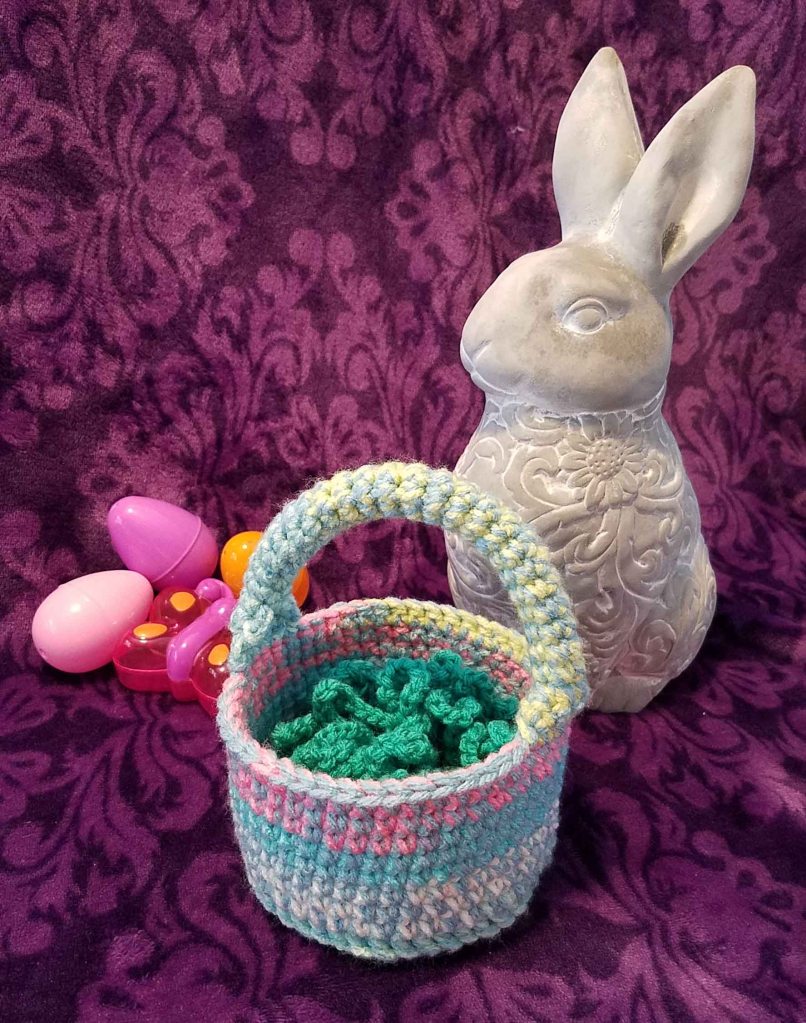
Easter is coming up in just a few weeks and I have a fun little pattern for you to crochet a basket for Easter goodies. This basket is small enough to be perfect for toddlers or as a special gift container.
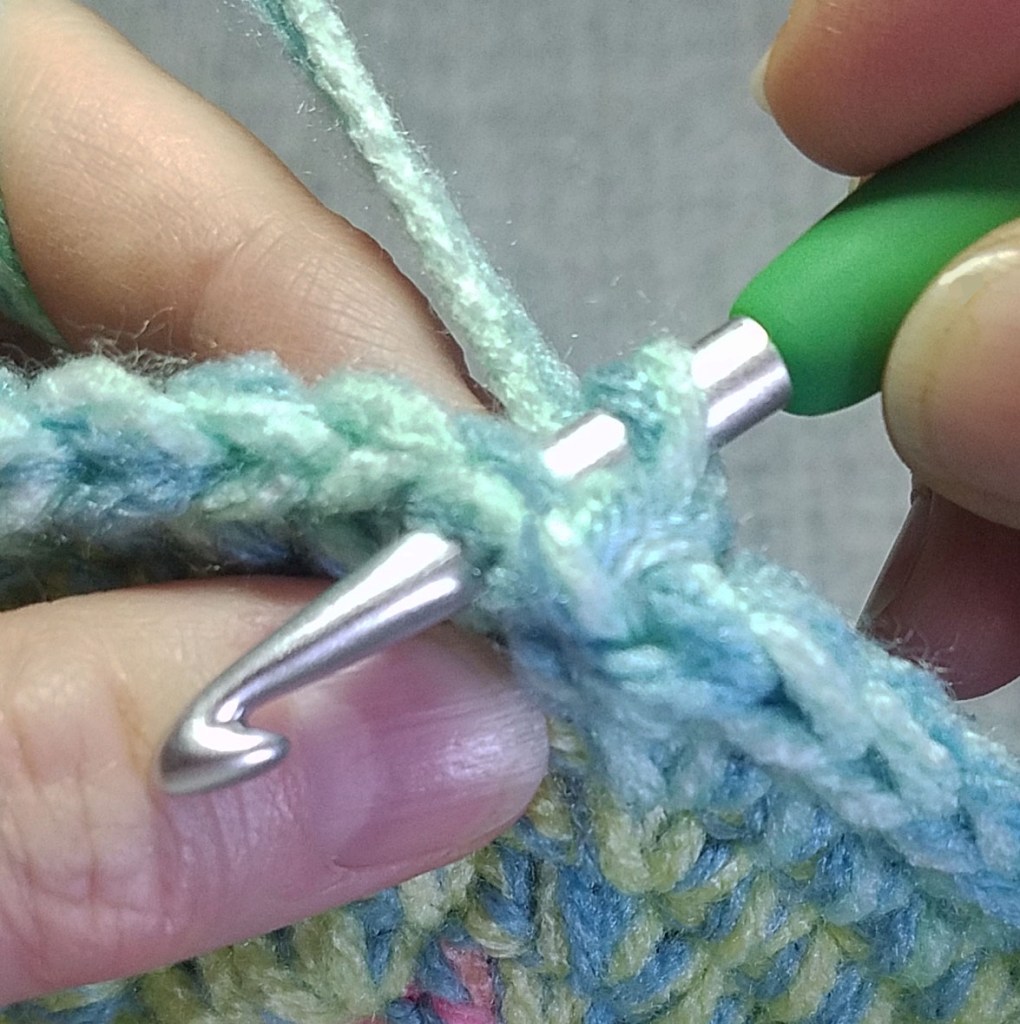
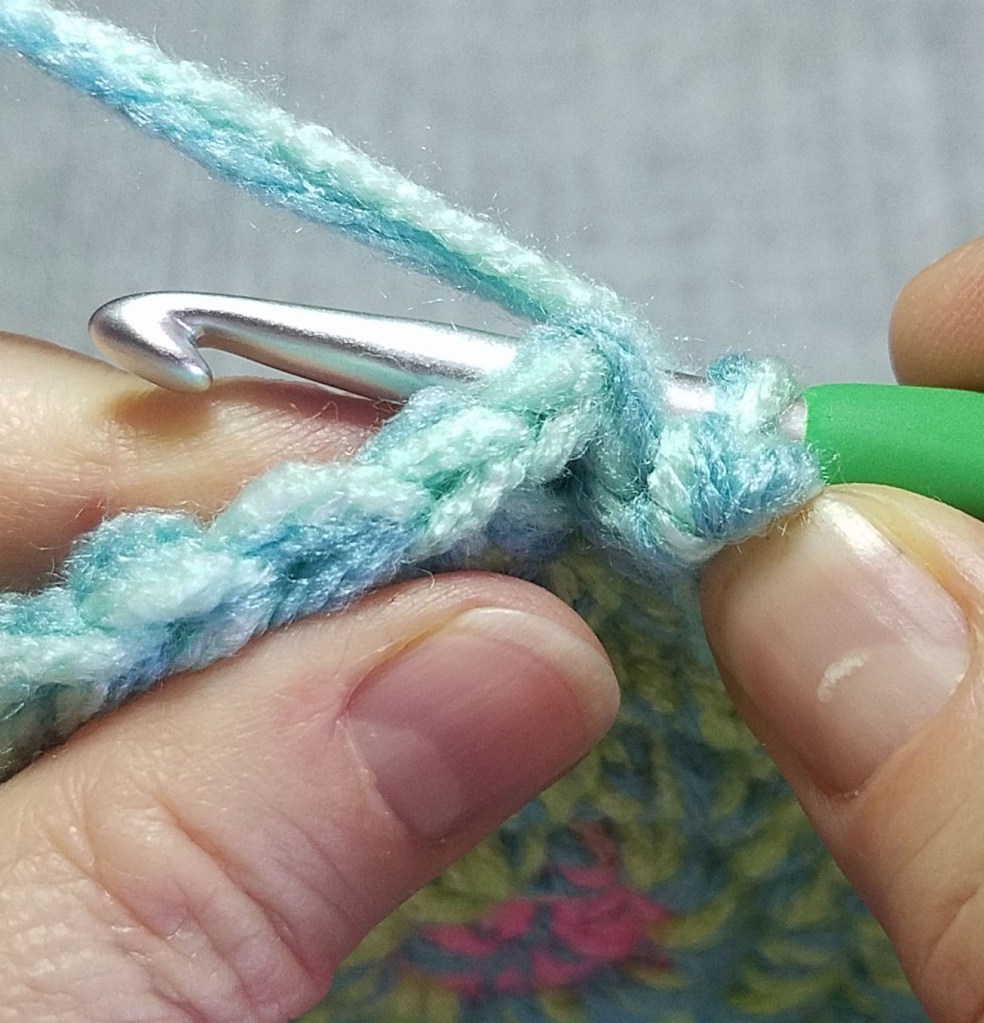
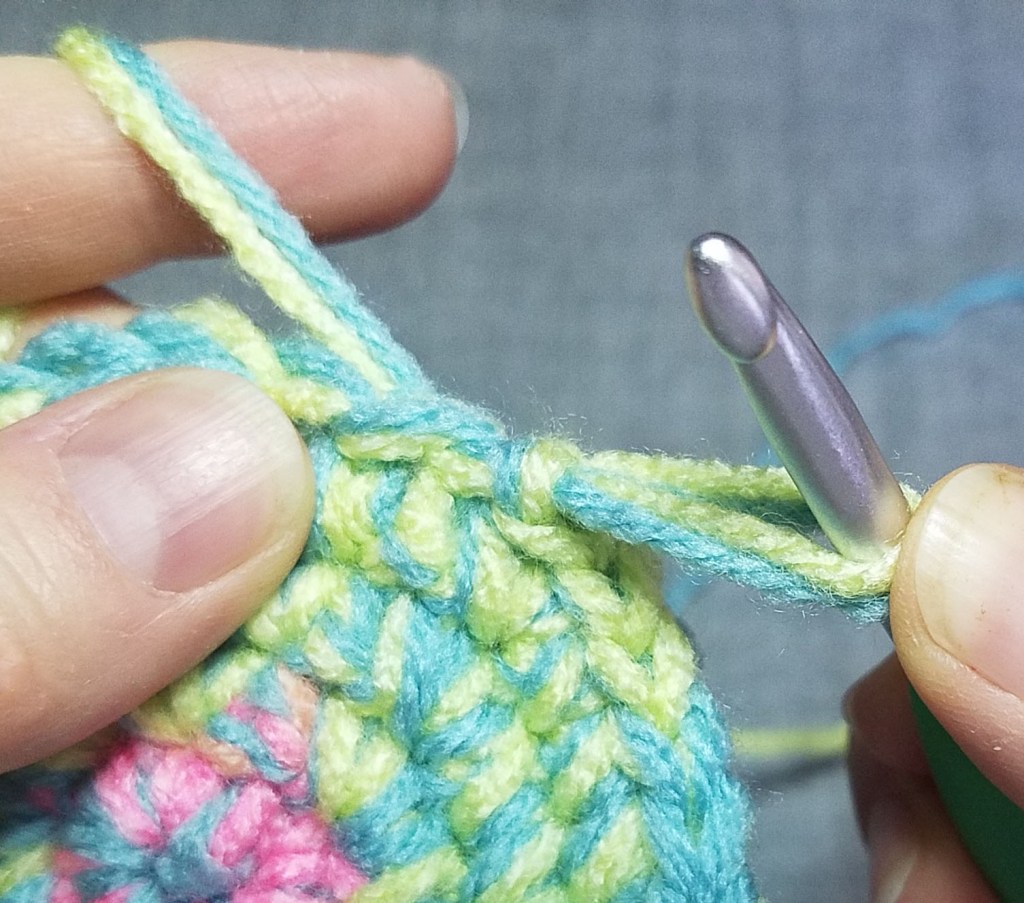
The trickiest stitch in this project is the Back Post Single Crochet (BPsc). The single crochet isn’t a stitch you usually think of as having enough of a post to work this stitch. You are working it using the top loops of your stitch so that the newly made stitch is sitting on the back side of the stitch. Following is a photo tutorial to help you make this stitch.

Step 1 – BPsc
Step 2 – BPsc
Step 3 – BPsc
Step 4 – BPsc
  1. Insert the hook from back to front of stitch working into.
  2. Insert the hook from front to back of next stitch.
  3. Yarn over and pull up a loop thru both stitches (2 loops on hook).
  4. Yarn over and complete single crochet, Back Post single crochet made.

All rounds in this project are worked concentrically. Each round ends with a tight slip stitch to join. The next round will start with a chain stitch to get to stitch height. For best results you want to be sure that your slip stitch is very tight and that your beginning chain stitch is a little smaller than typical.

Tight Slip Stitch – Step 1
Tight Slip Stitch – Step 2

  1. Make slip stitch as usual.
  2. Without letting working yarn feed out, pull on hook to take out slack from slip stitch.

Happy Spring Basket

designed by Andee Graves / M2H Designs

Skill level:    Intermediate

Finished Size: 4.5” diameter at base, 3” tall in basket, and 6.25” with handle.

Materials:

Yarn 

Red Heart “With Love” (100% Acrylic), 7 oz/198 g; 370 yds/ 338 m, Color #1502 Iced Aqua

Red Heart “With Love – Stripes” (100% Acrylic), 5 oz/141 g; 223 yds/ 204 m, Color #1973 Candy Stripe

Hooks

I-9 / 5.5 mm

Notions

Yarn/tapestry needle

Stitch markers

Gauge:

Barely over 3″ at end of Rnd 4

Special Stitches or Abbreviations:

BPsc — Back Post Single Crochet

PM – Place stitch marker

Pattern Notes:

Basket is worked double-stranded with a smaller than usual hook to create a stiff fabric. It begins with a flat circle worked in joined rounds for the base, then the first round of side is worked as back post stitches to create a sharp edge to bottom of basket.

Handle is worked without cutting the yarn. A couple rows of single crochet are switched to working in joined rounds for length of handle, then a couple more rows of single crochet. Work is fastened off and then sewn to the opposite side on top edge of basket.

Instructions:

Base

Rnd 1: Working with 2 strands at same time, make an adjustable slip knot, ch 2, 7 sc in second ch from hook, slip st to first sc of round. [7 sc]

Rnd 2: Ch 1, 2 sc in each st around, slip st to first sc of round. [14 sc]

Rnd 3: Ch 1, (sc in next st, 2 sc in next st) 7 times, slip st to first sc of round. [21 sc]

Rnd 4: Ch 1, (sc in next 2 sts, 2 sc in next st) 7 times, slip st to first sc of round.  [28 sc]

Rnd 5: Ch 1, (sc in next 3 sts, 2 sc in next st) 7 times, slip st to first sc of round. [35 sc]

Rnd 6: Ch 1, (sc in next 4 sts, 2 sc in next st) 7 times, slip st to first sc of round. [42 sc]

Side

Rnd 1: Ch 1, BPsc in each st around, slip st to first st of round. [42 BPsc]

Rnd 2 – 8: Ch 1, sc in each st around, slip st to first st of round. [42 sc]

Handle

Row 1: Ch 1, sc in next 5 sts.

Row 2: Ch 1, turn, sc in next 5 sts.

Row 3: Ch 1, turn sc in next 5 sts, slip st to first st of row.

Rnd 4 – 25: Ch 1, sc in each st around, slip st to first sc of round.

Row 26: Ch 1, sc in each st.

Row 27: Ch 1, turn, sc in next 5 sts.

Row 28: Repeat Row 27. Fasten off with 10 inch tail

Finishing

Count over 19 sts from both sides of the start of handle along top edge of basket. Sew loose end of handle to top edge of basket with a whip stitch to the remaining stitches opposite the handle start. Weave in all loose tails.

I hope you have a wonderful time making some baskets. Pop on over to my guest post at Mooglyblog.com for the pattern for crocheting the grass shown in the basket.

Crochet Inspired Coloring

I’m so excited to share with my readers my latest project.

My Crochet themed E-Coloring Book with FaveCrafts.com. Today is the first day it is available on the FaveCrafts website. It is a free downloadable PDF. Click here to get your copy.

The book contains 4 coloring pages for you to print out and color. The front and back covers are some examples of how I colored 2 of the pages using color pencils and fine line markers.

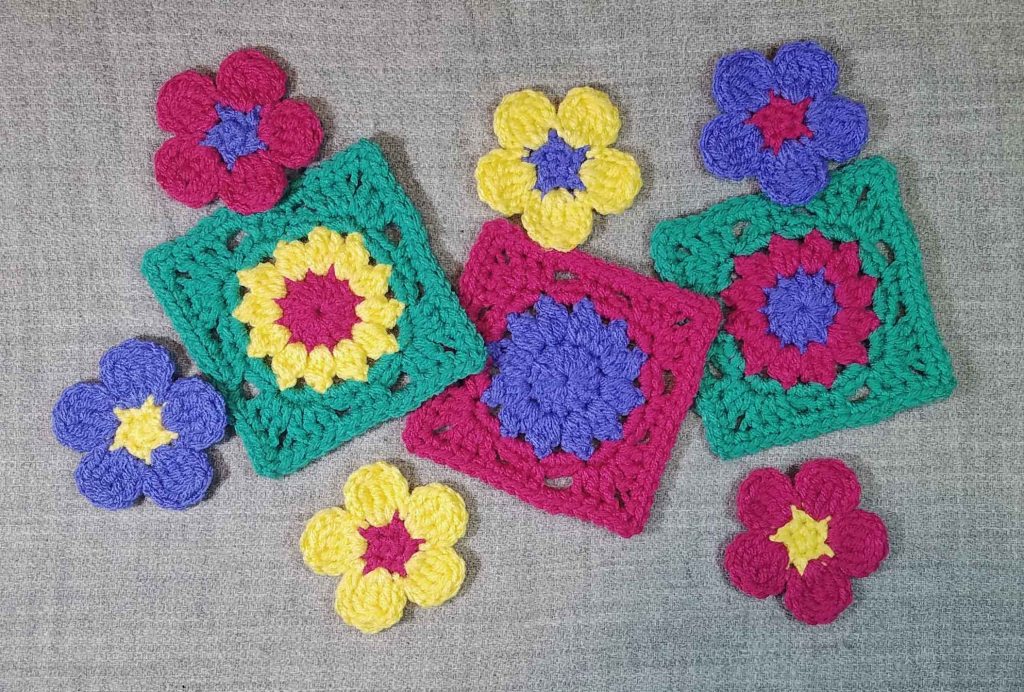
On 2 of the pages I included a stitch chart pattern for making motifs. One is the flower from the “Flowers & Vines” page. The other is a Round-to-Square blanket square from the “Gorgeous Granny Square” page. Both pattern pages also have a drawing of a crocheted motif (the square has 3) so you can play with color on the page to see what colors of yarn you might want to use.

I worked the motifs above with Red Heart’s “With Love” worsted weight yarn and a size I (5.5mm) hook. You can see on the squares that switching colors at the ends of round 1 and 2 creates a floral look. Especially when the last rounds are worked in green.

I hope you enjoy this collection of coloring pages. Please share your colored pages and crocheted projects with me on Instagram (andee.graves) or my Facebook business page (Andee Graves / M2H Designs).

Half Shell Summer Cowl

This is my newest pattern release from M2H Designs: Half Shell Summer Cowl. I wanted to create a cowl with beautiful drape that could be a fun summer layer. Summers up on my mountain are a bit cooler than in some parts, but even when I travel to warmer climes I like having a layer to wear in hotels and other air-conditioned venues. The cool and colorful “Vogue” cotton yarn from King Cole was the perfect match for this design.

This design takes advantage of the natural tendency of crochet fabric to bias to the right (for right-handed crocheters). It is worked in the round off of my favorite foundation: stacked rows. If you get confused by this foundation I have a video tutorial on my YouTube channel.

I’m participating in the International Crochet Month Designer Showcase with Underground Crafter. Come join the fun! Every day in March, 2019, we’ll highlight a different crochet designer who is also a member of the Crochet Guild of America. Each designer will share a free crochet pattern or a 25% discount on a premium pattern.

I’m sharing a coupon to get the “Half Shell Summer Cowl” for free in my Ravelry Shop. The coupon is only good until 11:59 p.m. (Mountain Time) April 11, 2019. Enter ICMDS2019 in the shopping cart to get your free copy before April 11, 2019. Please don’t post this coupon anywhere else, instead encourage others to come visit my blog.

We’ve also partnered with some of our favorite companies to get some great prizes for you — including yarn, crochet hooks, notions, pattern books, and more! Find out more information about other participating designers, the schedule, and how to enter to win the prizes on Underground Crafter.

Going Round and Round

This Thursday, 3/14, is one of my favorite days of the year: Pi Day! I love geometry and Pi is an important number to many of the calculations I use as a designer. Most of the time it is all about the circles.

For those of you that love to do some coloring, I have a new coloring page for you. You can download the page right here.

Since March is Crochet Month I thought we could revisit my blog post on crocheting circles from Pi Day 2017. In that post I gave you the basic formula for crocheting flat circles in single, half-double, double and treble crochet stitches.

Let’s talk today about some other helpful tips when crocheting circles. First off: crocheting continuous rounds. For me these are all about the stitch markers. I use stitch markers in each increase stitch, with a different color stitch marker for my final increase stitch (it also marks the last stitch of the round). After I make 2 stitches in the marked stitch I move the stitch marker up to the 2nd stitch made.

I think the trick that I geeked out about the most was how to keep track of which round I am in when crocheting continuous rounds. The number of stitches worked in each increase section will be the same as the number of Round. For example: in Round 5 I would work 3 plain stitches, then 2 stitches in the next (marked) stitch, 5 stitches total.

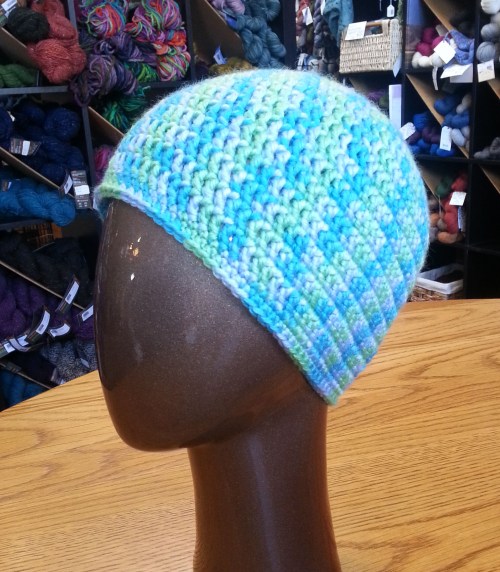
You can experiment with both of these techniques in my “Simple Double Crochet Hat” pattern here on the blog. Work it in a worsted weight yarn for a fun quick basic hat to chase away Springtime chills. Worked in a plain solid color this hat makes a great base to add decorative crocheted embellishments to.

If you want to experiment with making sure your hat fits who it is intended for, you can use Pi to help you. I have a detailed tutorial from 2011 here on the blog on making a hat fit using my “Pi Recipe”.

Have a wonderful Pi Day and celebrate all things Round this Thursday. I’m hoping to have some actual pie as part of my celebration.

Reading the Pattern

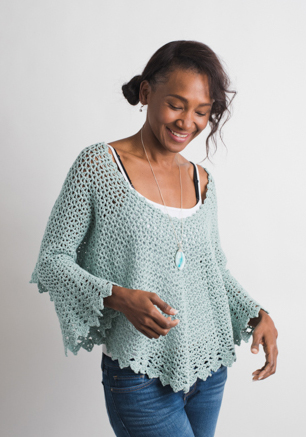
Sierra Swoncho – I Like Crochet – February 2019

This past week I seem to be getting a few messages about my “Sierra Swoncho” pattern that was published in the February 2019 issue of “I Like Crochet”. It is marked as an intermediate skill level pattern, and uses a simple stitch pattern and increases for the majority of the garment.

One thing that is really key in working this pattern (and any pattern for that matter) is reading carefully thru the information at the beginning of the pattern like abbreviations, special stitches, and pattern notes before jumping into the pattern instructions.

For this design in particular, I used stitch marker placement to simplify the pattern instructions. So reading carefully for where you place the stitch markers is very important.

I also designed it with the option of changing the bust sizing. Often in garment patterns it is assumed that a small sized garment is for a small bust, and that a large size garment is for the largest size bust. As my readers know women’s bodies come in an endless variety of sizes, including large busted small women and small busted large women. I wanted this design to reflect that variety.

The other thing that seems to be confusing some folks is my stacked rows foundation that creates the neckline. For those of you that are struggling with that my blog post: “2 by 2 Cowl pattern” may be of some help. I also have a video on my YouTube Channel that demonstrates working a stacked rows foundation.

I hope these tips will help those of you that may be struggling with this pattern.